


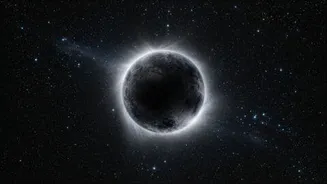
A Path That Defines the Spectacle
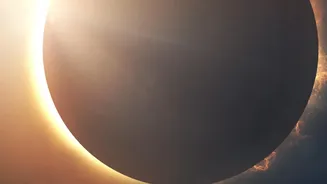
A total solar eclipse happens somewhere on Earth roughly every 18 months, but rarely is the path of totality—the narrow track where the Moon completely blocks the Sun—so accessible and historically significant. This eclipse begins over the remote Arctic,
sweeping across Greenland and Iceland before making its grand European entrance. It will be the first total solar eclipse visible from mainland Europe since 1999, making it a generational event for millions. The path will cross over a small corner of Portugal and a wide swath of northern Spain, including the Balearic Islands in the Mediterranean. This specific geography is what transforms it from a mere astronomical event into a major cultural and logistical moment.
Spain's Starring Role
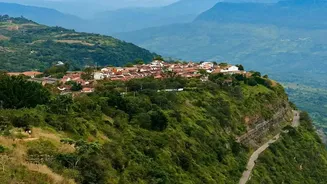
For eclipse chasers, Spain is the undisputed headliner. The path of totality will sweep across the northern part of the country, from the Atlantic coast of Galicia to the Mediterranean shores of the Balearic Islands. Major cities like A Coruña, Oviedo, Burgos, Zaragoza, and Palma will experience the awe-inspiring moments of totality. This makes the eclipse remarkably accessible, not just for locals, but for the thousands of international tourists expected to flood the region. The high probability of clear summer skies in Spain adds to its appeal as a prime viewing destination, although weather is never a guarantee. NASA and other agencies provide detailed maps and data, allowing enthusiasts to pinpoint the perfect viewing spot along this geographically diverse route.
The Ultimate Sunset Eclipse
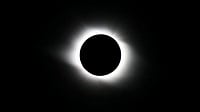
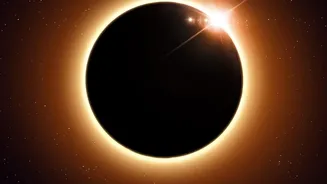
What makes the geography of this eclipse truly unique is its timing. For most observers in Spain, totality will occur just before sunset. This creates the rare and breathtaking phenomenon of a 'sunset eclipse'. Imagine watching the Sun’s corona—its ethereal outer atmosphere, only visible during totality—shimmering just a few degrees above the western horizon. This low position in the sky presents both a challenge and a spectacular opportunity. Observers will need to find locations with an unobstructed western view, free from mountains or buildings. For photographers, it offers the chance to capture a truly dramatic landscape, with the eclipsed Sun setting over the Atlantic or the Mediterranean Sea.
NASA's View From Above
While boots-on-the-ground geography is key for viewers, NASA provides the crucial context from above. The agency's role extends far beyond just tracking the path. NASA will be actively studying the eclipse, using high-altitude jets and scientific balloons to chase the Moon's shadow. These missions allow scientists to study the Sun's corona for longer than is possible from a stationary point on the ground, gathering invaluable data about our star's dynamics. NASA also provides extensive public resources, including live streams and safety information, ensuring people worldwide can experience and understand the event. Their precise orbital calculations are what allow us to predict this geographic spectacle years in advance.
A Celestial Event Meets a Terrestrial Boom
The timeliness of the eclipse's geography isn't just about the date; it's about the convergence of people, science, and tourism. The path of totality is creating a massive travel event. Hotels in prime viewing locations across Iceland and Spain have been booked for years. This influx of 'eclipse chasers' provides a significant economic boost but also presents logistical challenges for local communities. Furthermore, this eclipse is the first in a remarkable trifecta for Spain, with another total eclipse in 2027 and an annular 'ring of fire' eclipse in 2028. This sustained focus makes the region a global hub for astronomy, turning a fleeting moment of darkness into a long-term opportunity.