
Preparation is Everything
Before you can create sharp, clean geometric lines, you need to prepare your canvas. Start by cleaning the wall thoroughly to remove any dust or grease. Fill any holes or cracks with spackle, sand them smooth once dry, and then wipe the wall down again.
A smooth surface is crucial for tape adhesion and a flawless finish. Next, apply a base coat of paint if you are changing the wall's primary colour. Even if you are not, a fresh coat can ensure a uniform starting point. The most important tool for this project is high-quality painter's tape. Look for one designed for sharp lines, as this will prevent the paint from bleeding underneath and ruining your pattern.
1. The Timeless Triangle
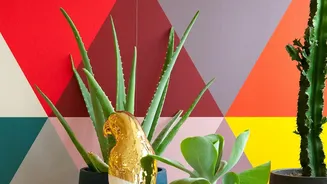
Triangles are a fundamental shape in geometric design, offering endless versatility. You can create a pattern of random, overlapping triangles for a dynamic and energetic feel, or a more orderly repeating pattern for a sense of calm. Start by mapping out your design with tape. Create large triangles first, then subdivide them into smaller shapes to build complexity. A popular approach is to use a range of shades within the same colour family, creating a tonal effect that adds depth without overwhelming the space. When painting, use a small roller or brush and apply two thin coats for full coverage. The key to a crisp result is removing the tape while the second coat of paint is still slightly wet. Pull it off slowly at a 45-degree angle for the sharpest possible lines.
2. The Classic Herringbone
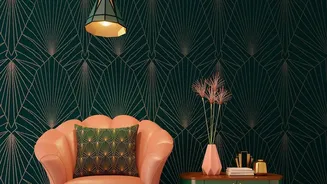
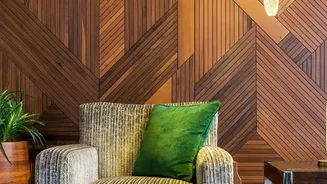
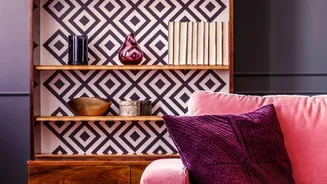
The herringbone pattern, often seen in wood flooring and textiles, brings a sophisticated and classic elegance to a wall. It consists of interlocking rectangles arranged in a V-shape. While it looks complex, it is quite achievable with careful measurement. To start, find the centre of your wall and mark a vertical line. This will be your guide. From there, use a level and a ruler to tape off your rectangles at a 45-degree angle to your centre line. The trick is consistency in the size and angle of your shapes. This pattern works wonderfully with a subtle, low-contrast colour scheme, such as a light grey over a white wall, to create a textural effect. For a bolder statement, you can use two or three contrasting colours.
3. The Modern Honeycomb
Hexagons, or honeycomb patterns, feel fresh, modern, and a little bit playful. They work well in children's rooms, home offices, and creative spaces. You can create a full wall of hexagons for a beehive effect or use a scattered cluster of them as a focal point. Using a stencil is one way to ensure perfect shapes, but you can also create them with tape. A hexagon is simply six equal-sided triangles joined at a centre point. Use a level to draw your first hexagon lightly in pencil, then use it as a template for your tape. You can paint the entire inside of the shapes or just create outlines for a more minimalist look. This design is perfect for experimenting with bright, bold colours.
4. The Abstract Mountain Range
A mountain mural is a fantastic way to bring a sense of nature and serenity indoors. This design is more forgiving than precise geometric patterns because the lines are meant to be angular and varied. It is particularly popular for nurseries and bedrooms. Start by taping off a series of overlapping peaks across your wall. Don't worry about making them perfectly symmetrical; the variation is what makes it look natural. A common technique is to use three to four shades of a single colour, like blue or grey, to create the illusion of atmospheric perspective, with darker peaks in the foreground and lighter ones in the 'distance'. Paint the furthest, lightest mountains first and work your way forward, letting each layer dry before taping the next.
5. Simple Colour Blocking
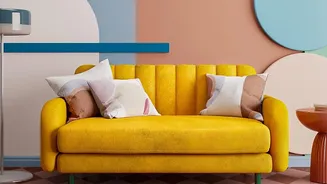
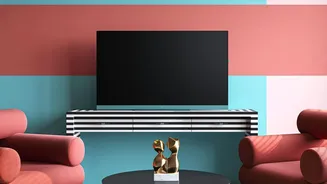
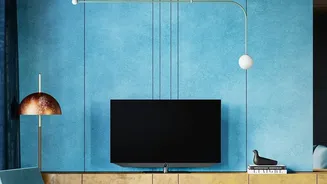
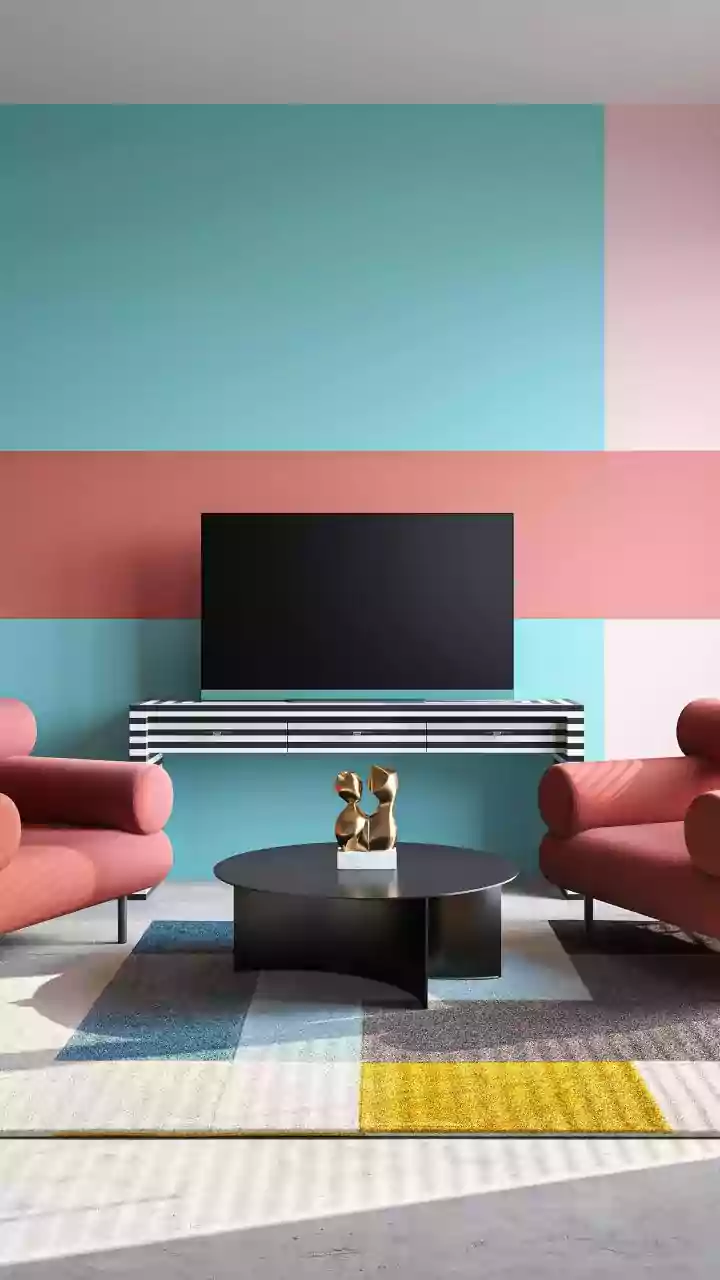
If intricate patterns feel too daunting, colour blocking is an incredibly effective and simpler alternative. This technique involves painting large, distinct blocks of colour on a wall to create a graphic, architectural effect. You can divide the wall horizontally, diagonally, or create shapes like arches and circles. A popular trend is the 'colour drenching' effect, where you paint a large block of colour that continues onto the ceiling or an adjacent wall. This technique is all about confident colour choices. Use tape to create a perfectly straight line between your colours. This works best with bold, contrasting hues or can be used to create a subtle feature with a slightly darker shade of your existing wall colour.