






In one of the most remote corners of the planet, a cold, high-altitude desert in the Indian Himalayas has become a global hotspot for astronomy. This is the story of how Hanle, in Ladakh, transformed into a world-class window to the cosmos.
A Paradise for Stargazers
Imagine a place
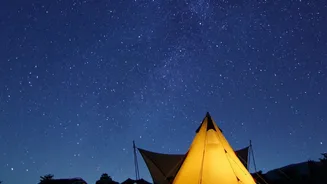
so high the air is thin and crisp, so dry that moisture almost never clouds the view, and so remote that the concept of light pollution is virtually nonexistent. This is Hanle, a village in Ladakh's Changthang region, situated at a breathtaking altitude of 4,500 meters (about 14,800 feet). Lying in the rain shadow of the Himalayas, the monsoon clouds that plague much of the subcontinent are blocked, granting the area an incredible 270 clear nights a year. This unique combination of conditions makes Hanle's skies comparable to the Atacama Desert in Chile, long considered the global gold standard for astronomical sites. For astronomers, this isn't just a beautiful landscape; it’s a near-perfect natural laboratory.
The Observatory on the Mountain
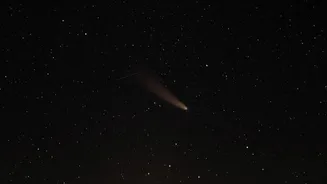
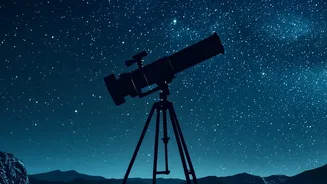
Perched atop Mount Saraswati, the Indian Astronomical Observatory (IAO), run by the Indian Institute of Astrophysics, has been the engine of Hanle’s celestial rise since it began operations around 2001. Its flagship instrument is the 2-meter Himalayan Chandra Telescope (HCT), an optical-infrared instrument named after Nobel laureate Subrahmanyan Chandrasekhar. Due to the harsh, remote conditions, the HCT is operated remotely from a control center near Bengaluru, over a thousand miles away, via a satellite link. But the HCT is not alone. Hanle has become a hub for various projects, hosting gamma-ray telescopes like HAGAR and MACE, and the GROWTH-India telescope, which specializes in tracking transient events like supernovae and the afterglow of cosmic explosions. This collection of advanced instruments makes Hanle a multi-faceted observatory capable of studying a wide range of cosmic phenomena.
From Remote Site to Global Hub
The establishment of world-class scientific infrastructure in such a remote location has had a profound ripple effect. Hanle’s pristine skies and advanced facilities have attracted international collaborations and put it firmly on the global astro-map. Its unique geographical longitude fills a critical gap in the 24-hour monitoring of celestial objects, allowing observation when sites in Europe and East Asia are in daylight. Recognizing the immense value of its dark skies, the area was designated as India's first Dark Sky Reserve in 2022. This formal protection limits artificial light pollution within a 22-kilometer radius, safeguarding the site for future scientific breakthroughs while also fostering a new kind of sustainable astro-tourism.
A Boost for the Local Community
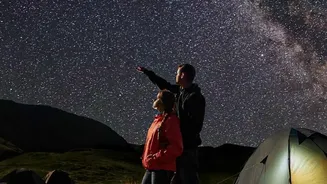
The impact of the observatory extends beyond science. The creation of the Hanle Dark Sky Reserve has spurred a unique astro-tourism initiative that directly benefits the local community. Villagers, many of them women, have been trained as 'astronomy ambassadors' to guide tourists through the wonders of the night sky using telescopes provided by the program. This has not only created new livelihoods and revived the local economy but has also reconnected the community with its own heritage of stargazing. Homestays have flourished, offering visitors a chance to experience the cosmos from one of the best vantage points on Earth, guided by the very people who call this extraordinary place home.