








Goa's Annual Natural Wonder
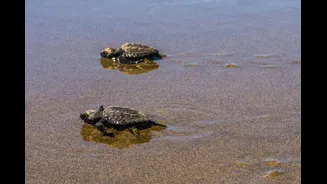
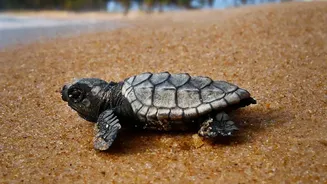
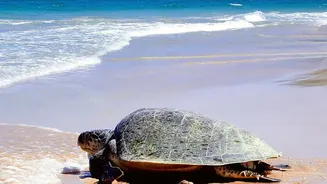
Every year, between November and April, a remarkable natural event unfolds on Goa's coastline. Female Olive Ridley turtles, a species listed as vulnerable, return to specific beaches to lay their eggs. Historically, Morjim, Mandrem, Agonda, and Galgibag
have been the primary nesting sites, with Morjim alone seeing 83 nests and over 8,500 eggs in the last season. This nesting cycle is crucial for the survival of the species, but it coincides directly with Goa's peak tourist season, creating a delicate and often challenging situation. The turtles and their hatchlings are extremely sensitive to their environment, making the bustling activity on the beaches a significant threat.
A Sanctuary Under Pressure
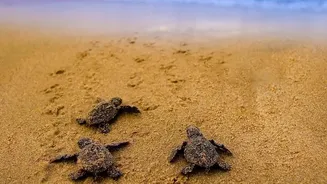
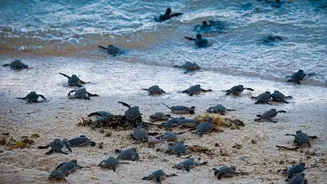
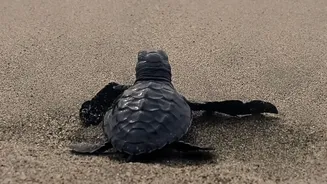
The primary threats to Goa's nesting turtles are human-induced. Artificial lighting from beach shacks, resorts, and parties can disorient both the nesting females and the hatchlings, who rely on the natural, bright horizon of the sea to navigate. Noise, beach furniture, and human movement can prevent turtles from coming ashore to nest or can obstruct the tiny hatchlings' perilous journey to the water. Despite existing conservation efforts, including protected hatcheries managed by the Forest Department, concerns are growing over a decline in nesting numbers compared to previous years, prompting a call for more robust protective measures.
What Are The Proposed Changes?
In response to these challenges, Goa's Forest Department has put forward a significant proposal to the Department of Environment and Climate Change. The proposal seeks to formally designate turtle nesting sites across 24 beaches—10 in North Goa and 14 in South Goa—under the Coastal Regulation Zone (CRZ) Notification of 2019. This list now includes not only the well-known sites but also popular tourist beaches like Baga, Calangute, Candolim, and Palolem. If approved, these areas would be classified as ecologically sensitive, which would trigger stricter regulations. These restrictions could include tighter controls on light and sound pollution, vehicle movement, and the placement and operation of beach shacks and other tourism activities, especially at night.
Concerns from Local Communities
The proposal has sparked considerable debate and concern among local stakeholders, particularly beach shack owners and fishermen. Many fear that broad restrictions across 24 beaches could negatively impact their livelihoods, which are deeply intertwined with tourism. Representatives from the Shack Owners Welfare Society have voiced that while they support turtle conservation, they believe declaring so many beaches as nesting sites is impractical and could cripple the local economy. They are seeking clarity on the exact nature of the restrictions and are advocating for a balanced approach that protects turtles without shutting down tourism. The concern is that overly stringent rules could drive traditional Goan businesses off the coast.
Finding the Right Balance
The core of the issue is finding a sustainable path forward that allows both the turtles and Goa's tourism-dependent economy to thrive. Conservationists and government bodies point to the necessity of protecting these vulnerable nesting grounds to ensure the species' survival for future generations. At the same time, local business owners argue that they can be partners in conservation, provided the rules are clear, specific, and developed through consultation. The next steps will involve the state government mapping the precise boundaries of the nesting grounds and defining how the CRZ rules will be applied. This process will determine how the balance between ecology and economy is struck on Goa's world-famous shores.