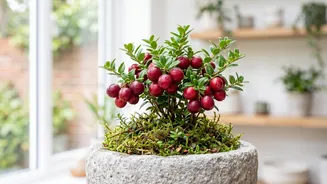


Dreaming of harvesting your own tart, jewel-toned berries, but limited by city living? Growing cranberries indoors is a unique and rewarding project for the dedicated gardener. It's a challenge, but with the right setup, it's entirely possible.
Why Grow Cranberries in a Pot?
Beyond
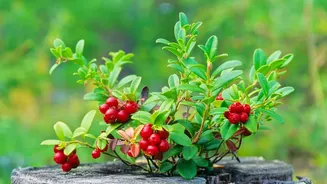
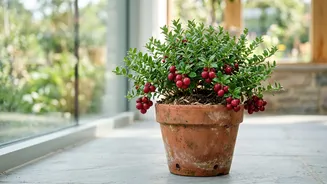
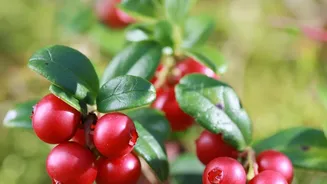
the thrill of harvesting your own superfood, cranberry plants make for a beautiful and unusual houseplant. Known botanically as Vaccinium macrocarpon, these are low-growing, evergreen vines with small, glossy leaves. The runners will trail elegantly over the side of a pot or hanging basket. In spring, they produce delicate pink flowers that resemble the head of a crane, which is how they got their name. While commercial growing happens in bogs, you can successfully cultivate them in containers without any flooding, making it a perfect project for an urban balcony or a sunny windowsill.
Choosing the Right Cranberry Variety
Several cultivars are suitable for home gardens, and many perform well in containers. Varieties like 'Pilgrim', 'Stevens', and 'Ben Lear' are popular choices. 'Pilgrim' is noted for its large, deep red fruit, while 'Stevens' is a vigorous and widely grown commercial variety. Many cranberry plants are self-pollinating, which is a significant advantage for indoor growers, though planting a second variety can sometimes improve fruit production. Look for compact varieties, as their spreading nature is more manageable in a pot.
The Perfect Container and Location
Cranberries have shallow roots that spread horizontally, so the width of the pot is more important than its depth. Select a container that is at least 30 cm wide, such as a trough-style planter or a large round pot, to give the runners space to grow. Excellent drainage is absolutely essential to prevent root rot. For light, these plants need full sun — at least six hours of direct sunlight per day is crucial. A south-facing window is ideal. If you don't have enough natural light, you will need to supplement with a grow light to keep the plant healthy and encourage flowering.
The Acid Test: Getting the Soil Right
This is the most critical step for success. Cranberries are acid-loving plants and will not survive in standard potting soil. They require a highly acidic soil with a pH between 4.0 and 5.5. The easiest way to achieve this is to buy a bagged ericaceous compost, the same type used for blueberries or azaleas. You can also create your own mix using peat moss blended with sand or perlite. It is vital to test your soil's pH annually and amend it if necessary, as tap water can raise the pH over time.
Watering and Feeding Your Plant
True to their boggy origins, cranberry plants need consistently moist soil. However, they must not become waterlogged. The goal is 'damp', not 'soggy'. Self-watering pots can be an excellent tool for maintaining consistent moisture. Whenever possible, use rainwater or distilled water, as tap water is often alkaline and can slowly neutralize the acidic soil your cranberry needs to thrive. When it comes to feeding, less is more. Avoid high-$nitrogen$ fertilisers, which encourage leafy growth at the expense of flowers and fruit. A slow-$release$ acidic fertiliser applied once in the spring is usually sufficient.
The Fruiting Challenge: Pollination and Chilling
Getting your indoor cranberry to produce fruit is the ultimate goal, but it presents two main challenges. First, pollination. While many varieties are self-$fertile$, the lack of wind and bees indoors means you may need to help. When the plant is flowering, you can gently shake it daily or use a small, soft brush to move pollen from flower to flower. Second, and more difficult, is the chilling requirement. Cranberry plants need a long period of cold—several hundred hours of temperatures below $7°C$—to trigger flowering and fruit production. For an indoor plant in a warm climate, this is a significant hurdle. You might try moving the pot to a cool, unheated garage or even attempting a complex dormancy period in a refrigerator, but success is not guaranteed.