






Why the South Pole is Prime Real Estate
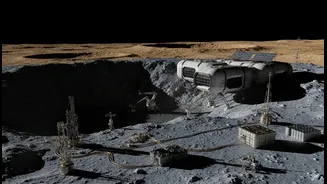
For decades, the Moon was seen as a dusty, desolate, and largely uniform world. But recent discoveries have turned the lunar south pole into the most coveted real estate in the solar system. The reason is simple: the potential for water ice. In the pole's
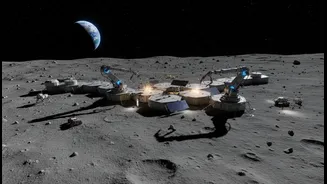
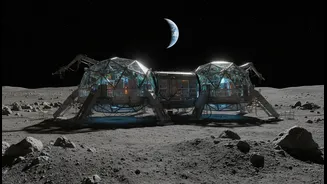
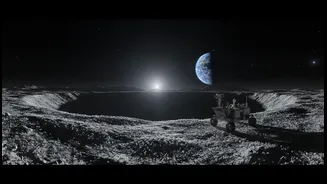
permanently shadowed craters, where sunlight hasn't reached for billions of years, temperatures plummet to extreme lows. Scientists believe these frigid traps could hold vast quantities of frozen water. This is not just about quenching an astronaut's thirst. Water can be split into hydrogen and oxygen, providing breathable air and, crucially, rocket propellant. The ability to refuel on the Moon would revolutionize space travel, turning it from a destination into a launchpad for missions to Mars and beyond. This has sparked a new space race, with nations and private companies alike, including those involved in NASA's Artemis program, targeting the south pole for future outposts.
Reading the Ground Truth
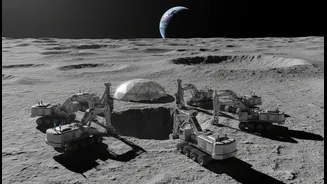
Before you can build, you need to know what you're building on. ISRO’s Pragyan rover provided the first-ever ground-level analysis of the south pole's elemental makeup. One of its most significant discoveries was the unambiguous presence of sulphur, alongside elements like aluminum, iron, and silicon. The higher-than-expected concentration of sulphur is a scientific puzzle that could point to the region's volcanic history or even provide clues about the presence of water ice. For habitat engineers, this is critical information. The process of using local materials for construction, known as In-Situ Resource Utilization (ISRU), is the only feasible way to build a long-term lunar base. Knowing the precise composition of the lunar soil, or regolith, informs what materials can be extracted and what technologies are needed to turn abrasive, glass-like dust into building blocks, radiation shielding, or other useful components.
Taking the Temperature
One of the most surprising findings came from the lander's ChaSTE (Chandra’s Surface Thermophysical Experiment) payload. The probe, which burrowed about 10 centimeters into the surface, revealed a dramatic temperature difference. While the surface temperature was around 50-60°C, just a few centimeters below it plummeted to roughly -10°C. This massive gradient confirmed that the lunar topsoil is an incredibly effective thermal insulator. This single data point has profound implications for habitat design. It suggests that structures built just partially underground could be naturally protected from the wild temperature swings on the surface, which can range from a scorching 54°C in sunlight to -203°C in shadow. This insulating property of the regolith could simplify thermal control systems for habitats, rovers, and sensitive equipment, saving mass and energy—two of the most precious commodities in space exploration.
Listening for 'Moonquakes'
A permanent habitat needs to be built on stable ground. The Vikram lander carried the Instrument for Lunar Seismic Activity (ILSA) to listen for tremors. During its mission, ILSA recorded vibrations that appeared to be from the rover's movement, but it also detected what scientists believe was a natural event, possibly a small 'moonquake' or a meteorite impact. This was the first seismic data ever collected from the lunar south pole. Understanding the Moon's seismic activity is as fundamental as checking the geology of a construction site on Earth. Are there fault lines? How often does the ground shake? This information is non-negotiable for designing foundations and structures that can withstand lunar tremors over decades, ensuring the long-term safety of the astronauts who will one day call the Moon home. ILSA's preliminary data provides a crucial starting point for this vital environmental survey.