
Saturn Takes the Spotlight
Throughout August, Saturn will become an increasingly prominent and rewarding target for skywatchers. While its official opposition—the point where Earth passes directly between the sun and Saturn—isn't until early October, this month marks the beginning
of its best viewing season. Each night, the planet will rise a little earlier, growing brighter and more impressive. By late August, Saturn will be rising around 9 p.m. local time, making it a convenient and captivating sight for evening observers. It will appear as a steady, bright, yellowish point of light in the constellation Pisces. Unlike twinkling stars, planets shine with a constant glow, making Saturn relatively easy to distinguish.
How to Find the Ringed Jewel
You don't need to be an expert astronomer to find Saturn. This month, it will be located in the constellation Pisces, near its border with Cetus. This area of the sky isn't particularly crowded with bright stars, which helps the planet stand out. To find it, look toward the eastern sky a couple of hours after sunset. As the night deepens, Saturn will climb higher, reaching its highest point in the southern sky around midnight. On August 4th and again on the 30th and 31st, the Moon will pass nearby, serving as a convenient guidepost to help you locate the planet. While Saturn is perfectly visible to the naked eye, even a pair of binoculars will steady the view and enhance its colour. If you have a small telescope, you're in for a real treat.
A Glimpse of the Famous Rings
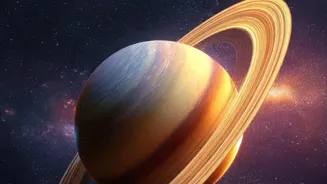
This is what makes Saturn truly special: its iconic rings. After being nearly edge-on to our view in recent years, the rings are now tilted favorably toward Earth, making them clearly visible again. Even a modest telescope will reveal the planet's disk and its magnificent ring system, which spans nearly twice the diameter of the planet itself. These rings are composed of countless particles of ice and rock, ranging in size from tiny dust grains to large boulders. Seeing them for yourself, even as a tiny, perfect image millions of miles away, is an unforgettable experience. Through a telescope, you may also be able to spot Saturn's largest moon, Titan, appearing as a small star-like point of light close to the planet.
Don't Miss the Perseid Meteor Shower
As if a brilliant Saturn wasn't enough, August also hosts the year's most beloved meteor shower: the Perseids. Active from mid-July to late August, this shower will reach its peak on the nights of August 12th and 13th. This year's peak is set to be spectacular because it coincides with a New Moon. This means the sky will be perfectly dark, without moonlight to wash out the fainter meteors. The Perseids are known for producing bright, fast meteors and can deliver between 50 and 100 shooting stars per hour at a dark-sky location. For the best view, find a spot away from city lights, lie back, and look toward the northeast after midnight. The show is well worth staying up for.
A Month of Celestial Meetings
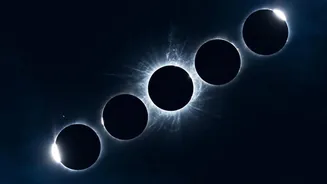
August 2026 is truly a packed month for celestial events. Beyond Saturn and the Perseids, there's a parade of planets in the morning sky. On the morning of August 12th, a rare six-planet alignment will be visible just before sunrise. The same day features a total solar eclipse visible from parts of Europe, and a partial lunar eclipse will be visible across the Americas later in the month on August 27-28. While Venus will also put on a dazzling display in the western evening sky all month, the main event remains the steady, majestic presence of Saturn, beckoning us to look deeper into our solar system.