



Malshej Ghat, Maharashtra: The Waterfall Paradise
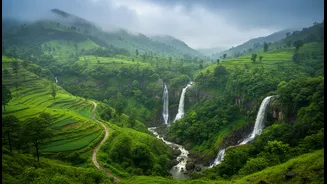
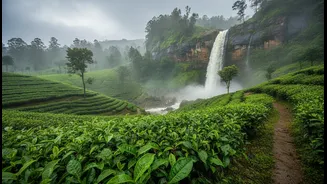
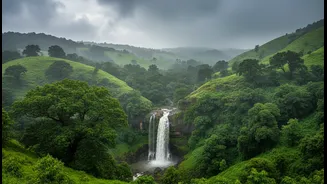
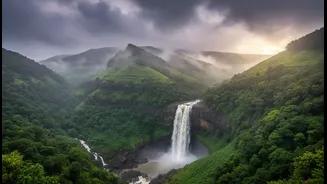
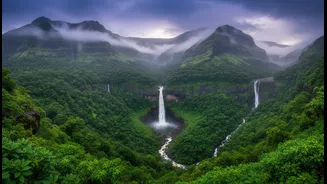
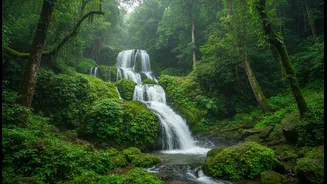
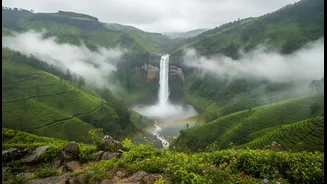
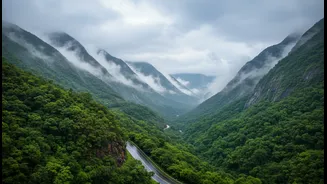
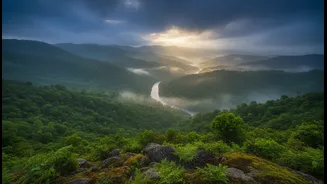
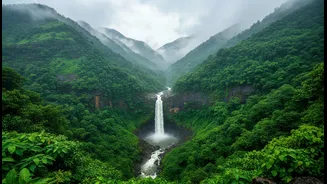
A favourite for travellers from Mumbai and Pune, Malshej Ghat becomes a water world during the monsoon. Countless waterfalls burst forth from the cliffs, lining the winding roads with their silvery cascades. The entire region is draped in a thick fog,
creating a mystical atmosphere that feels like driving through the clouds. For the adventurous, the trek to Harishchandragad Fort offers a challenging journey with historical caves and stunning clifftop views, while the gigantic Kalu Waterfall, the largest in the area, becomes a thunderous spectacle. This area is also a temporary home for migratory flamingos during the rainy season, adding a splash of pink to the green and grey landscape.
Munnar, Kerala: Tea Gardens in the Mist
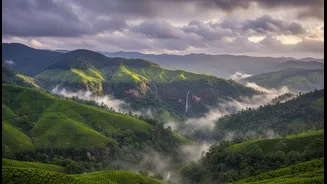
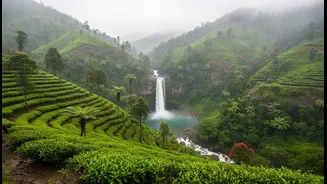
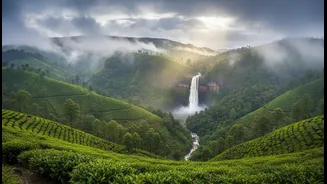
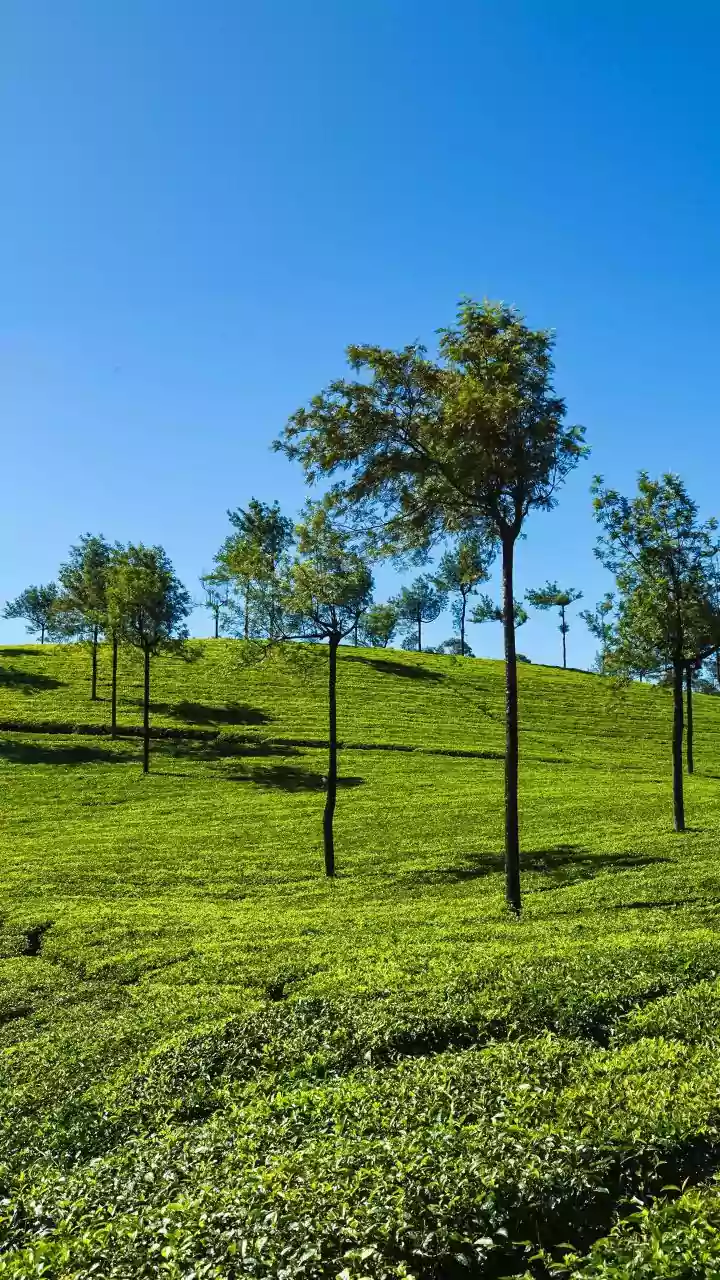
Munnar’s rolling hills, blanketed with tea plantations, are a sight to behold year-round, but the monsoon adds an extra layer of enchantment. The landscape, already a vibrant green, becomes even more lush and is often shrouded in a soft, low-hanging mist that gives it a dreamlike quality. The rain washes the tea leaves clean, making them glisten and the air smell fresh and earthy. Waterfalls like Attukad, which are modest trickles in other seasons, become powerful cascades. Driving through the winding roads, with clouds drifting across the tea estates and the sound of rain as your only companion, is an experience that defines the monsoon in the southern Ghats.
Kaas Plateau, Maharashtra: The Carpet of Flowers
Known as Maharashtra's own Valley of Flowers, the Kaas Plateau is a UNESCO World Heritage site that puts on a spectacular, if fleeting, show post-monsoon. From late August to early October, this laterite plateau bursts into a riot of colour as over 850 species of wildflowers bloom, creating a vast, multicoloured carpet. The blooms change every few weeks, offering a different canvas of pinks, purples, yellows, and whites with each visit. To protect the delicate ecosystem, visitor numbers are restricted, so booking in advance is essential. It’s a breathtaking spectacle for botanists, photographers, and anyone who appreciates nature’s artistry. Nearby attractions like the serene Kaas Lake and the impressive Thoseghar Waterfalls make the trip even more worthwhile.
Agumbe, Karnataka: The Rainforest Kingdom
Often called the 'Cherrapunji of the South', Agumbe receives some of the heaviest rainfall in the region, transforming it into a dense, dripping rainforest teeming with life. This is not a destination for casual sightseeing but for deep immersion into a wild, wet world. Agumbe is a biodiversity hotspot, famous for its king cobras and a stunning array of frogs that emerge during the rains. Guided night walks to spot these amphibians have become a popular, conservation-focused activity. The landscape is one of misty peaks, hidden waterfalls, and ancient trees. For those willing to brave the leeches and the constant downpour, Agumbe offers a raw and unforgettable encounter with the wild heart of the Ghats.
Coorg, Karnataka: The Scent of Coffee and Rain
Coorg, or Kodagu, with its sprawling coffee plantations and spice estates, is another gem of the Western Ghats that shines brightest in the monsoon. The rain amplifies the earthy aroma of coffee blossoms and wet soil. The entire district turns into a canvas of rolling green hills, with the famous Abbey Falls roaring with monsoon-fed power. While trekking can be challenging on slippery paths, the views are immensely rewarding. You can explore the misty trails around Madikeri, visit the Namdroling Monastery, or simply relax in a traditional homestay, sipping on locally grown coffee as the rain drums on the roof. It’s a perfect blend of natural beauty and cozy relaxation.