








The New Science of Ambiance
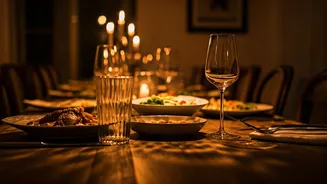
For years, the only rule for dinner lighting was to dim it. But a deeper understanding of environmental psychology has revealed the powerful connection between light and our senses. Warm, low lighting does more than create intimacy; it encourages guests
to relax, linger, and can even increase enjoyment of a meal. Studies have shown that diners in softly lit spaces report higher satisfaction. This isn't just about feeling cozy. Dimmer light can reduce visual distractions, allowing our other senses—taste and smell—to take center stage, potentially making food seem more flavorful. Conversely, bright, cool light, often found in fast-casual spots, signals energy and quick turnover, subtly encouraging you to eat faster.
Lessons from the Professionals
Top restaurants have moved far beyond a simple dimmer switch, now treating lighting as a key ingredient in their design. Many are adopting 'layered lighting'—a combination of ambient, task, and accent lights. Ambient light sets the overall mood, task lights (like a soft pendant over the table) ensure you can see your food, and accent lights highlight art or architectural details, adding depth to the room. Some high-end establishments even use dynamic systems that subtly change the light's intensity and warmth over the course of an evening, mimicking the setting sun to enhance the dining experience from appetizer to dessert. The goal is to make the space feel intentional and atmospheric, transforming a meal into a memorable event.
It’s Not Just Brightness, It’s Warmth
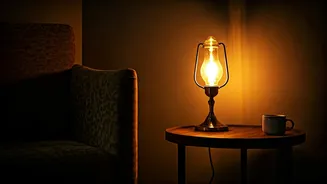
The next level of lighting mastery lies in understanding colour temperature, measured in Kelvin (K). For dining, the sweet spot is warm white light, typically between 2700K and 3000K. This is the temperature of candlelight or a classic incandescent bulb, and it casts a comforting, relaxing glow that makes people and food look their best. Cool white light (above 4000K) can feel clinical and energizing, which is great for a kitchen or office but less so for a relaxing dinner, as it can make a space feel sterile. Smart bulbs have made it easy to control not just brightness but colour temperature, allowing you to shift from a brighter, neutral light for setup to a warm, inviting glow when guests arrive.
Making Food Look as Good as It Tastes
Ever wonder why food sometimes looks drab and unappetizing under certain lights? The culprit is a low Colour Rendering Index (CRI). CRI is a scale from 0 to 100 that measures how accurately a light source reveals the true colours of an object compared to natural sunlight. For food, a high CRI is crucial. A light with a CRI of 90 or above will make the red of a tomato look vibrant and the green of a salad appear fresh. A low-CRI bulb can make the same food look dull and flat, taking away its appeal before you’ve even taken a bite. When shopping for bulbs for your dining area, look for a high CRI (90+) to ensure your culinary creations are always seen in their best light.
Bringing the Restaurant Vibe Home
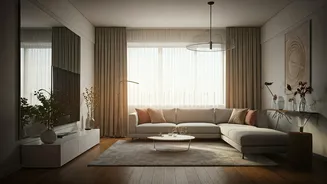
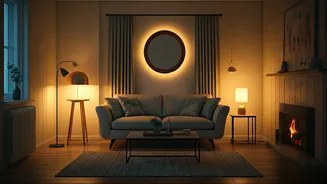
You don't need a restaurant-sized budget to master your dining lighting. Start by layering. Your main overhead fixture (the 'ambient' light) should be on a dimmer. Then, add 'task' lighting—perhaps a floor lamp in a corner or small table lamps on a sideboard—to create pools of softer light. Finally, use 'accent' lighting like candles or small, battery-operated picture lights to add a final touch of sparkle. Smart lighting is your best friend here, allowing you to create and save 'scenes' for different occasions. A 'Dinner Party' scene could automatically set all lights to 2700K and dim them to 60% brightness, creating the perfect atmosphere with a single tap.