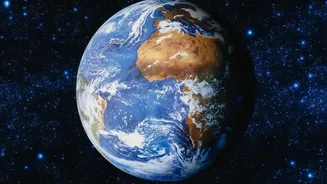

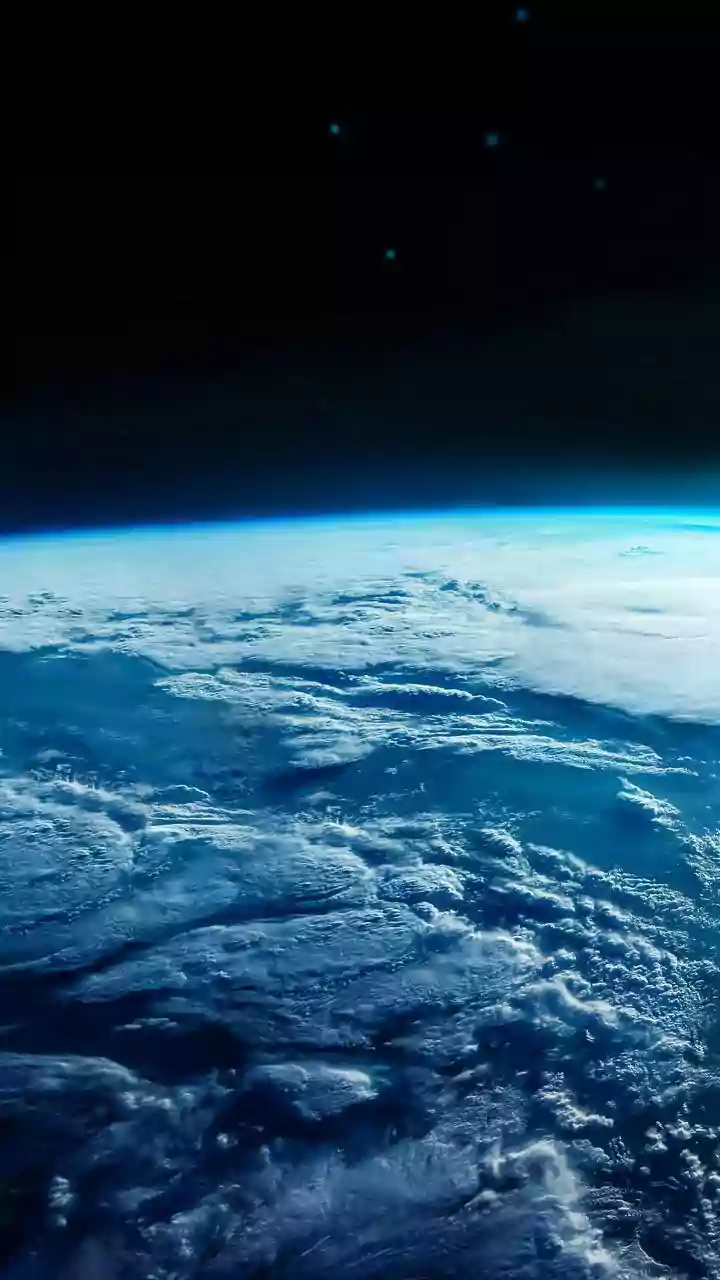

Earth as a Planetary Blueprint
Before we send billion-dollar rovers and telescopes to probe distant worlds, we need a blueprint. Earth provides that blueprint. By studying life in places that mimic conditions on other planets, scientists can develop and test strategies for finding
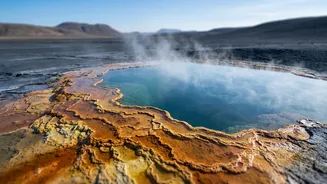
it elsewhere. These places are called "analogue environments." Astrobiologists don't expect to find complex creatures; they're hunting for microbes, specifically a hardy group known as extremophiles. These organisms thrive in conditions that would be instantly lethal to humans: scorching heat, freezing cold, crushing pressure, high radiation, and extreme salinity. By understanding how life survives at these limits on Earth, we learn what might be possible on a planet like Mars or a moon like Europa.
Mars on Earth: The Atacama Desert
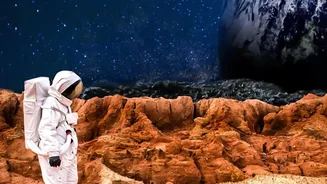
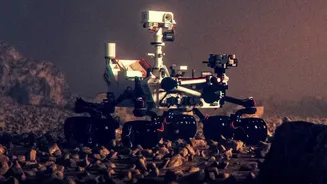
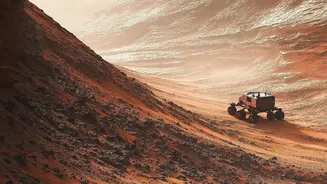
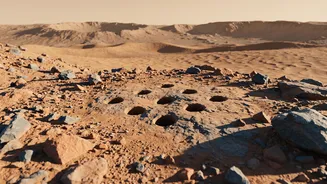
To find a place on Earth that resembles Mars, scientists travel to Chile's Atacama Desert. It is one of the driest places on the planet, with soil chemistry, extreme aridity, and intense ultraviolet radiation that are strikingly similar to what we've found on the Red Planet. For years, space agencies like NASA have used the Atacama as a testing ground to fine-tune instruments designed to detect signs of life, or "biosignatures." Researchers drive rovers across this Martian-like landscape to test drilling technologies and life-detection tools. Studies here have revealed microbes surviving inside salt nodules, drawing moisture directly from the atmosphere. This discovery gives scientists a specific type of micro-habitat to look for on Mars, guiding rovers to search for similar salt-rich deposits where life might have once clung on.
Icy Moons and Deep Oceans
Beyond Mars, some of the most promising candidates for life are the icy moons of Jupiter and Saturn, like Europa and Enceladus. These worlds are thought to have vast liquid water oceans hidden beneath their frozen shells. To understand what could survive in such a dark, cold, high-pressure environment, scientists look to Earth’s own hidden waters. Antarctica's subglacial lakes, such as Lake Vostok, are buried under kilometres of ice and have been isolated for millions of years. The study of microbes found in these lakes serves as a model for what might exist on Europa. Similarly, lifeforms found clustered around hydrothermal vents on Earth's deep ocean floors, which survive on chemical energy instead of sunlight, provide a powerful analogue for how ecosystems could function in the sunless oceans of an alien moon.
Decoding Alien Atmospheres
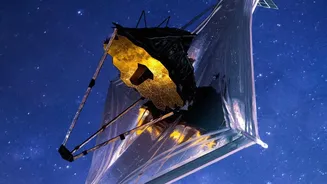
The search for life also extends to planets orbiting distant stars, known as exoplanets. Telescopes like the James Webb Space Telescope can analyze the light passing through an exoplanet's atmosphere to determine its chemical makeup. But how do we know which gases signal life? Again, we look to Earth. Our planet’s atmospheric history shows that for billions of years, life existed in an atmosphere very different from today's oxygen-rich air. Studying Earth's geological past helps scientists identify various biosignature gases—molecules produced by life—that could indicate a microbial biosphere, even one that doesn't photosynthesize like modern plants. Gases like methane, nitrous oxide, and dimethyl sulfide, all produced by microbes on Earth, are now key targets in the search for life on worlds light-years away.