



Decoding the Super New Moon
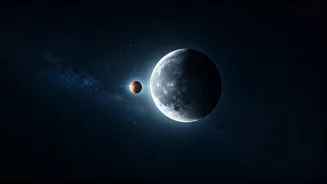
First, let's break down the terminology. A 'New Moon' is a lunar phase where the Moon is between the Earth and the Sun. From our perspective, the side of the Moon facing us is not illuminated, making it essentially invisible in the night sky. This is a stargazer's
dream, as the absence of moonlight creates the darkest possible skies, allowing faint stars, nebulae, and galaxies to shine through. The 'Super' part refers to when the Moon is at or near its closest point to Earth, known as its perigee. While a Supermoon makes tides slightly stronger, for sky-watching, its main effect during the new moon phase is simply confirming the Moon is completely out of the picture. It’s the ‘new moon’ that provides the perfect, dark backdrop we need.
The Spectacular Galactic Center
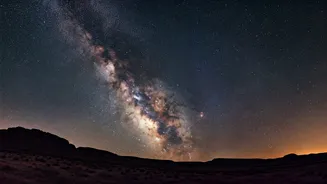
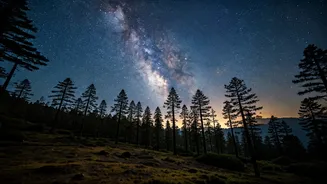
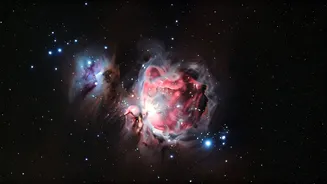
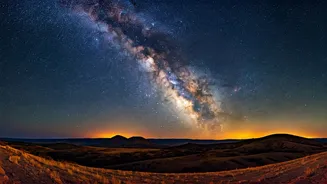
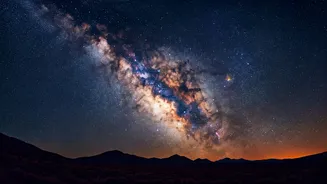
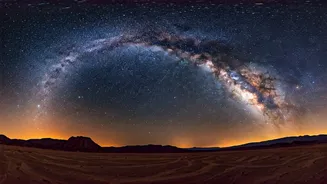
So, what are we looking for in this pristine darkness? The main event is the Galactic Center—the very heart of our Milky Way galaxy. Located about 26,000 light-years away, this region is a dense, bustling metropolis of stars, dust clouds, and cosmic gas. At its very core lies Sagittarius A* (pronounced 'A-star'), a supermassive black hole with the mass of over four million suns. While you can't see the black hole itself, you can see the incredible concentration of stars and bright nebulae that surround it. To the naked eye, this area appears as the brightest, widest, and most complex part of the Milky Way band that stretches across the sky, like a glowing celestial cloud.
Why This Is the Perfect Time
The visibility of the Galactic Center is a game of cosmic hide-and-seek. From India and the rest of the Northern Hemisphere, the core of the Milky Way is best observed during the summer months, from roughly March to October. During this window, the Galactic Center rises high enough in the southern sky to be seen clearly. When a new moon coincides with this viewing season, you get the absolute best conditions. The moonless sky acts like a blackout curtain, eliminating the light pollution it would normally cause and allowing the faint, beautiful details of the Milky Way's core to emerge in all their glory. It’s the perfect alignment of celestial mechanics for an unforgettable night of astronomy.
How to Find the Galactic Center
You don't need a high-tech telescope to find this cosmic landmark. The key is to find the constellation Sagittarius. Look towards the southern horizon. Sagittarius is famous for an asterism (a pattern of stars) known as 'the Teapot'. It looks exactly like its namesake: it has a handle, a lid, and a spout. On a dark, clear night, the 'steam' rising from the teapot's spout is actually the densest part of the Milky Way—that’s the Galactic Center you're looking for! Several stargazing apps for your smartphone can help you locate Sagittarius with ease. Simply point your phone at the sky, and the app will guide you to the right spot.
Tips for the Best Viewing Experience
To make the most of this opportunity, preparation is key. First, get away from city lights. The darker your location, the more you will see. National parks, remote countryside, or designated dark-sky spots are ideal. Second, give your eyes time to adjust. It takes about 20-30 minutes for your eyes to become fully 'dark-adapted'. Avoid looking at your phone screen (or use its red-light filter) during this time. Third, while the Galactic Center is visible to the naked eye, a simple pair of binoculars will dramatically enhance the view. Scanning the 'steam' from the Teapot with binoculars will reveal countless stars and fuzzy patches of glowing nebulae, turning a beautiful sight into a truly breathtaking one.