







The Monsoon Dilemma
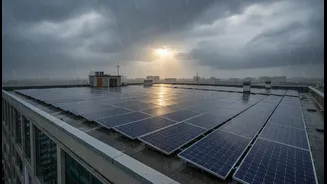
India has made massive strides in solar power, aiming for 500 GW of non-fossil fuel capacity by 2030, with solar being a major component. This ambitious goal is crucial for the nation's energy security and climate commitments. However, there's a seasonal
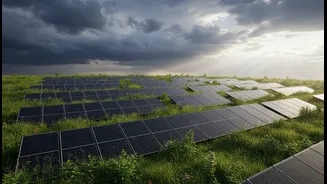
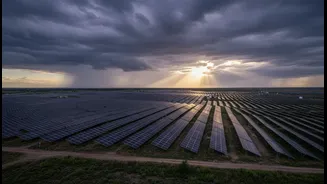
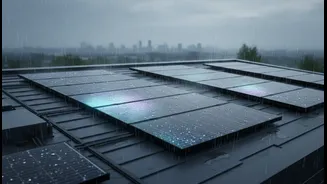
hurdle that can't be ignored. The annual monsoon, lasting from June to September, blankets large parts of the country in thick clouds, dramatically reducing the output of conventional solar panels. On heavily overcast days, generation can plummet to just 10-25% of a panel's peak capacity. This variability poses a significant challenge to grid stability and the dream of round-the-clock renewable power. While traditional panels can still generate some electricity from diffuse light scattered by clouds, their efficiency takes a major hit, creating a predictable dip in the country's clean energy production for a third of the year.
Enter a New Generation of Solar Tech
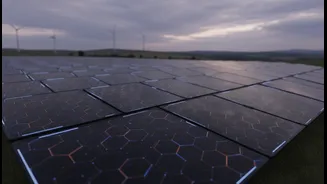
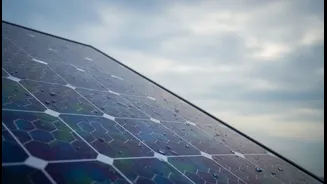
The term "cloudy-day solar panels" doesn't refer to a single product but a suite of advanced technologies designed to work more efficiently in low-light conditions. One of the most promising is Perovskite Solar Cells (PSCs). These cells use a unique crystal structure that is exceptionally good at absorbing a broader spectrum of light. While traditional silicon panels are optimised for direct, bright sunlight, perovskites can be tuned to perform remarkably well under indoor lighting or on overcast days. Another key innovation is bifacial panels. These panels are designed to capture light from both sides. The front captures direct and diffuse sunlight, while the rear side absorbs light reflected from the ground—a phenomenon known as albedo. In India, where solar farms are often situated on light-coloured soil or gravel, this can result in an energy gain of 5-20% or more. Technologies like PERC, TOPCon, and HJT are also enhancing cell efficiency, making panels better at converting every available photon into electricity, even when the sun isn't shining brightly.
An All-Weather Solution for India
The implications of these technologies for India are profound. By deploying panels that maintain higher output during the monsoon, the country can significantly smooth out its annual renewable energy generation curve. This improves grid reliability and reduces the need for fossil-fuel-based backup power during cloudy seasons. Bifacial panels are particularly well-suited for India's large-scale solar parks in regions like Rajasthan and Gujarat, where high ground reflectivity can maximise rear-side energy capture. More consistent year-round generation would make solar power a more dependable and predictable asset for India's energy planners. It would accelerate the return on investment for solar projects and strengthen the business case for further expansion. Ultimately, this leads to greater energy independence, reduced reliance on imported fuels, and a faster transition to a net-zero future.
The Road Ahead: Challenges and Potential
While the potential is enormous, these next-generation technologies are not without their challenges. Perovskite cells, for example, have historically faced issues with long-term durability and stability, though recent research is making significant strides in overcoming these hurdles. Similarly, while bifacial panels are already being deployed in India, their rear-side gain can be reduced when the ground is waterlogged during heavy rains, a factor that must be modelled accurately. The cost of these advanced technologies is also a consideration. While prices are falling, scaling up domestic manufacturing to meet India's massive demand will be a critical step. The good news is that the pace of innovation is rapid. Some perovskite-based commercial panels are already shipping in limited quantities, and the cost difference between bifacial and traditional panels is shrinking.