


What You Are Looking For
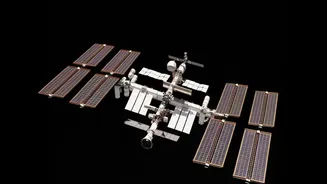
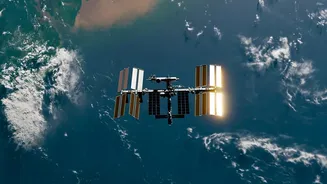
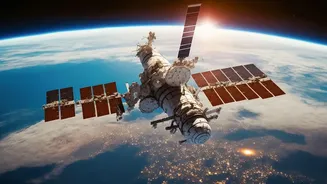
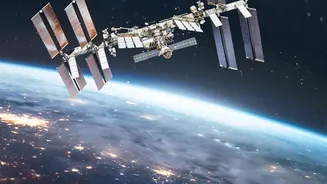
Spotting the International Space Station requires no special equipment; it's one of the brightest objects in the night sky. It looks like a very bright, fast-moving star or a silent, high-altitude airplane. The key difference is that the ISS emits a steady,
solid white or golden light and does not blink like an aircraft. It travels across the entire sky in just a few minutes, appearing to rise from one horizon and glide smoothly before disappearing below the opposite horizon or fading as it enters Earth's shadow. This spectacular sight is possible only during the periods shortly after sunset or before sunrise, when the sky on the ground is dark, but the station is high enough to catch the sun's rays.
Your Digital Toolkit: Top Skywatching Apps
The easiest way to know when and where to look is by using a smartphone app. These tools use your phone's location to give you precise viewing times and directions. Some of the most popular and reliable apps include NASA's official Spot The Station app, ISS Detector, and Heavens-Above. NASA's app is straightforward, providing alerts and accurate pass details. ISS Detector is another fan favourite, offering notifications for ISS passes and, with premium features, tracking for Starlink satellite trains and other famous objects. Heavens-Above is a comprehensive website and app cherished by serious stargazers for its detailed star charts and predictions for a vast number of satellites.
Using an App: A Step-by-Step Guide
Once you've downloaded your chosen app, the process is simple. First, ensure your phone's location services are enabled so the app can provide predictions tailored to your exact position. Then, allow notifications. The app will send you an alert, typically a few minutes before a visible pass is about to begin. Open the app to see the crucial details: the start time, the direction it will appear (e.g., 'WSW' for West-Southwest), its maximum height in degrees (90 degrees is directly overhead), and the duration of the pass. For the best experience, look for passes with a high maximum elevation and a bright magnitude—the lower the magnitude number (especially negative numbers), the brighter the pass will be.
Tips for the Perfect Sighting
To make your viewing experience memorable, a little preparation goes a long way. Head outside five to ten minutes before the scheduled pass to allow your eyes to adjust to the darkness. If possible, find a location with a clear view of the horizon, away from tall buildings and the glare of city lights, like a park or an open field. Knowing the pass trajectory beforehand from your app will help you face the correct direction in advance. While you don't need binoculars or a telescope to see the ISS, using a pair of binoculars can enhance the view, making the station appear even brighter and revealing its golden hue.