



What is a Caretaker Government?
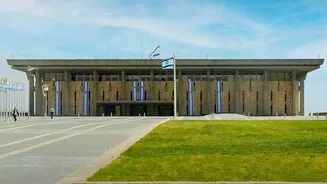
In Israel, a caretaker or transitional government takes over in several scenarios: after a no-confidence vote, when the Knesset (Israel's parliament) dissolves itself to call an election, or during the period after an election while parties negotiate
to form a new coalition. Its fundamental purpose is to prevent a 'governance vacuum', ensuring the state continues to function without interruption. According to Israel's Basic Law: The Government, the outgoing administration 'shall continue to carry out its functions until the new government is formed'. This principle of continuity means that even without the formal confidence of the Knesset, the government doesn't just disappear; it continues to manage the day-to-day affairs of the state. This period can sometimes be lengthy, especially after indecisive elections, extending for many months.
The Core Duty of 'Routine Administration'
On paper, a caretaker government holds the same powers as a regular one. Israel's laws do not explicitly detail a separate, limited set of powers for this period. The primary function is to continue routine administration, which includes everything from ensuring public sector employees are paid to maintaining the operations of government ministries. However, this broad authority is not without checks. The Israeli Supreme Court has established a key principle known as the 'duty of restraint'. This judicial precedent requires a caretaker government to act with caution, especially on matters that are not urgent or could create long-term, irreversible changes. The government's actions are subject to a stricter standard of 'reasonableness' than a regularly elected government.
The Major Limitations and Grey Areas
The 'duty of restraint' has the most impact on major decisions. A caretaker government is expected to avoid making significant new policy initiatives or permanent appointments to senior public positions, such as judges or top civil servants. The logic is that a government without a clear democratic mandate should not lock its successor into major commitments. However, there are significant grey areas, particularly concerning foreign affairs and national security. The Supreme Court has historically allowed caretaker governments broad discretion in these domains, especially when there is a 'vital public need for action'. This is the most contentious aspect of a caretaker government's power, as what constitutes a 'vital need' can be a matter of intense political debate.
Can a Caretaker PM Go to War?
This is the most critical question. Israeli law does not prohibit a caretaker government from launching a war or a major military operation. According to the law, such a decision must be made at the government level or by the smaller, high-level security cabinet, not by the prime minister alone. The law makes no distinction between a regular and a caretaker government in this regard. History provides several examples. In 2008, Ehud Olmert's caretaker government launched Operation Cast Lead in Gaza. More recently, Benjamin Netanyahu himself oversaw Operation Guardian of the Walls in 2021 while serving as a caretaker prime minister. Therefore, while legal and political analysts argue that such a decision requires an extremely pressing security justification, the authority to act remains.
The Netanyahu Factor
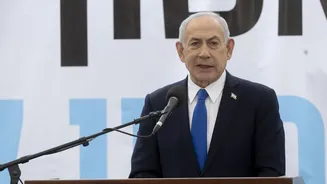
With a dominant and long-serving figure like Benjamin Netanyahu, the powers of a caretaker government often come under intense scrutiny. Political opponents and analysts frequently raise concerns that a leader might use a security crisis to delay a transfer of power or create a rally-around-the-flag effect for political gain. For example, reports have often surfaced about disagreements between Netanyahu and security officials over potential military actions during transitional periods. While the Prime Minister's Office typically insists that all decisions are based purely on security needs and are made in coordination with the defense establishment, the ambiguity of a caretaker's powers ensures that these political battles over legitimacy and authority continue to be a central feature of Israel's governance during times of transition.