



A Star’s Final Act
For stars like our Sun, the end comes not with a bang, but with a dramatic expansion. In about five billion years, our Sun will exhaust the hydrogen fuel in its core. Gravity will cause the core to shrink and heat up, while the outer layers will swell
enormously, transforming the Sun into a 'red giant'. This bloated version of our star will be hundreds of times its current size, large enough to engulf the inner planets. Mercury and Venus are almost certain to be vaporised. The Earth’s fate hangs in the balance; it might be swallowed, or it might be pushed into a wider, safer orbit. After this phase, the star sheds its outer layers, creating a beautiful, glowing structure called a planetary nebula. What’s left behind is the star’s incredibly dense, hot core: a white dwarf.
The Survivors of the Apocalypse
Common sense suggests any surviving planets would be frozen, inert worlds orbiting a dying ember. But the universe is full of surprises. Astronomers have found compelling evidence that not only can planets survive this process, but entire systems can re-organise and continue to evolve. Any planets far enough away to escape being engulfed by the red giant—like our own gas giants, Jupiter and Saturn—are expected to survive. As the star loses mass, its gravitational grip weakens, causing these surviving planets to drift into wider orbits. This phase can be chaotic, with gravitational nudges sending some planets into new, sometimes eccentric paths, while others may be ejected from the system entirely.
A New Field: Necroplanetology
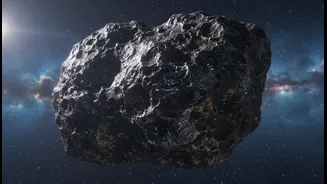
The study of these post-death systems has become so significant it has earned a fascinating new name: necroplanetology. This field focuses on the 'autopsy' of dead planetary systems to understand their final moments and what remains. One key piece of evidence comes from so-called 'polluted' white dwarfs. These stellar remnants have heavy elements like iron and magnesium in their atmospheres, which should have sunk out of sight due to the white dwarf's intense gravity. Their presence implies the white dwarf is actively consuming something—likely the debris from shattered asteroids and planetesimals. In some cases, telescopes have observed clouds of dust and gas from a disintegrating minor planet orbiting a white dwarf, providing direct proof of this cosmic cannibalism.
A Second Life for Planets?
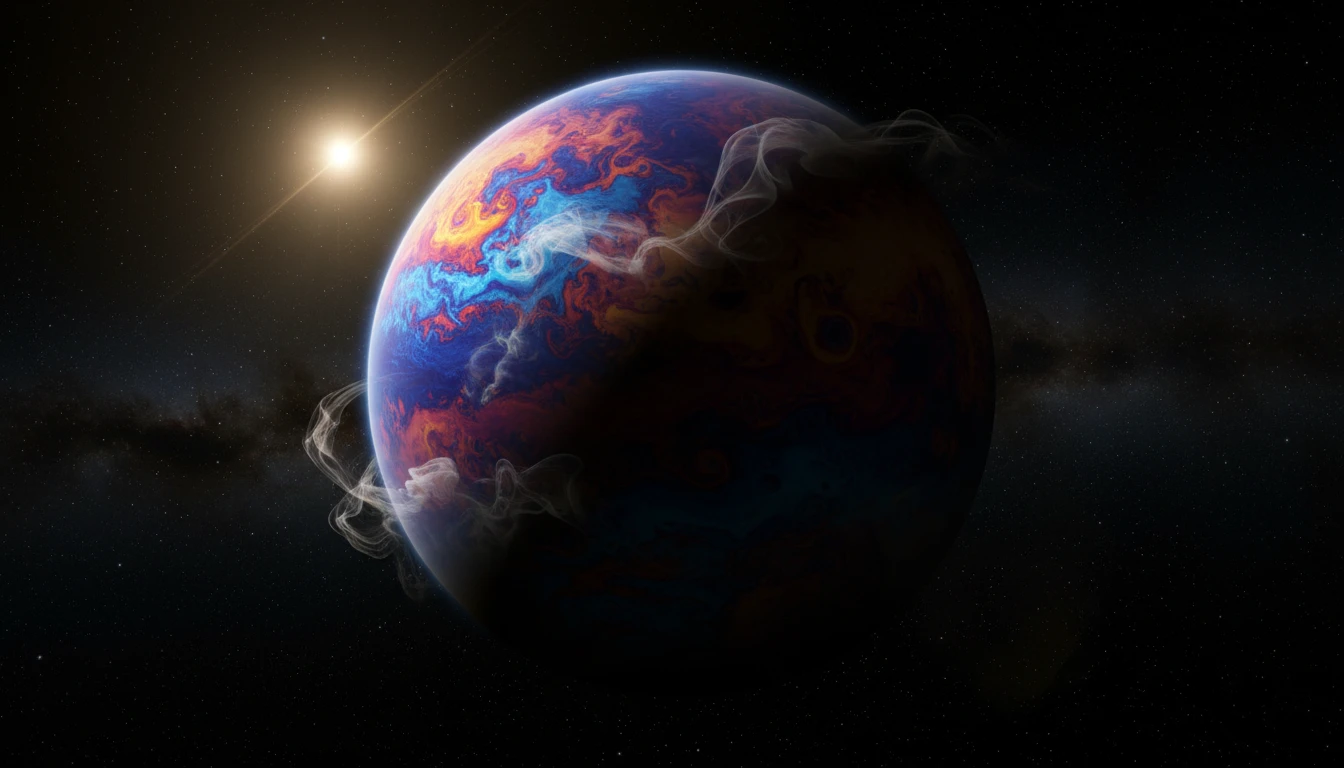
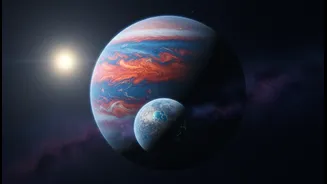
Recent observations from the James Webb Space Telescope (JWST) have provided an even more stunning picture. Astronomers studying a Jupiter-like planet named WD 1856 b, which orbits a white dwarf just 80 light-years away, made a groundbreaking discovery. This planet orbits its dead star at an incredibly close distance—a journey that takes only 34 hours. It should have been destroyed when its star became a red giant. Analysis revealed that the planet likely started in a much safer, wider orbit and only migrated inward billions of years after its star had died, possibly due to gravitational nudges from other stars in its system. Astonishingly, the JWST even detected an atmosphere, including signs of methane and cloud particles, the first time an atmosphere has been seen on a planet orbiting a dead star.