





A World War II Airstrip Reborn
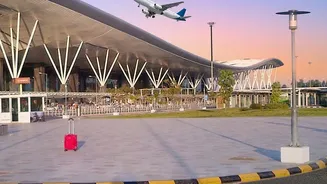
For nearly four decades, Rupsi airport was little more than a ghost of its past. Originally built by the British during World War II as a strategic airbase for supplying Allied forces, it fell into disuse after a brief stint of commercial operations in the 1980s.
For years, residents of Dhubri, Kokrajhar, and neighbouring areas had to undertake long road journeys of six to seven hours to reach the nearest airports in Guwahati or Siliguri. The revival of Rupsi came under the central government's UDAN (Ude Desh ka Aam Nagrik) scheme, which aims to enhance regional connectivity. After being redeveloped at a cost of roughly Rs 69 crore, the airport became operational again in May 2021, connecting the region primarily to Guwahati and Kolkata.
The Engine of Local Economy
The renewed interest in Rupsi isn't just driven by wanderlust; it’s a reflection of growing economic activity. The airport serves the crucial Lower Assam districts of Dhubri, Kokrajhar, Bongaigaon, and Goalpara, which form a significant commercial and agricultural belt. Historically, this region has relied on road, rail, and the Brahmaputra's waterways for trade. However, these modes of transport face challenges, especially during the annual floods. Air connectivity provides a much-needed, reliable alternative for business travel, movement of professionals, and time-sensitive cargo, effectively plugging the region into the national economic grid. The Assam government has also announced plans for a phased expansion of the airport and its development as a logistics hub, signalling its future importance for trade with neighbouring West Bengal, Meghalaya, and even countries like Bhutan and Bangladesh.
Unlocking an Untapped Tourism Circuit
While not a conventional tourist hub, the area around Rupsi is rich with untapped potential. The dramatic surge in flight searches, as noted by travel platform Skyscanner, points to a growing curiosity among travellers to explore destinations beyond the mainstream. The airport serves as a gateway to a diverse range of attractions. These include the Chakrasila Wildlife Sanctuary, Manas National Park, and the Buxa Tiger Reserve. The region is also steeped in history and culture, boasting the revered Gurdwara Sri Guru Tegh Bahadur Sahib in Dhubri, the ancient Mahamaya Dham, the historic Panbari Mosque, and the unique terracotta craft village of Asharikandi. The airport makes these sites far more accessible, potentially transforming a quiet corner of Assam into a vibrant tourism circuit for those interested in wildlife, history, and spiritual travel.
A Blueprint for Regional Growth
The story of Rupsi is more than just about a single airport. It is a powerful example of how targeted infrastructure development can awaken a region's latent potential. By providing reliable and affordable air connectivity, the UDAN scheme has done more than just cut down travel time; it has opened doors for improved access to healthcare, education, and new business opportunities that were previously out of reach for many. The Assam government's focus on strengthening connectivity through projects like the Asom Mala for roads and developing national waterways reflects a broader strategy to integrate every part of the state into the national growth story. The rise in flight searches for Rupsi, therefore, is not the story itself but a symptom of it. It shows that when you build a gateway, people and opportunities will inevitably start flowing through it.