




The Old Dream of a Perfect Battery
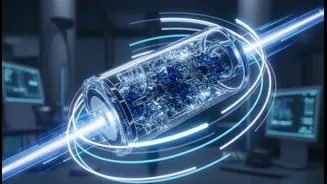
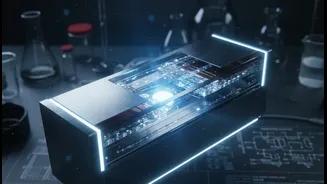
For decades, the idea of a rechargeable lithium-metal battery has been considered the holy grail of energy storage. Unlike the lithium-ion batteries that power today's EVs and smartphones, which use graphite to hold lithium ions in their anode, a lithium-metal battery uses
pure, lightweight lithium metal. In theory, this is a massive upgrade. Lithium is the lightest metal and has the potential to store far more energy in the same amount of space. The theoretical capacity of a lithium-metal anode is more than ten times that of a graphite one. This fundamental difference is why scientists and engineers have pursued it for so long, despite significant challenges that kept it confined to research labs.
A Quantum Leap in Driving Range
The single biggest advantage of lithium-metal technology is its incredible energy density. Current lithium-ion batteries typically offer an energy density of around 100-270 Watt-hours per kilogram (Wh/kg). Lithium-metal designs, however, are targeting figures exceeding 500 Wh/kg. For an EV driver, this technical jargon translates into a simple, game-changing benefit: a much longer driving range. An electric car that currently gets 450 kilometres on a charge could potentially travel 900 kilometres or more with a similarly sized lithium-metal battery. This would effectively eliminate range anxiety for most drivers, making cross-country trips as feasible as they are in petrol or diesel cars. Furthermore, because the batteries are lighter, they could make vehicles more efficient and agile.
Solving the Epic Charging Wait
Beyond range, the other major pain point for EV adoption is charging time. While fast-charging networks are expanding, it can still take 30 to 40 minutes to get a significant top-up. Lithium-metal battery designs promise to slash this wait time dramatically. Some researchers and companies have demonstrated the potential for these batteries to charge from near-empty to 80% in as little as 10 to 15 minutes. Recent breakthroughs, such as those from a Korean research team at KAIST, have shown stable performance even with ultra-fast charging. Achieving charging speeds that rival a stop at a petrol pump would represent a monumental shift in the user experience and make EVs practical for almost everyone.
The Obstacle That Nearly Killed the Idea
If this technology is so great, why isn't it in every car already? The answer lies in a dangerous microscopic problem known as 'dendrites'. For years, as lithium-metal batteries were charged and discharged, the pure lithium anode would grow tiny, needle-like crystals. These dendrites could pierce the internal barrier separating the battery's positive and negative sides, causing a short circuit. This would not only kill the battery but could also lead to overheating and, in some cases, fires. This fundamental safety risk and the related issue of a short cycle life have been the primary reasons why the dream of a rechargeable lithium-metal battery has remained just that—a dream.
New Designs Finally Taming the Beast
The reason for the renewed excitement is that scientists are finally figuring out how to tame dendrites. There are two major fronts of innovation. The first is the development of solid-state electrolytes. Instead of a flammable liquid separating the anode and cathode, these designs use a thin, solid material like a ceramic or polymer that physically blocks dendrites from growing. Companies like QuantumScape have become well-known for this approach. The second breakthrough area involves creating advanced protective layers on the anode itself. Recent research from institutions like Stanford University and KAIST has shown that applying nanoscopically thin coatings or using special electrolyte additives can guide lithium ions to deposit smoothly, preventing dendrite formation from the start. These solutions are making lithium-metal batteries safer and more durable than ever before.