
Early Month Planet and Moon Pairings
The celestial action starts early in the month with a series of beautiful planetary encounters. In the pre-dawn hours of September 6 and 7, look to the eastern horizon around 3 a.m. for a close pairing of the crescent Moon and Mars. They will appear within
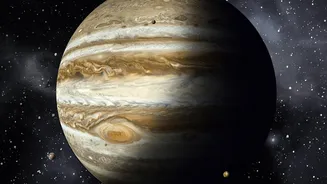
a few degrees of each other, making for a great photo opportunity. Just a day later, on the morning of September 8, the Moon continues its journey to meet up with Jupiter. You can spot this pair in the east before sunrise. For those in North America with a telescope, the Moon will actually pass in front of Jupiter during the daytime, an event known as an occultation. While challenging to see in daylight, it's a unique astronomical event.
Best Stargazing Nights and a Faint Meteor Shower
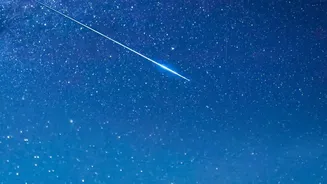
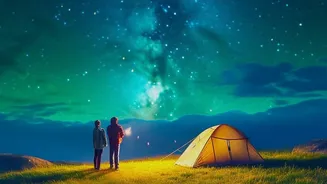
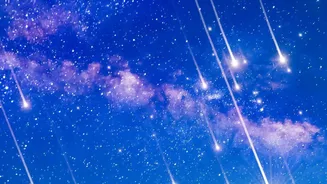
For those who love a truly dark sky, the period around the new Moon on September 11 and 12 is your prime time for stargazing. With no moonlight to wash out fainter objects, these nights are perfect for viewing the Milky Way's core before it disappears from Northern Hemisphere skies until next spring. You might also catch a few shooting stars from the September Epsilon-Perseid meteor shower, which peaks on September 9. While not a major shower, the dark skies around its peak mean you have a better chance of spotting its meteors.
Venus Reaches Its Peak Brilliance
The planet Venus, often called the "Evening Star," will be impossible to miss this month. On the evening of September 18, it reaches its peak luminosity for the year, shining at a dazzling magnitude of -4.8. Look for this brilliant beacon low in the western sky just after sunset. Even in light-polluted cities, Venus will be easily visible. While it will be bright for several nights before and after this date, the 18th marks its official peak. Through a telescope, Venus will appear as a slim, bright crescent.
The Autumnal Equinox Arrives
September marks a change of seasons for both hemispheres. The autumnal equinox occurs on September 22 or 23, depending on your time zone. This is the precise moment the Sun crosses the celestial equator, signaling the official start of autumn in the Northern Hemisphere and spring in the Southern Hemisphere. On the equinox, day and night are of nearly equal length across the globe. This event is also associated with an increased chance of seeing auroras, or northern lights, due to the way the solar wind interacts with Earth's magnetic field around the equinoxes.
Neptune at Opposition and Mars Meets Gemini
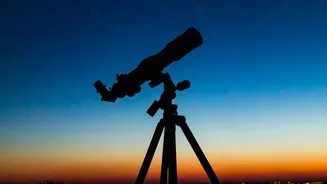
For those with a telescope, September 25 offers a special challenge: spotting Neptune. The distant ice giant reaches opposition, meaning Earth is directly between it and the Sun. This makes it the best time of year to view Neptune, though you will need a telescope or powerful binoculars to spot the faint blue dot. The full Moon on the following night might make viewing tricky, so try looking in the days leading up to opposition. Also on the morning of September 25, look for Mars as it forms a neat alignment with Castor and Pollux, the two bright stars of the Gemini constellation. The reddish hue of Mars will make it stand out in this celestial trio in the eastern sky.
The Famous Full Harvest Moon
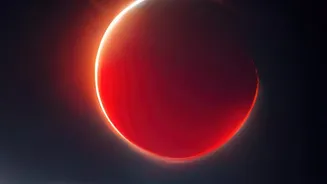
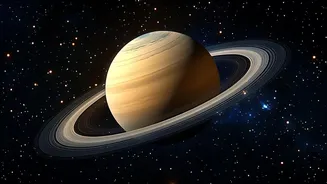
September concludes with one of the most well-known lunar events of the year: the Harvest Moon. The full Moon on September 26 gets this name because it's the full Moon that falls closest to the autumnal equinox. Historically, the bright moonlight for several successive evenings allowed farmers extra time to bring in their crops. The special characteristic of the Harvest Moon is that it rises only about 25-30 minutes later each night for several nights, as opposed to the usual 50 minutes. Look for the full Moon to rise around sunset, when it may appear larger and more orange due to an optical effect known as the Moon illusion. Saturn will also be visible, following the Moon across the sky throughout the night.