



A Planet Forging Itself
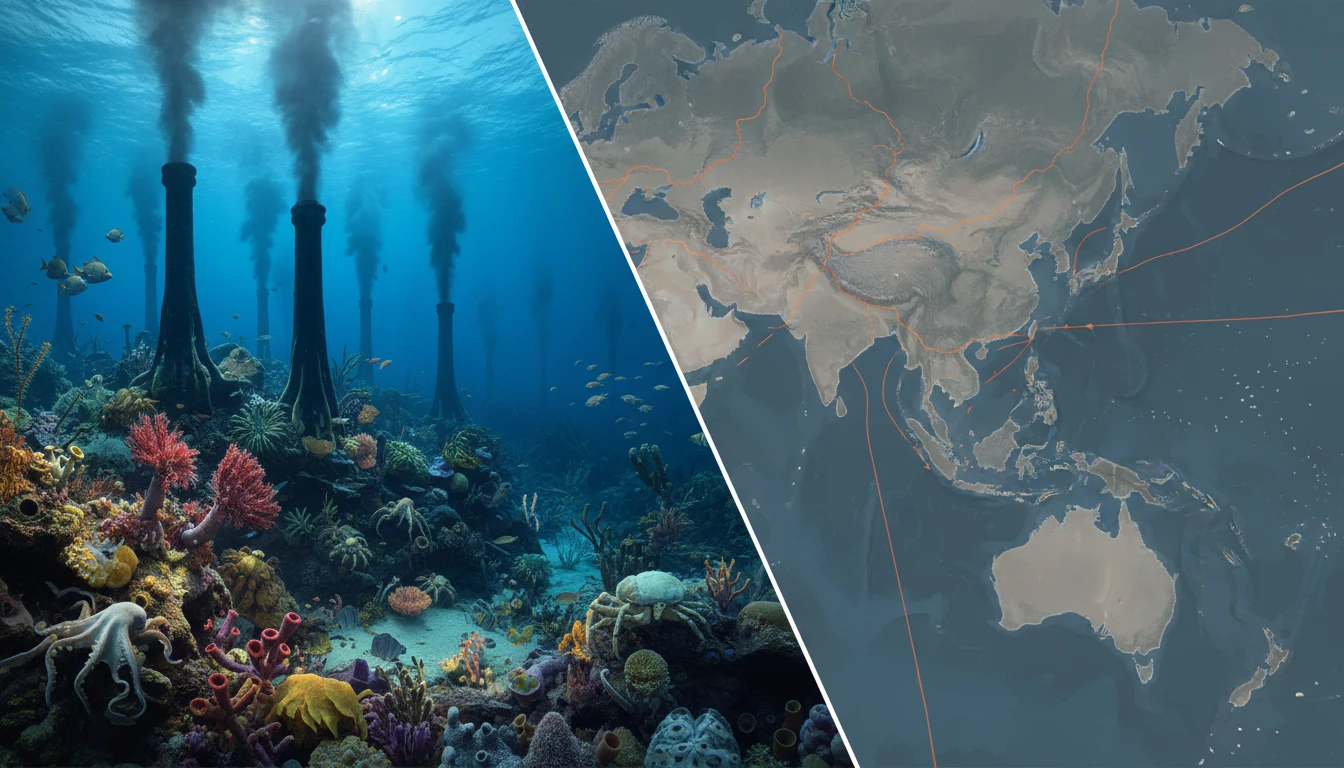
Seafloor spreading is one of the planet's most fundamental processes. It happens at mid-ocean ridges, vast underwater mountain ranges that act like seams on the Earth's crust. Here, tectonic plates pull apart, allowing molten rock, or magma, to rise from
the mantle, fill the gap, and cool to form a brand-new ocean floor. This constant creation pushes older crust away, driving the slow dance of the continents. For decades, geologists understood this process by studying ancient rocks and magnetic patterns on the seabed. Actually witnessing it was considered a geological holy grail—until a recent, remarkable event.
Caught in the Act: A Geologic First
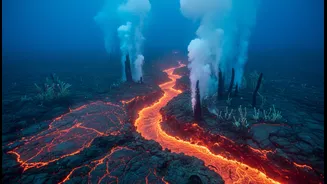
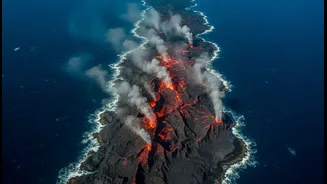
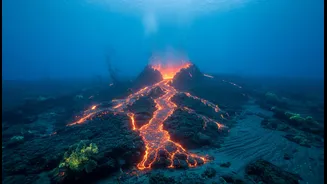
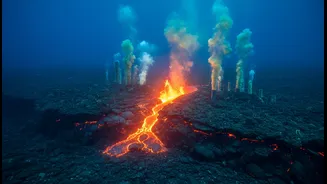
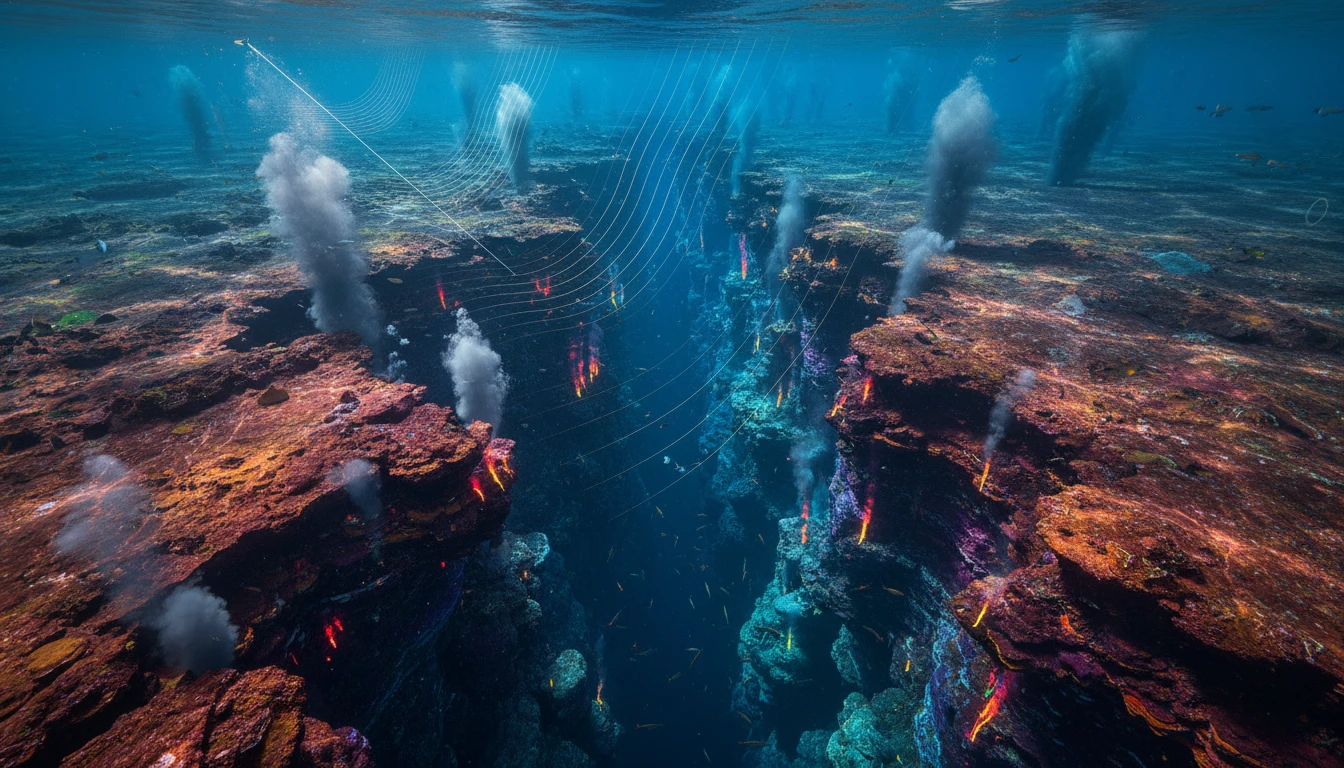
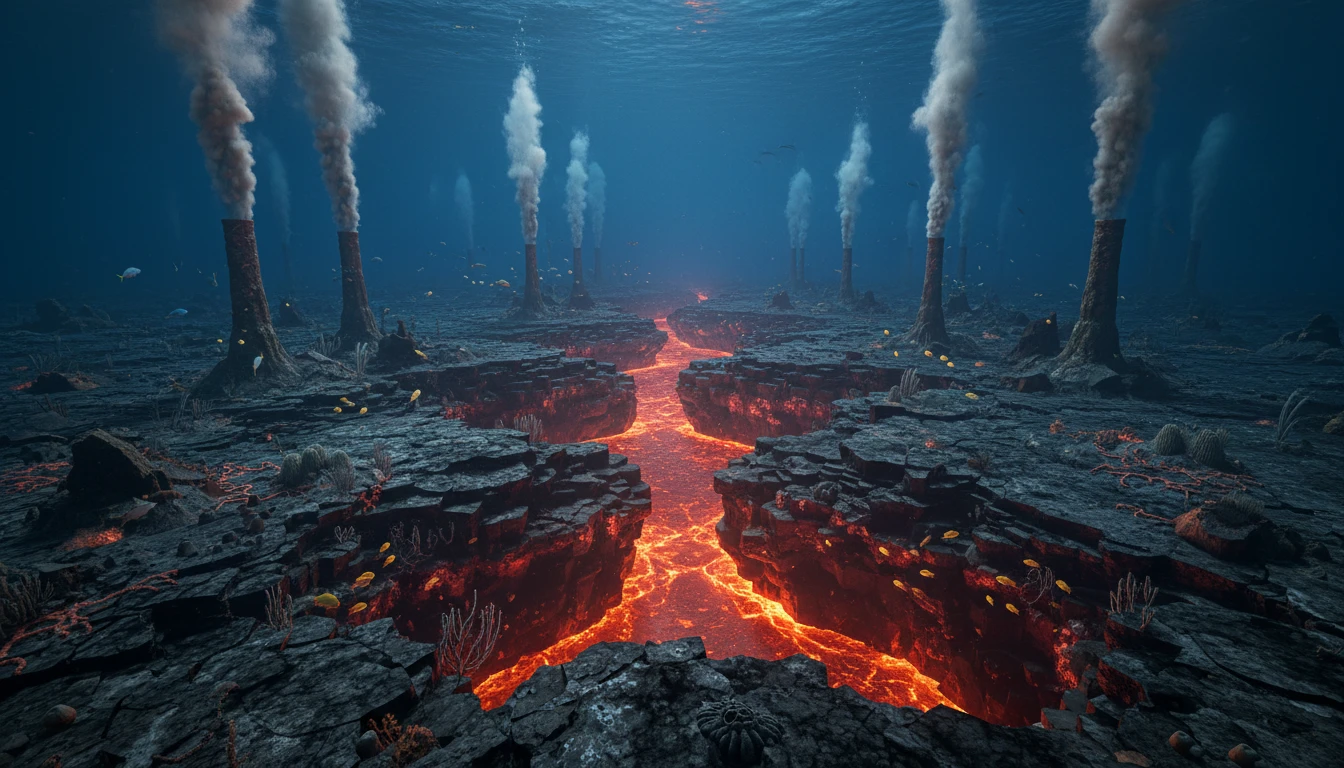
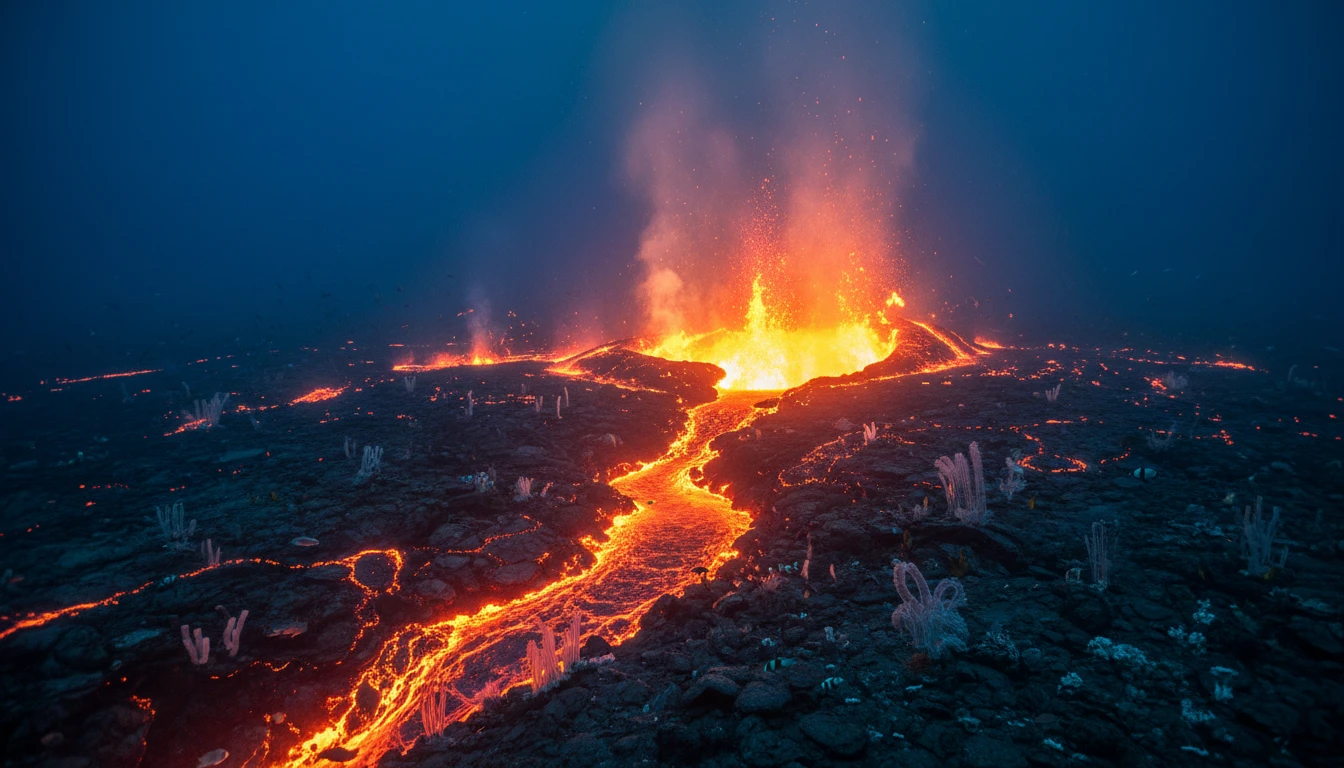
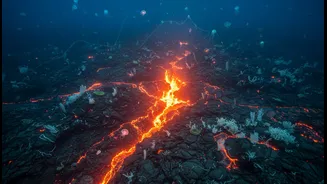
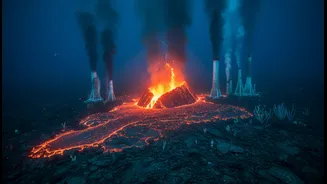
In April 2024, an array of instruments deployed just two months earlier on the Southeast Indian Ridge captured a full-blown seafloor spreading event from start to finish. A French-led research team had placed seismometers, acoustic beacons, and pressure sensors in this remote region, which separates the Australian and Antarctic plates. Suddenly, their equipment lit up. A swarm of earthquakes began tearing along the ridge, and within days, the valley floor sank by over four metres. This sinking was accompanied by the eruption of a colossal amount of lava—an estimated 160 million cubic metres—which poured onto the ocean floor, creating new crust in layers up to 90 metres thick. In just a couple of weeks, the seafloor stretched by an amount that would normally take 30 to 60 years of slow, steady movement.
The Fiery Link Between Magma and Quakes
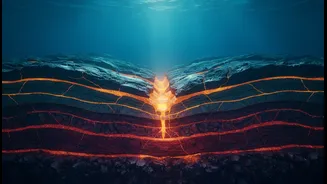
This unprecedented observation provided a clear picture of the violent relationship between magma, earthquakes, and the creation of the seafloor. The process began with magma forcing its way into vertical cracks, called dykes, within the Earth's crust. This intrusion triggered the initial swarm of earthquakes. As the magma chamber below emptied, the ground above it collapsed, causing the dramatic sinking of the ridge's valley floor. The study also solved a long-standing mystery. Scientists knew that the number of recorded underwater earthquakes didn't fully account for the known speed of plate separation. The 2024 event showed that a significant portion—roughly three-quarters—of the fault movement happens without any detectable shaking at all, a phenomenon known as silent or aseismic slip. It seems the Earth's crust grows not just with a crawl, but in sudden, massive lurches.
India's Stake in the Indian Ocean's Floor
While this specific event occurred in the southern Indian Ocean, the study of these processes is critically important for India. The Indian Plate itself is geologically active, having broken away from Gondwana millions of years ago and famously colliding with the Eurasian Plate to form the Himalayas. India's National Centre for Polar and Ocean Research (NCPOR), based in Goa, is a key player in studying the region's complex geology. NCPOR leads geoscientific surveys and participates in international efforts like the International Ocean Discovery Program (IODP), which drills into the seafloor to retrieve rock samples. This research helps scientists understand everything from the formation of the Deccan Traps to the seismic risks facing the subcontinent. Understanding how the seabed shifts, triggers earthquakes, and potentially generates tsunamis is vital for hazard assessment and protecting coastal populations.
A Restless and Complex Seafloor
The Indian Ocean is home to some of the most interesting tectonic features on Earth, including ultra-slow spreading ridges like the Southwest Indian Ridge. At these ridges, the engine of plate tectonics seems to stutter, with spreading rates of less than 20 millimetres per year. Here, volcanic activity can be intermittent, and in some sections, the seafloor is formed not by magma but by mantle rock being pulled directly to the surface. These zones challenge classic models and show there isn't a one-size-fits-all rule for how planets build themselves. Research in these areas, sometimes finding crusts thicker than expected, continues to reveal the complex interplay of forces that shape our world.