


The Final Countdown: What's Happening Now?
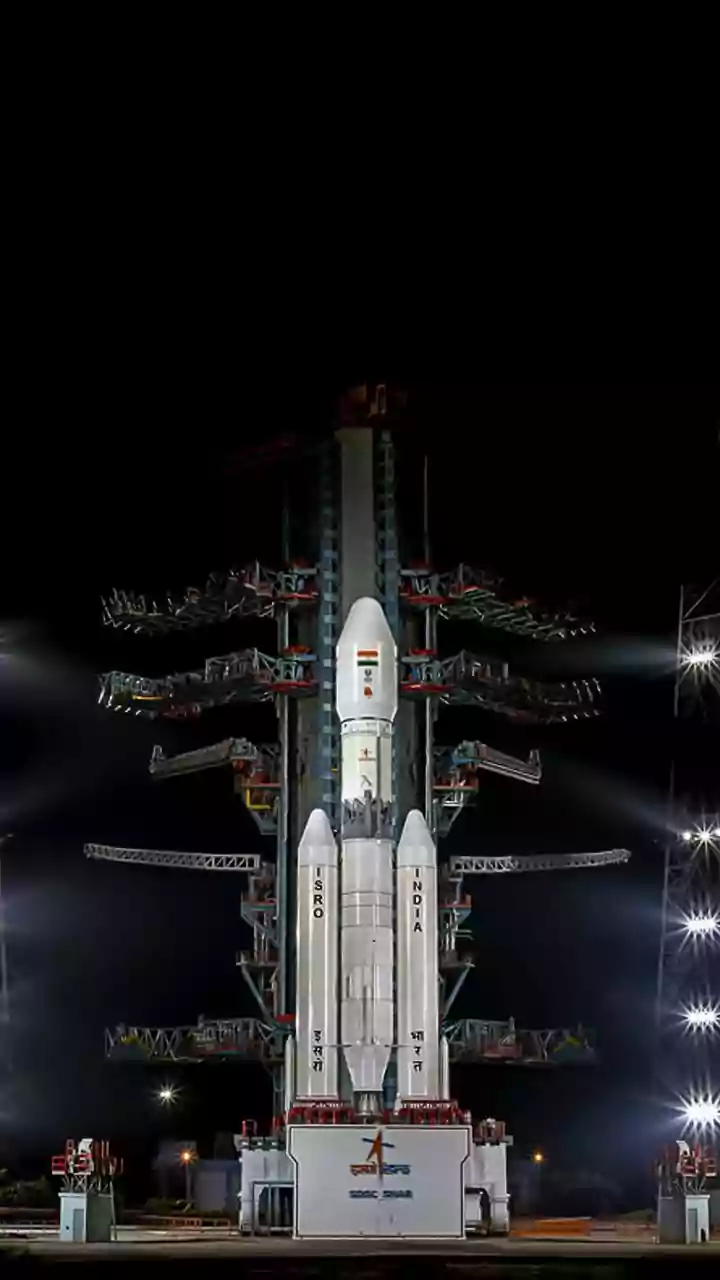
The Indian Space Research Organisation (ISRO) is deep into the final preparatory phase for Gaganyaan, the country's first human spaceflight mission. The immediate focus is on a series of uncrewed test flights designed to validate every system before astronauts
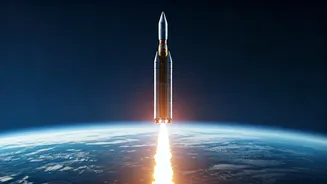
climb aboard. The first of these, the G1 mission, is slated for the latter half of 2026. This uncrewed flight will carry 'Vyommitra', a humanoid robot, into a 400 km orbit to test the life-support systems, re-entry performance, and recovery operations. A series of successful ground tests, numbering over 8,000, have already been completed, including crucial trials for the propulsion systems and the Crew Escape System, designed to eject astronauts to safety in an emergency. ISRO has confirmed that the human-rated LVM3 launch vehicle (HLVM3) has been qualified and is ready, marking a massive step forward.
Meet the Vyomanauts
The nation has already met the four chosen individuals for this monumental task. The astronaut-designates are all distinguished pilots from the Indian Air Force: Group Captain Prasanth Balakrishnan Nair, Group Captain Ajit Krishnan, Group Captain Angad Pratap, and Wing Commander Shubhanshu Shukla. They have undergone extensive training, including a stint in Russia and rigorous preparation at ISRO's own facilities in Bengaluru. To gain crucial real-world experience, Group Captain Shubhanshu Shukla also participated in the Axiom-4 mission, travelling to the International Space Station in 2025. This mission provided invaluable insights into microgravity research, astronaut training, and the operational procedures of human spaceflight, significantly boosting India's readiness for its own independent mission.
The Technology Behind the Leap
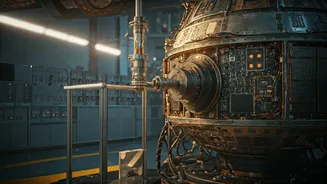
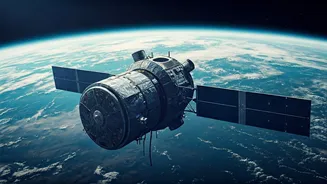
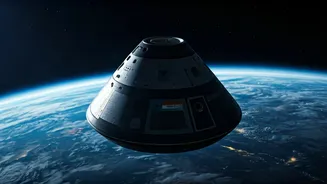
Gaganyaan is not just a single launch; it's the culmination of years of developing cutting-edge indigenous technology. The orbital module consists of two main parts: the Crew Module, where the astronauts will be, and the Service Module, which houses propulsion and power systems. One of the most complex pieces of the puzzle has been the Environmental Control and Life Support System (ECLSS), which is responsible for maintaining cabin pressure, air quality, temperature, and humidity—essentially creating a habitable bubble in the vacuum of space. Beyond the spacecraft itself, ISRO has been building a vast network of infrastructure, including a new launch pad at Sriharikota, a Gaganyaan Control Centre, and robust recovery plans involving the Indian Navy to ensure a safe splashdown and return.
Timeline to the Stars
While initial timelines have shifted to ensure absolute safety and technical perfection, the path forward is becoming clearer. Following the uncrewed G1 mission in late 2026, at least one more uncrewed flight (G2) is planned. These precursors are non-negotiable steps to iron out any issues and build complete confidence in the system. The first crewed flight, designated H1, is now anticipated in 2027. If successful, this flight will carry a crew of up to three astronauts into a low Earth orbit for about three days before they return to Earth. This meticulous, step-by-step approach underscores ISRO's commitment to crew safety above all else, with the agency chairman noting the extreme caution required for such a complex endeavour.
More Than a Mission: India's Space Future
The Gaganyaan programme is a gateway to even grander ambitions. Successfully sending humans to space will make India only the fourth country in the world to achieve this feat independently, after the Soviet Union, the United States, and China. This capability is a stepping stone towards India's long-term vision, which includes establishing its own space station, the Bharatiya Antariksh Station (BAS), by 2035, with the first module planned for launch by 2028. The mission has also spurred significant growth in India's private space sector, with hundreds of startups now contributing to the ecosystem. Ultimately, Gaganyaan represents a powerful statement of India's scientific prowess, technological self-reliance, and its rising status as a major global space power.