



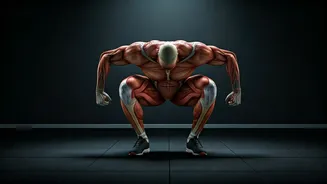


The Power of Staying Still
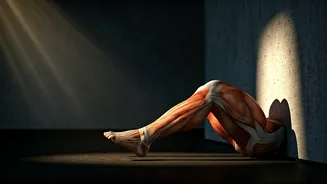
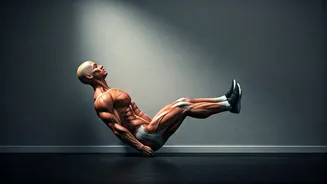
The wall squat, or wall sit, is an isometric exercise. This means you’re contracting your muscles without actually moving your joints. Think of it as a pause button for a squat. While dynamic movements like jumping build explosive power directly, isometric holds
are phenomenal for building raw strength, muscular endurance, and stability. By holding the squat position, you force your quadriceps, glutes, and hamstrings to work continuously, increasing their time under tension. This is the bedrock of strength. A stronger muscle has a higher potential for power. You can’t fire a cannon from a canoe; you need a stable, strong base to generate explosive force, and that’s precisely what the wall squat helps you build.
Why 'Short' Holds Matter for Power
The headline specifies 'short stationary' squats, and this detail is crucial. While holding a wall squat for minutes on end is a great test of mental grit and muscular endurance, shorter, more intense holds are better aligned with power development. Holding the position for 20-30 seconds with maximum muscle engagement helps recruit fast-twitch muscle fibres—the very fibres responsible for quick, powerful movements like sprinting and jumping. The goal isn’t to survive the hold; it’s to actively engage every muscle in your lower body. Squeeze your glutes, brace your core, and push your heels into the floor. This intentional, high-tension contraction in a short timeframe helps prepare your neuromuscular system to fire more effectively during explosive activities.
How to Perform the Perfect Wall Squat
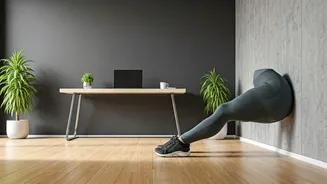
Form is everything. Doing it wrong can strain your knees or back, while doing it right ensures all the work goes to your muscles. Follow these steps: 1. **Find a Wall:** Stand with your back against a smooth, sturdy wall. 2. **Position Your Feet:** Walk your feet forward about two feet from the wall. Your feet should be shoulder-width apart and pointing straight ahead. 3. **Slide Down:** Slowly slide your back down the wall until your thighs are parallel to the floor, as if you’re sitting in an invisible chair. Your knees should be directly above your ankles, forming a 90-degree angle. 4. **Check Your Form:** Ensure your back is flat against the wall (no arching) and your weight is evenly distributed through your heels. 5. **Engage and Hold:** Brace your core, squeeze your glutes, and hold the position for your target time (e.g., 30 seconds). Keep your breathing steady. 6. **Slide Up:** To finish, press through your heels and slide back up the wall to the starting position.
Common Mistakes to Avoid
A few small errors can undermine the exercise and increase your risk of injury. Watch out for these common pitfalls: * **Knees Caving Inward:** This puts stress on your knee ligaments. Actively think about keeping your knees aligned with your feet. * **Not Going Low Enough:** If your thighs aren't parallel to the floor, you're not fully engaging your quads and glutes. If a 90-degree angle is too difficult, go as low as you can with good form and build up from there. * **Letting Your Knees Go Past Your Toes:** This places excessive pressure on the knee joint. If this is happening, your feet are too close to the wall. Walk them forward a bit more. * **Leaning Forward or Arching Your Back:** Keep your entire back, from your shoulders to your lower back, pressed firmly against the wall to maintain stability and protect your spine.
Putting It All Together In Your Routine
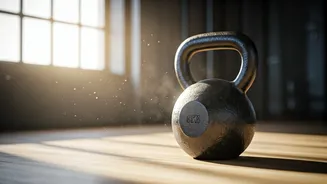
While wall squats build foundational strength, they are one piece of the power puzzle. For a truly explosive lower body, you need to combine them with dynamic exercises. A good approach is to use wall squats as a pre-activation exercise to 'wake up' your glutes and quads before a workout, or as a 'finisher' to build endurance at the end. For power development, try this: perform a 30-second wall squat, rest for 30 seconds, and then immediately perform a set of explosive movements like 5-8 box jumps or 10-12 kettlebell swings. This combination teaches your body to use the strength you’ve built in a powerful, dynamic way. Aim for 3-4 sets of wall squats in your lower body workouts, 2-3 times a week.