
The Sun’s Unseen Threat
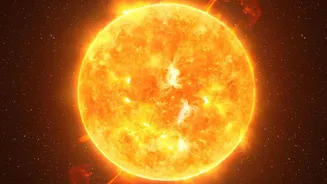
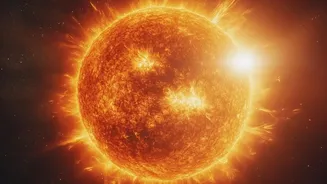
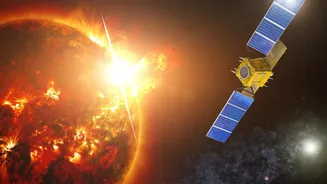
The sun, our source of light and life, has a violent side. It periodically unleashes massive explosions of plasma and magnetic fields known as Coronal Mass Ejections (CMEs). When these solar storms are aimed at Earth, they can wreak havoc. A severe CME can interact
with our planet's magnetic field, inducing powerful, low-frequency electrical currents in the ground. These geomagnetically induced currents (GICs) can flow into our electrical transmission systems, overwhelming and potentially destroying the large transformers that are the backbone of the power grid. The result could be widespread, long-lasting blackouts, disrupting everything from finance and communications to healthcare and public safety. Recent research even suggests there may be no upper limit to the intensity of these storms, meaning they could be far more dangerous than previously thought.
A Blurry Window to Solar Storms
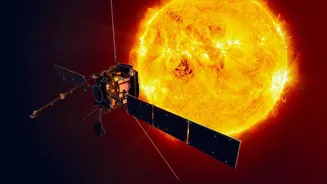
For decades, our primary tool for spotting these threats has been the coronagraph, a special telescope that uses a disk to block the sun's blinding glare, revealing the much fainter outer atmosphere, or corona. This is where CMEs are born. However, older instruments, like those on the venerable SOHO spacecraft, had limitations. They could only see a CME begin its journey, losing track of it for most of the vast distance to Earth. This left forecasters to essentially guess its speed and trajectory, resulting in arrival time predictions with an error window as wide as 12 hours or more. That’s simply not enough notice for power grid operators to take effective protective measures.
A Breakthrough in Cosmic Forecasting
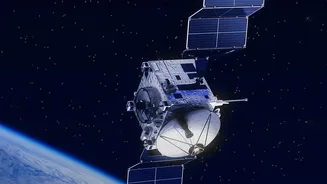
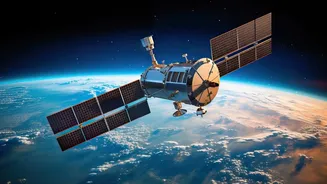
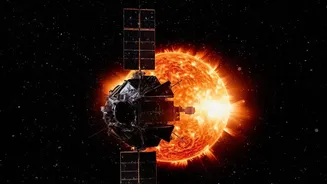
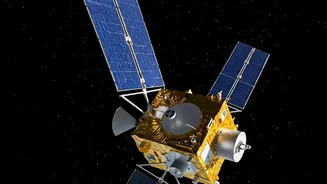
This is where the breakthroughs come in. A new wave of advanced satellite coronagraphs is revolutionizing space weather forecasting. NASA’s PUNCH (Polarimeter to Unify the Corona and Heliosphere) mission, which launched in 2025, uses a constellation of four satellites to create a single, unified wide-field view, tracking CMEs nearly the entire way to Earth. In a recent test using data from a 2025 storm, PUNCH's continuous imagery allowed scientists to predict the CME’s arrival to within 30 minutes—an incredible tenfold improvement in accuracy over previous methods. Separately, new instruments like the Compact Coronagraph (CCOR-1) aboard NOAA's GOES-U satellite are designed as dedicated, operational forecasters. CCOR-1 can deliver imagery to forecasters within 30 minutes, a massive improvement on the up to eight-hour delay from older research instruments.
How Early Warnings Become Our Shield
The headline's promise of a 'shield' isn't a physical barrier, but something just as powerful: time. Accurate, reliable, and timely warnings are the key to protecting our infrastructure. With a precise forecast from missions like PUNCH and GOES-U, space weather prediction centers can issue detailed alerts to utility companies. This gives grid operators the crucial hours they need to act. They can re-route power, take sensitive transformers offline, or activate new mitigation hardware like neutral blocking devices, which are designed to stop the flow of damaging GICs. This proactive approach prevents transformers from saturating and overheating, averting physical damage and keeping the grid stable. It turns a potential catastrophe into a manageable event.
The Reality of a 'Full' Defense
So, does this mean our electrical infrastructure is now 'fully' shielded? Not quite. While these new coronagraphs represent a quantum leap in our defensive capabilities, they are part of a larger, ongoing effort. The accuracy of PUNCH's 30-minute forecast, for example, was demonstrated in a post-analysis and still needs validation in real-time forecasting scenarios. Furthermore, ESA's Proba-3 mission is pioneering new techniques with two satellites flying in perfect formation to create a more perfect artificial eclipse, hoping to better understand the very origin of CMEs. These technologies provide an unprecedented level of protection, but the sun is a complex and powerful star. Vigilance and continued innovation remain our most important tools in this cosmic struggle.