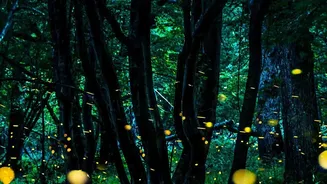




The magical glow of a firefly on a warm evening is a cherished sight. This isn't magic, but a remarkable chemical process called bioluminescence, a silent, beautiful language of light that serves a vital purpose in the insect's world.
What Is Bioluminescence?
Bioluminescence is
simply light produced by a living organism. While it might seem like a rare superpower, it's found across the natural world, from jellyfish and fungi to deep-sea fish. For fireflies, which are not flies but actually a type of beetle, this ability is central to their existence. Their glow is generated in special organs in their abdomen, and it's what scientists call a 'cold light'—meaning it produces almost no heat, making it incredibly efficient.
A Chemical Cocktail for Light
The secret to a firefly's glow is a precise chemical recipe. The main ingredient is a molecule called luciferin. When a firefly decides to light up, it takes in oxygen. Inside its light organ, an enzyme called luciferase acts as a catalyst, speeding up a reaction between the luciferin, oxygen, and a cellular fuel source called adenosine triphosphate (ATP). This reaction releases energy in the form of a photon—a particle of light—creating the glow we see. The firefly can control this process by regulating the flow of oxygen, allowing it to turn its light on and off in an instant.
A Language of Flashes
A firefly's glow isn't just for show; it's a sophisticated form of communication, primarily used for finding a mate. Males typically fly around, flashing a specific pattern that is unique to their species—it's their glowing pick-up line. Females, usually waiting in the grass or on low vegetation, watch this light show. If a female sees a male of her species with an impressive flash, she will respond with a flash of her own, beginning a luminous conversation that leads the male to her. This carefully timed dialogue of light ensures they find the right partner in the dark.
A Glowing Warning Sign
Beyond romance, bioluminescence also serves as a potent defense mechanism. Firefly larvae, often called 'glow worms', also produce light. Since they are not yet mature enough to mate, scientists believe their glow acts as a warning to predators that they are unpalatable. Fireflies contain chemicals that make them taste bad, and predators quickly learn to associate the glowing light with a disgusting meal and avoid them in the future. Some devious female fireflies of the 'Photuris' genus even mimic the flash patterns of other species to lure in unsuspecting males, not for romance, but for a meal.
Nature's Most Efficient Lightbulb
The chemical reaction that produces a firefly's light is a marvel of efficiency. It converts nearly 100% of its energy into light, with almost none wasted as heat. This makes it far superior to our own lighting technologies. A traditional incandescent bulb, for instance, loses about 90% of its energy as heat and is only 10% efficient at producing light. Even modern LEDs, with efficiencies around 40-50%, don't come close to the firefly's perfect glow. Scientists are now studying the unique physical structures on firefly lanterns to inspire designs for more efficient LEDs, learning from nature's perfect lightbulb.