
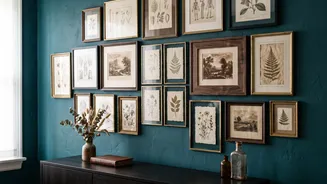
Discovering Your Colour Story
Every great gallery wall begins with a colour story. This palette is the visual thread that ties disparate pieces together, ensuring the final arrangement feels intentional rather than chaotic. Start by looking at the room itself. Pull two or three key
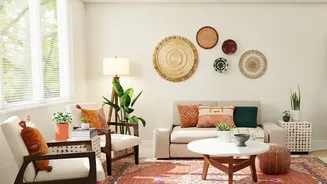
colours from existing decor, such as a rug, sofa, or curtains. Alternatively, find a 'hero' piece of art—one that you absolutely love—and build your palette from the tones within it. A vintage-inspired palette might lean on warm neutrals like cream and beige, or incorporate muted tones like sage green, dusty rose, burnt orange, or ochre. The goal is not to match every piece perfectly, but to create a harmonious conversation between the colours.
The Hunt for Vintage Treasures
Sourcing art for a vintage gallery wall is a creative journey in itself. Thrift stores, flea markets, and estate sales are goldmines for affordable and unique finds. Look for pieces that speak to you, whether it's an oil painting, a botanical print, a quirky portrait, or an antique map. Don't be afraid to mix mediums; combine paintings with sketches, photographs, and even three-dimensional objects like small mirrors or decorative plates. You can also include personal items like old family photos, handwritten letters, or postcards to add a layer of storytelling. The charm of a vintage wall lies in its eclecticism, so embrace pieces with a little wear and history.
The Art of Framing
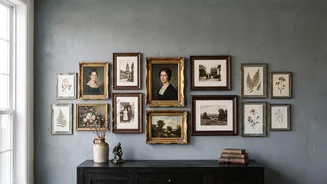
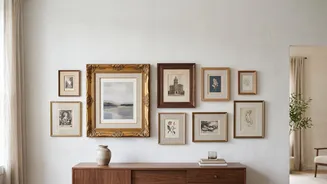
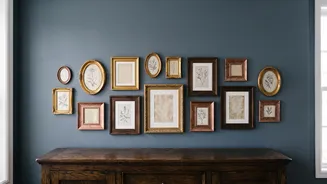
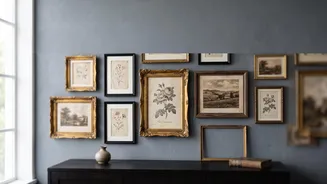
Frames are just as important as the art they hold. For a vintage look, an eclectic mix of frames often works best, adding authenticity and depth. Combine ornate gilded frames with simple wood and sleek metal ones. While the styles can vary, maintaining a common thread can create cohesion. For instance, you could stick to a palette of warm metals like gold and bronze, mixed with natural wood tones. If you find the perfect art in a less-than-perfect frame, don't hesitate to paint it. A can of spray paint in matte black or gold can unify a mismatched collection. Using mats can also elevate your pieces, giving smaller works more presence and providing visual breathing room.
Mastering the Layout
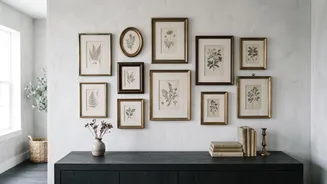
Before a single nail goes into the wall, plan your arrangement. The best method is to lay all your framed pieces on the floor and experiment with different layouts. Start by placing your largest piece first, typically off-centre, to anchor the collection and encourage the eye to travel around the entire display. Build outward from there, mixing horizontal and vertical orientations to create a dynamic composition. Aim for a consistent spacing of about two to three inches between each frame to ensure the wall looks curated, not cluttered. Once you're happy with the arrangement, take a photo for reference or create paper templates of each frame to tape to the wall, allowing you to perfect the placement before hanging.