






How can India power its future without compromising its ability to feed its people? A visionary solution is gaining ground: integrating solar energy production directly with agriculture, a concept that promises to tackle both challenges at once.
A Double Dilemma, A Single Solution
India
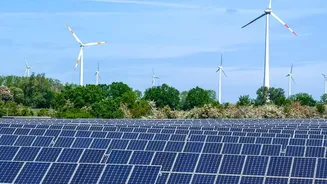
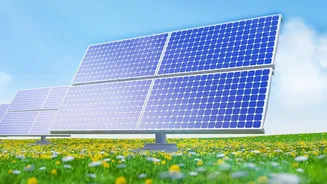
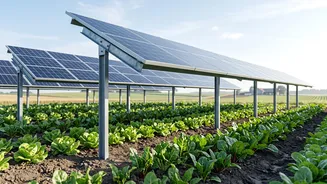
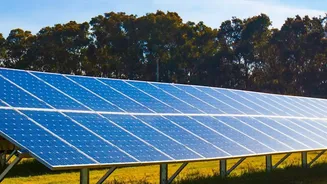
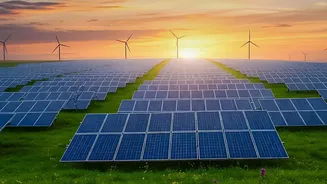
faces the immense twin challenges of ensuring food security for its vast population and meeting its escalating energy needs. Traditionally, these two goals have competed for the same critical resource: land. Large-scale solar farms require significant acreage, often taking agricultural land out of production. This creates a difficult choice between growing food and generating clean energy. However, a new approach called agrivoltaics offers a way to do both simultaneously. This model involves installing solar panels on elevated structures high above the ground, allowing crops to be cultivated underneath. By merging farming with power generation on the same piece of land, agrivoltaics presents a powerful solution to this land-use conflict, turning a dilemma into a dual opportunity.
Harvesting Sunshine and Crops Together
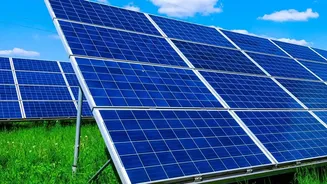
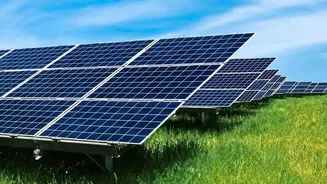
The practical application of agrivoltaics is both simple and ingenious. Solar panels are mounted on structures typically two to three metres high, providing enough clearance for farming activities, including the movement of machinery, to continue below. This co-location of activities does more than just save space. The partial shade provided by the panels can be beneficial for certain crops, protecting them from extreme heat and reducing water evaporation from the soil. Research from institutions like the Central Arid Zone Research Institute (CAZRI) in Jodhpur has been crucial in studying these effects and identifying suitable crops. While initial studies suggest the model is well-suited for fruits and leafy vegetables, its applicability for staple crops like rice is still being assessed. The electricity generated can power farm operations like irrigation pumps and the surplus can be sold to the grid, creating a new, stable income stream for farmers.
The Promise of a Greener Future
The benefits of this integrated approach are manifold. For farmers, it offers the potential for a significant and stable income boost. They can earn from their agricultural harvest as well as from selling electricity, a combination sometimes referred to as a 'third crop'. This is especially critical for India's small and marginal farmers, who make up about 85% of the farming community and often struggle with income volatility. On a national level, agrivoltaics supports India's ambitious renewable energy targets, including its goal of achieving 500 GW of non-fossil fuel capacity by 2030, without sacrificing precious agricultural land. The model also promotes decentralized energy generation, reducing transmission losses and strengthening rural energy resilience.
Hurdles on the Path to Integration
Despite its immense potential, the widespread adoption of agrivoltaics faces significant hurdles. The primary challenge is the high upfront cost. Agrivoltaic systems can be 25–30% more expensive than conventional ground–mounted solar projects due to the need for elevated structures and additional infrastructure. For small farmers, accessing the necessary credit and financing for such an investment is a major barrier. Furthermore, there is a need for more extensive research across India's diverse agro–climatic zones to determine which crops are best suited for cultivation under panels and to ensure that yields are not negatively impacted. Developing a robust policy framework that standardizes technical guidelines, ensures fair compensation for farmers, and streamlines coordination between various government departments is essential for scaling up this technology.
From Vision to Village–Level Action
India's government is actively working to turn this vision into reality. The Ministry of New and Renewable Energy is drafting a national policy to promote agrivoltaics, with an initial target of deploying $5$ GW of capacity. The popular PM–KUSUM scheme, designed to solarize agriculture, is also expected to include a dedicated component for agrivoltaics in its next phase. Several states, including Maharashtra, Rajasthan, and Karnataka, are already exploring or implementing their own initiatives. Pilot projects are underway across the country, from research institutes in Jodhpur to private farms in Madhya Pradesh, providing valuable data and demonstrating the real–world viability of the model. These initiatives are crucial steps in moving agrivoltaics from a promising concept to a widespread agricultural practice.