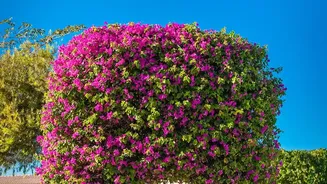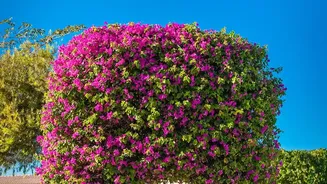





Imagine a boundary wall that isn't just a barrier, but a breathtaking cascade of colour. That’s the magic of bougainvillea. This hardy, sun-loving tropical plant is perfect for creating a living fence that is both beautiful and functional.
Why Bougainvillea Makes the Perfect Hedge
In the Indian
climate, few plants are as rewarding and resilient as bougainvillea, known locally by names like 'Booganbel' or 'Kaagaz ka Phool'. It's an ideal choice for a garden boundary for several reasons. Firstly, it is incredibly drought-tolerant once established, thriving in the full, hot sun that can challenge other plants. Secondly, its dense, thorny branches create a secure and private natural barrier. Finally, the sheer spectacle of its vibrant bracts—the colourful paper-like leaves that we mistake for flowers—offers a year-round display in shades of pink, magenta, orange, white, and purple, turning a simple boundary into a stunning garden feature.
Choosing the Right Variety
Not all bougainvillea are created equal when it comes to hedging. For a dense boundary, look for shrub or bush-type varieties rather than the more vigorous climbers. Varieties like 'Bougainvillea glabra', often called Paperflower, have a naturally bushy habit. Other popular choices in India include the classic purple, pink, and white varieties which grow vigorously and can be trained into a thick screen. Some nurseries offer bicolour plants like 'Mary Palmer' or those with variegated leaves, adding another layer of visual interest to your living fence. Dwarf varieties can also be used for lower borders.
Planting for a Dense Boundary
To create a thick, intertwined hedge, spacing is key. Plant your bougainvillea saplings about 3 to 5 feet apart. This allows them to grow into each other, forming a continuous screen. Bougainvillea thrives in well-draining soil and abhors water-logged conditions, which can lead to root rot. Before planting, dig a hole twice as wide as the root ball and enrich the soil with compost. These plants have delicate, fibrous root systems, so handle them with care and avoid disturbing the roots too much when transferring from the nursery pot. Ensure the location receives at least six hours of direct sunlight daily for the best flowering.
The Art of Pruning for Shape and Flowers
Pruning is the most critical step in shaping your bougainvillea into a hedge. Bougainvillea blooms on new growth, so strategic trimming encourages more branches and, therefore, more flowers. The primary structural pruning should be done in late winter or early spring before the new growth starts. During this time, you can cut the plant back by about one third to encourage a fuller, bushier shape. Throughout the year, after each major flowering cycle, a light trim or 'pinching' of the branch tips will stimulate a fresh round of blooms and help maintain the hedge's form. Regular pruning also improves air circulation, which helps prevent fungal issues. Always wear thick gloves, as the thorns can be sharp.
Watering, Feeding, and General Care
One of the most common mistakes is overwatering. Water deeply but infrequently, allowing the soil to dry out between waterings. Once established, bougainvillea is quite drought tolerant. In fact, slightly stressing the plant by letting the soil dry can trigger more profuse blooming. During the main growing season, you can feed the plant with a balanced fertiliser, or one formulated for blooms, every few weeks to support vigorous growth and flowering. Avoid high nitrogen fertilisers, which promote leafy growth at the expense of flowers. Keep an eye out for common pests like aphids or mealybugs, which can be managed with insecticidal soap if caught early.