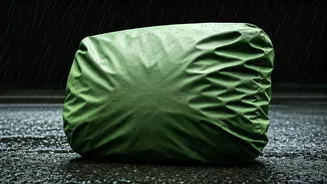








The Inevitable Monsoon Dilemma
Every rider and road-tripper in India knows the feeling. You’ve packed your electronics, a change of clothes, and essential documents into your trusty backpack. You think you’re prepared. Then the skies open up. That ‘water-resistant’ tag on your backpack that
sounded so reassuring in the store proves to be hopelessly optimistic. Within minutes, water starts seeping through the zippers and seams, threatening your laptop, your camera, and your dry pair of socks. This is the moment of truth where many a great trip has been dampened, quite literally. Relying on flimsy plastic bags or a hastily wrapped poncho is a gamble, and a good trip shouldn't be left to chance.
Why Your Standard Backpack Isn't Enough
Most backpacks are designed to be water-resistant, not waterproof. This means they can handle a light drizzle or brief exposure to rain, but they will fail under the sustained, heavy assault of an Indian monsoon. The fabric might repel some water, but the zippers, stitching holes, and seams are major points of weakness. A truly waterproof solution requires a seamless, impenetrable barrier between your bag and the elements. This is where a dedicated, high-quality rain cover becomes not a luxury, but an absolute necessity for anyone serious about travelling during the rainy season.
Decoding 'Military Grade'
The term 'military grade' gets thrown around a lot in marketing, but what does it mean for a backpack cover? In this context, it isn't about the cover being issued to soldiers, but about it being built to a higher standard of durability and performance. Think of it as a shorthand for ruggedness. These covers are typically made from high-denier fabrics like Ripstop Nylon or PVC-coated Polyester, which are highly resistant to tearing and abrasion. A 500D (Denier) fabric is good, but a 1000D Cordura fabric is even better, offering exceptional strength. The seams are often tape-sealed—a process where a waterproof tape is applied over the stitching to prevent any water from getting through the needle holes. This combination of tough material and meticulous construction is what sets a 'military grade' cover apart from the cheap, flimsy alternatives that tear at the first sign of a struggle.
Your Essential Buying Checklist
When you're ready to invest, don't just grab the first cover you see. Look for these key features: 1. **Fully Taped Seams:** Turn the cover inside out. You should see waterproof tape covering all the stitching lines. If you don't, it's not truly waterproof. 2. **Secure Fastening System:** A simple elastic edge isn't enough to withstand highway speeds on a motorcycle. Look for covers with additional adjustable straps—vertical and horizontal—that wrap around your backpack to keep the cover securely in place, even in high winds. 3. **Correct Sizing:** A cover that is too small won't offer full protection, and one that's too large will flap around and potentially fly off. Check the volume (in litres) that the cover is designed for and match it to your backpack. 4. **Drainage Grommet:** This is a small but brilliant feature. A small hole, usually reinforced with metal, at the bottom of the cover allows any water that pools inside to drain out, preventing your bag from sitting in a puddle. 5. **High-Visibility and Reflective Elements:** For road safety, especially on overcast days or during night rides, a cover in a bright colour (like fluorescent green or orange) with reflective strips is a massive bonus.
More Than Just Waterproofing
A robust backpack cover offers benefits beyond just keeping the rain out. It protects your bag from the mud and grime kicked up from the road, keeping it clean. It acts as an extra layer of security in crowded places, making it harder for someone to quickly access your zippers. And by keeping your primary bag clean and dry, it extends its lifespan. Investing in a good cover is investing in the longevity of all your travel gear.