



Artemis: Humanity's Return to the Moon
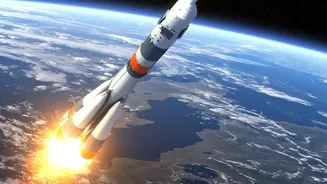
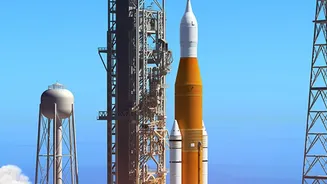
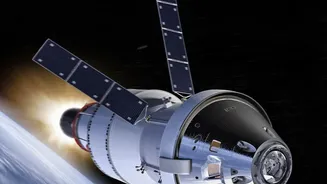
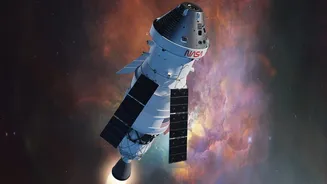
The biggest story in spaceflight is NASA's monumental effort to return astronauts to the lunar surface. The Artemis program isn't just about planting a flag; it's about building a sustainable human presence on the Moon. After the successful uncrewed Artemis I
flight in 2022 and the crewed Artemis II lunar flyby in April 2026, all eyes are on the next steps. Artemis III is planned as a demonstration mission in 2027 to test the commercial landing systems that will ferry astronauts from the Orion spacecraft to the surface. The actual lunar landing is now targeted for 2028 with Artemis IV. For Indian enthusiasts who have proudly watched ISRO's Chandrayaan missions map the lunar south pole, Artemis represents the next chapter in our collective human story on the Moon, transitioning from robotic explorers to a permanent foothold.
Mars Sample Return: Awaiting a New Plan
For years, the plan was to bring back the precious rock and soil samples collected by the Perseverance rover, which has been diligently exploring Mars since 2021. However, the highly complex Mars Sample Return (MSR) mission, a joint effort with the European Space Agency, faced significant budget and timeline challenges. In early 2026, the original plan was overhauled. NASA is now evaluating new, more efficient approaches to retrieve these scientifically priceless samples, with a final decision on the new mission design expected later in 2026. While the samples wait patiently in their tubes on the Red Planet, the scientific community, including many researchers in India, eagerly awaits a definitive plan to study the first pristine pieces of Mars here on Earth.
Europa Clipper: The Search for a Hidden Ocean
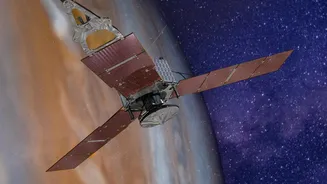
One of the most tantalising questions in our solar system is whether Jupiter's icy moon, Europa, harbours a liquid water ocean beneath its frozen crust. Launched in October 2024, the Europa Clipper spacecraft is currently on a long journey to find out. This December, in 2026, it will perform a crucial gravity-assist flyby of Earth to slingshot it toward Jupiter, where it's expected to arrive in 2030. Europa Clipper isn't a life-detection mission itself. Instead, its primary goal is to determine if conditions suitable for life exist by conducting dozens of close flybys, mapping the moon’s surface, confirming the ocean's existence, and even analysing its chemical composition. With its massive solar arrays making it the largest interplanetary spacecraft NASA has ever built, Clipper represents a huge leap in our search for habitable worlds.
Dragonfly: A Nuclear-Powered Drone on Titan
Perhaps the most futuristic mission on NASA’s slate is Dragonfly. This revolutionary mission will send a car-sized, nuclear-powered drone to Saturn’s largest moon, Titan. Scheduled for launch in 2028, the rotorcraft will arrive at Titan in 2034. Titan is a unique world with a thick, nitrogen-rich atmosphere and a methane cycle that mimics Earth's water cycle. Its surface is rich in the kind of complex organic molecules that may have been the precursors to life on our own planet. Dragonfly will fly between dozens of promising locations, landing to sample and analyse materials. This mission will move far beyond the stationary landers of the past, offering a mobile laboratory to explore a world that could hold clues to how life begins.
Eyes on Earth: Understanding Our Home Planet
While deep space exploration captures the headlines, NASA also runs a fleet of critical missions focused on Earth. These satellites and instruments are vital for understanding climate change, weather patterns, and natural disasters—issues of immense importance to India. For example, missions continue to monitor sea-level rise, atmospheric composition, and the health of our planet’s ice sheets. Upcoming missions will provide even more detailed data on everything from soil moisture to the dynamics of our weather systems. For Indian space enthusiasts, these missions are a powerful reminder that the same technology used to explore distant worlds is also our best tool for protecting our own, providing data that helps predict monsoons, manage water resources, and prepare for a changing climate.