



A New Frontier for Indian Space Exploration
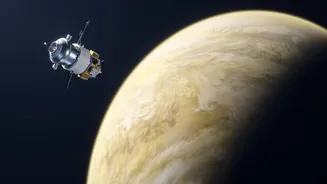
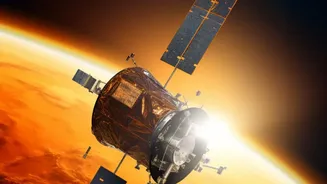
Building on the historic successes of the Chandrayaan missions to the Moon and the Mangalyaan mission to Mars, Shukrayaan represents India's next great leap in interplanetary exploration. Officially named the Venus Orbiter Mission, the project was formally
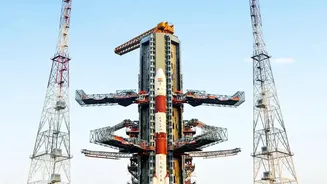
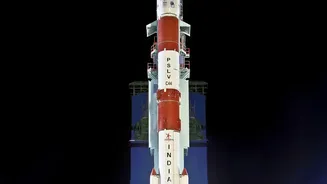
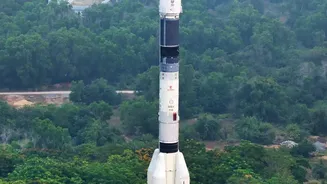
approved by the Union Cabinet in September 2024. Scheduled for a potential launch in March 2028 aboard the powerful LVM-3 rocket, the mission underscores India's growing capabilities and ambitions in deep space. This venture places India in a select group of space-faring nations turning their attention to Venus, a planet that, despite being our closest neighbour, remains shrouded in mystery. The mission is not just a scientific endeavour but also a demonstration of advanced space technology, including the first-time use of aerobraking by ISRO to manoeuvre a spacecraft into its final orbit by using a planet's atmospheric drag.
Unlocking the Secrets of Earth's 'Evil Twin'
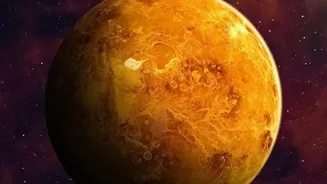
Venus is often called Earth's twin due to its similar size, mass, and density. However, the similarities end there. Venus is the hottest planet in our solar system, with a crushing surface pressure over 90 times that of Earth's and a toxic atmosphere of carbon dioxide and sulfuric acid clouds. Scientists believe Venus may have once been more like Earth, possibly with vast oceans, before a runaway greenhouse effect transformed it into a hellish landscape. Studying Venus provides a natural laboratory for understanding how planetary climates can drastically change. By examining its extreme greenhouse effect, scientists hope to gain invaluable insights into climate change processes, which could help refine climate models here on Earth. Understanding why Earth's twin took such a different evolutionary path is a key question that Shukrayaan aims to help answer.
The Science of Shukrayaan
The mission has a comprehensive set of scientific objectives designed to study Venus as a complete system, from its interior to its outer atmosphere. A primary goal is to map the planet's surface and subsurface. Since Venus is permanently covered by thick clouds, this will be achieved using radar. The orbiter will carry a high-resolution Synthetic Aperture Radar (SAR) to create detailed maps of the surface, looking for evidence of active volcanoes and other geological features with up to four times the resolution of NASA's previous Magellan mission. Crucially, Shukrayaan will also carry a ground-penetrating radar, making it the first mission ever to study the subsurface of Venus, offering a glimpse of the planet's hidden geology. The mission will also conduct a detailed investigation of the Venusian atmosphere, studying its composition, chemistry, and super-rotating dynamics.
A Toolkit for a Hostile World
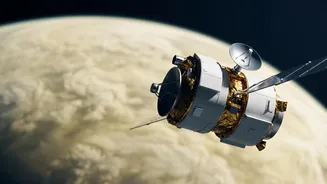
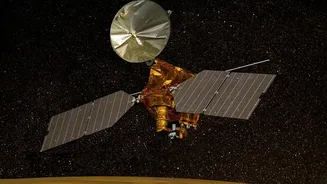
To achieve its ambitious goals, the Shukrayaan orbiter will be equipped with a suite of nearly 20 scientific instruments, weighing around 100 kilograms. These include payloads developed in India as well as through international collaborations with countries like Sweden, Russia, and France. The flagship instrument is the Venus S-Band SAR (VSAR) for high-resolution surface mapping. Another key instrument, developed with Russia and France, is VIRAL (Venus Infrared Atmospheric Gases Linker), which will study atmospheric chemistry. The VISWAS payload, a collaboration with Sweden, will analyse the interaction between the solar wind and the Venusian ionosphere to understand how the planet loses its atmosphere. Together, this payload suite will provide a holistic view of the planet, collecting data on everything from surface topography and volcanic activity to atmospheric composition and cloud structure.
India Joins a Global Return to Venus
ISRO is not alone in its renewed interest in Venus. Several other space agencies are also planning missions, heralding a new era of exploration for the planet. NASA is developing two missions: DAVINCI, an atmospheric probe, and VERITAS, an orbiter designed to map the surface in high detail. The European Space Agency (ESA) is proceeding with its EnVision mission, which will also study the planet's surface, interior, and atmosphere. Even the private sector is getting involved, with Rocket Lab planning a small, targeted probe to search for organic molecules in the Venusian clouds. Shukrayaan's unique capabilities, particularly its ground-penetrating radar, ensure that it will provide complementary and unprecedented data, cementing India's role as a key player in the international effort to understand our planetary neighbour.