



India's Unblinking Solar Sentry
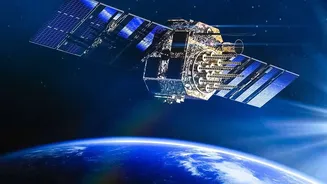
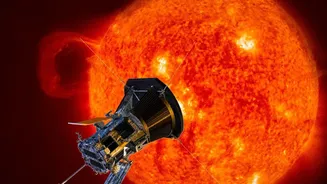
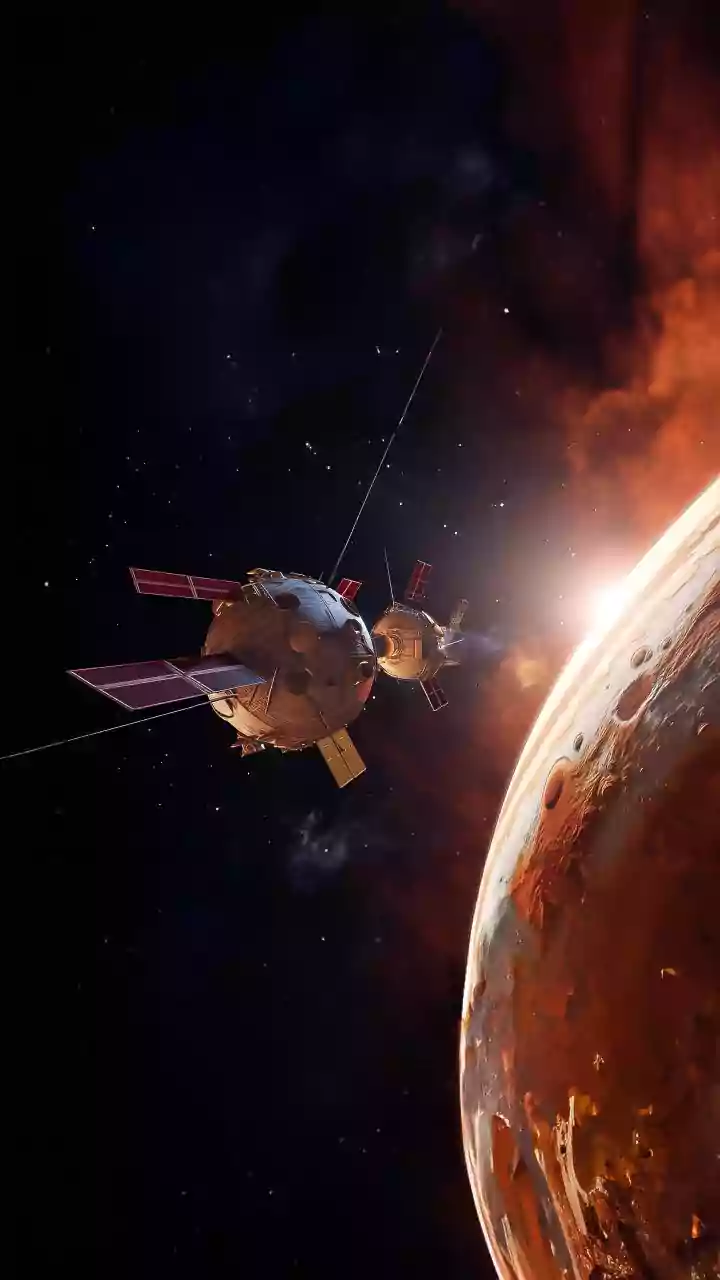
Launched by the Indian Space Research Organisation (ISRO), the Aditya L1 is the nation's first dedicated solar observatory. It holds a unique position in space, circling Lagrange Point 1 (L1), approximately 1.5 million kilometres from Earth. This vantage
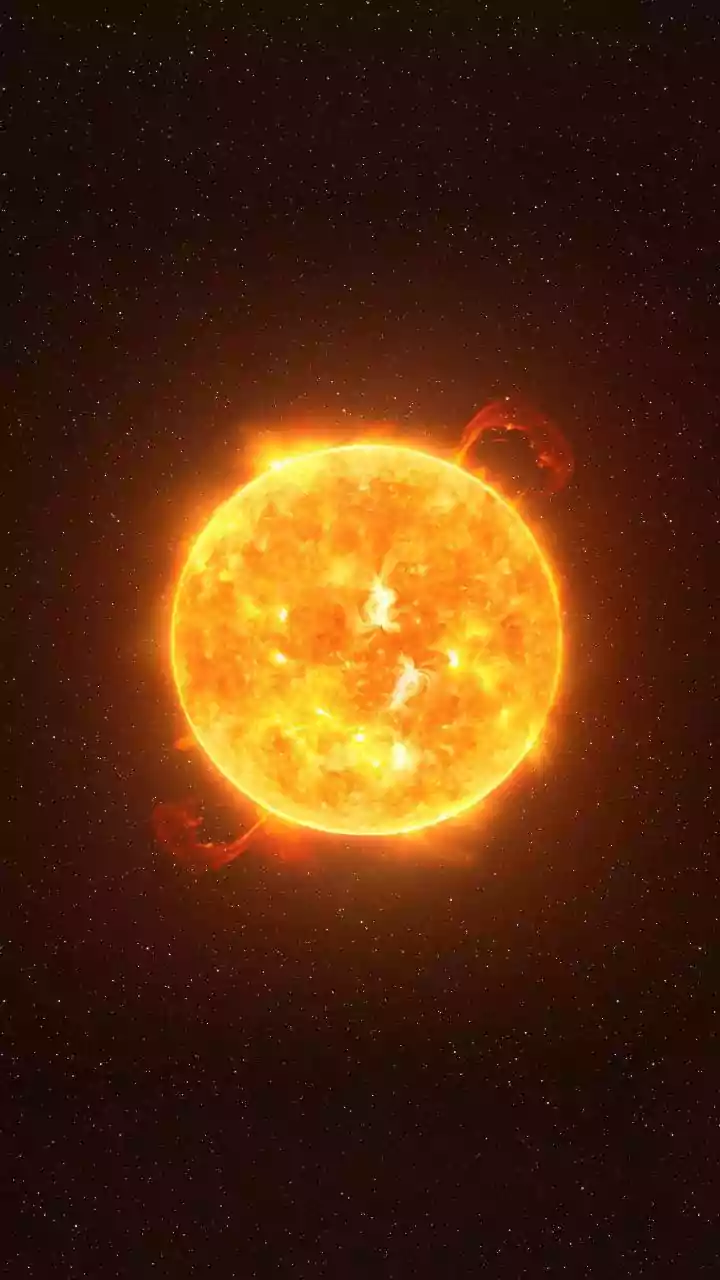
point allows the spacecraft to watch the Sun continuously, without the interruption of eclipses or Earth's shadow, which is critical for monitoring solar phenomena. The mission's primary goal is to understand the dynamics of the Sun's atmosphere, particularly the chromosphere and the enigmatic corona, and to track solar events that drive space weather. Having commenced scientific data collection, the mission has already beamed back terabytes of valuable information, solidifying India's role as a key producer of solar physics data.
Fresh Clues to an Old Solar Mystery
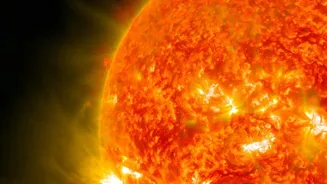
One of the most significant early contributions from Aditya L1 addresses a long-standing puzzle: why the Sun's outer atmosphere, the corona, is millions of degrees hotter than its surface. Recent findings, published in the prestigious Astrophysical Journal Letters, provide compelling evidence. By analysing a powerful Coronal Mass Ejection (CME) that occurred on August 5, 2024, scientists used data from the Visible Emission Line Coronagraph (VELC) instrument to quantify the sources of the corona's energy. The study revealed that a staggering 93% of the energy needed to keep the corona superheated comes from the snapping and reconnecting of tangled magnetic field lines. This process replenishes the massive energy lost during solar eruptions and offers a crucial benchmark for understanding the Sun's atmospheric engine.
From Raw Data to Better Forecasts
The data from Aditya L1's suite of instruments is the raw material for a new generation of space weather models. The mission isn't just about academic discovery; it's about building a practical shield for our technology-dependent world. By observing CMEs and solar flares at their origin with instruments like VELC and the Solar Ultraviolet Imaging Telescope (SUIT), scientists gain crucial information about their intensity, speed, and direction. One study using Aditya L1 data investigated a solar storm's impact on Earth's magnetic shield, revealing how a turbulent region compressed the magnetosphere and exposed some satellites to harsh conditions. This deeper understanding of the Sun-Earth connection is fundamental to improving the accuracy and lead time of space weather predictions, giving us a vital heads-up before a solar storm hits.
Why Predicting Solar Tantrums Matters
Improved solar forecasts have profound real-world implications. Violent solar eruptions can hurl vast amounts of energy and charged particles towards Earth, triggering geomagnetic storms. These storms pose a significant threat to our critical infrastructure. They can fry the electronics of satellites, disrupting everything from GPS navigation and television broadcasts to vital communication networks. On the ground, they can induce powerful currents that overload and knock out power grids. For a nation like India, with over 50 operational satellites and a rapidly growing space economy valued in the billions of dollars, the ability to anticipate these events is a matter of national resilience and economic security.
A Landmark Achievement for India
The Aditya L1 mission represents more than just a scientific triumph; it is a declaration of India's advanced capabilities in space exploration. By successfully designing, launching, and operating a complex observatory at a distant Lagrange point, ISRO has joined an elite group of space agencies. The mission showcases an end-to-end capability, from building sophisticated instruments to gathering and analysing data that contributes to global scientific understanding. As India continues to expand its satellite constellations and reliance on space-based technology, the insights from Aditya L1 are not just valuable but essential for safeguarding the nation's assets and cementing its position as a confident, self-reliant space power.