




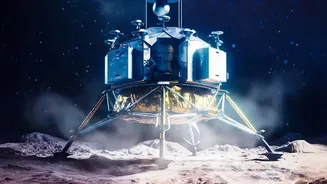
The Two-Week Freeze
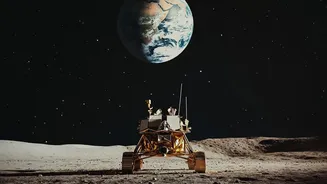
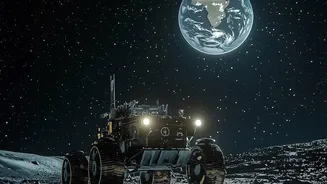
Imagine a night that lasts for two weeks, where temperatures plummet to an unforgiving -170 degrees Celsius. This is the reality on the Moon. Without an atmosphere to retain heat, any part of the lunar surface not in direct sunlight becomes one of the coldest
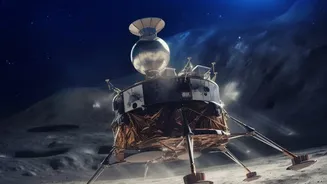
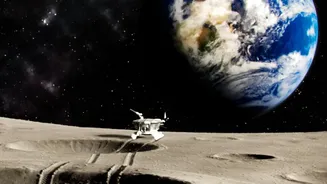
places in the solar system. For robotic landers and rovers, this is a death sentence. Solar panels are useless, and standard batteries quickly lose their ability to function in the extreme cold. Historically, most lunar missions have either been short-term, operating only during the lunar day, or they simply powered down and hoped to wake up again, a risky gamble that often failed. Russia's Lunokhod-2 rover, for example, failed to survive the night in 1973. This fundamental challenge has prevented long-duration science and made the idea of a permanent lunar base seem like science fiction.
The Nuclear Option: A Warm Glow
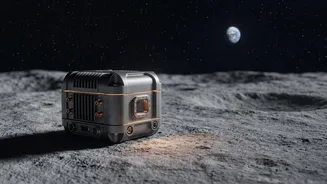
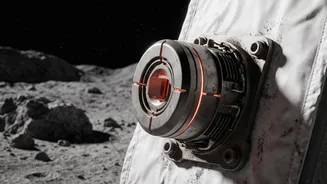
The most reliable solution has been to use the steady decay of radioactive material. Small devices called Radioisotope Heater Units (RHUs) have been used on space missions for decades, including on the Apollo 11 seismometer and the Mars rovers Spirit and Opportunity. These units, often containing a pellet of Plutonium-238, act like tiny, powerless furnaces, generating a constant, reliable stream of heat for years. A single RHU can weigh just a few hundred grams yet provide the same amount of heat as a 7 kg battery system over a two-week lunar night. They are a simple, mass-efficient way to keep critical electronics and instruments from freezing solid, enabling missions to operate through the night or in permanently shadowed regions where the sun never shines.
Innovating for a New Lunar Era
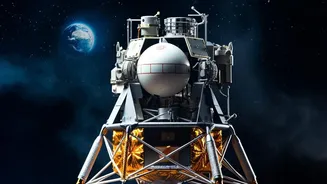
While effective, traditional RHUs using Plutonium-238 are complex and costly to produce. This has driven a new wave of innovation from both government agencies and private companies. Zeno Power, a US-based company, is developing RHUs that use a different isotope, Americium-241. This alternative is seen as potentially safer and more accessible. In a demonstration mission planned for 2028, Zeno will send a five-watt RHU to the Moon's surface aboard a Firefly Aerospace lander as part of NASA’s Commercial Lunar Payload Services (CLPS) program. This mission aims to prove the technology's ability to provide passive heat through the deep freeze, a key step toward enabling sustained operations. The European Space Agency (ESA) is also developing its own Americium-241 RHUs, highlighting a global push for this crucial capability.
Beyond Radioisotopes: A Toolbox of Solutions
Nuclear heat isn't the only game in town. Engineers are developing a full suite of thermal management technologies designed to work together. Advanced Cooling Technologies (ACT), in partnership with Astrobotic, is creating a 'toolbox' of solutions that includes advanced insulation, phase change materials that absorb heat during the day and release it at night, and 'thermal switches' that can actively manage heat flow. During the brutal lunar day, systems must reject heat to avoid cooking the electronics. At night, they must do the opposite, trapping every possible watt of warmth. Other concepts being explored include metal oxidation warming systems, which use controlled chemical reactions to generate heat without radioactivity. This diverse approach allows mission designers to pick the right solution for the job, whether it's a small rover or a large habitat.
Unlocking a Permanent Moon Base
Solving the lunar night problem is about more than just keeping robots warm. It is the single most important key to unlocking a sustainable human future on the Moon. With reliable power and heat, lunar bases can operate continuously. Companies like Astrobotic are planning commercial power services, envisioning a 'LunaGrid' of vertical solar arrays and rovers that can distribute power to various surface assets. This infrastructure would allow habitats, science experiments, and resource extraction equipment to function through the long night, transforming the Moon from a temporary campsite into a permanent outpost. By conquering the cold and the dark, these self-heating systems are not just defeating a technical challenge; they are laying the foundation for humanity's multi-planetary future.