






The Old Question and the New Clue
It’s a painful paradox for dog lovers. While across the animal kingdom larger species like whales and elephants tend to outlive smaller ones like mice, within the dog world, the opposite is true. A tiny Chihuahua might live for 15 years or more, while
a majestic Great Dane's life expectancy is often less than 10. For years, theories have pointed to the strain of rapid growth and higher cancer rates in larger breeds. While these factors are still relevant, a recent study published in the journal 'Science' points to a more fundamental reason, one written in the very code of life: their biological clock simply ticks faster.
Meet the Epigenetic Clock
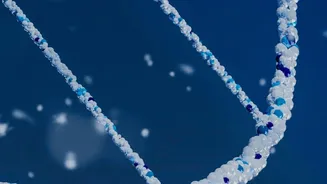
To understand this discovery, we need to look beyond genes themselves to something called epigenetics. Think of your dog’s DNA as a massive library of instruction manuals. Epigenetics is like a series of sticky notes and highlights that tell the body which manuals to read and which to ignore. One of the most important of these 'notes' is DNA methylation. It’s a chemical tag that acts like a switch, turning genes on or off. As an animal ages, the pattern of these methylation tags changes in a predictable way. Scientists can read these patterns to determine a dog's 'biological age', which may be different from their chronological age in years. This is what's known as an 'epigenetic clock'.
What the Groundbreaking Study Found
Researchers from the Dog Aging Project analysed DNA samples from nearly 900 dogs of various breeds and sizes. By creating an epigenetic clock for dogs, they made a striking discovery: larger dogs showed accelerated molecular aging. Their biological age was advancing more rapidly than that of smaller dogs. For example, even if a Pomeranian and a German Shepherd are both four years old chronologically, the study suggests the German Shepherd is biologically older at a cellular level. This accelerated aging was directly linked to a higher risk of mortality; dogs with an older epigenetic age than their actual age were more likely to pass away sooner.
The Role of 'Jumping Genes'
The study zeroed in on a specific area where this aging was most visible: transposable elements, also known as 'jumping genes'. These are stretches of DNA that can copy themselves and move around the genome. Normally, DNA methylation acts like a security guard, keeping these genes locked down to prevent them from causing damage and genomic instability. However, the research found that as dogs age, they lose this methylation control. Crucially, larger dogs lose it much faster. Giant breeds were found to lose about 35% more methylation on a key family of jumping genes (called LINE1) each year compared to small breeds. This loss of control is thought to contribute to faster aging and a higher risk of age-related diseases like cancer.
A Trade-Off Between Growth and Longevity
The findings support a long-held biological theory: there is a trade-off between growth and maintenance. The intense, rapid growth that turns a small puppy into a 70-kilogram gentle giant in just over a year comes at a cost. The very biological processes that fuel this incredible growth may divert resources away from long-term cellular repair and genomic stability. This intensive breeding for size may have inadvertently selected for traits that lead to a faster-ticking epigenetic clock and, consequently, a shorter, compressed lifespan.
What This Means for Big Dog Owners
This research doesn't offer an immediate cure for aging, but it provides a profound understanding of why our big companions have shorter lives. It reinforces that the clock is ticking differently for them at a molecular level. This knowledge empowers owners by highlighting the critical importance of proactive healthcare. While we can't change their epigenetics, we can provide an environment that supports their health to the fullest. This includes a high-quality diet, maintaining a healthy weight to reduce stress on joints and organs, regular exercise, and consistent veterinary check-ups to catch any age-related issues early. Ultimately, science is beginning to explain the 'why', but the 'how' of caring for them remains in our loving hands.