



The Global Spectacle
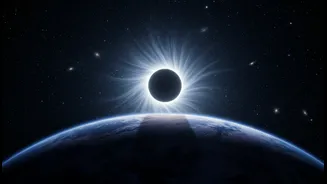
First, let's be clear: a spectacular total solar eclipse is indeed happening on August 12, 2026. This celestial event will trace a path across Greenland, Iceland, the Atlantic Ocean, and northern Spain. For parts of Europe, it will be the first total solar eclipse in 27
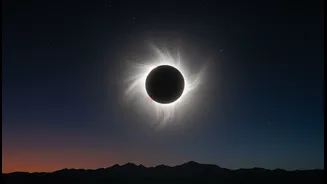
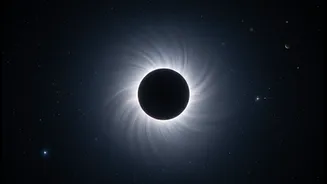
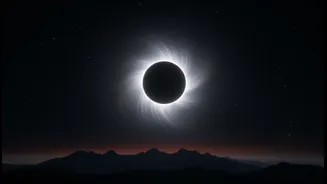
years, making it a massive international event. During totality, the Moon will completely block the Sun, casting a dramatic shadow and revealing the Sun's ethereal outer atmosphere, the corona. It’s an event that has astronomers and travellers buzzing with anticipation, and you will undoubtedly see stunning images and videos of it online.
Myth: A Grand Eclipse Over India
With global hype building, it is easy to assume that this celestial show will be visible everywhere. Many in India might expect to witness this grand eclipse, perhaps preparing to take out their cameras and solar viewers. Social media posts, often stripped of geographical context, can give the impression of a worldwide event. This leads to the most significant point of confusion: the belief that Indian cities will have a front-row seat to the eclipse. This expectation, unfortunately, sets people up for disappointment.
Reality: Not Visible From India
The hard fact is the August 12, 2026, total solar eclipse will not be visible from almost anywhere in India. The path of totality, where the full spectacle occurs, is thousands of kilometres away in Europe and the Arctic. Even the partial phases of the eclipse, where the Moon takes a 'bite' out of the Sun, will not be visible from the Indian subcontinent. NASA's official visibility maps, which chart the Moon's shadow across the Earth, show it missing India completely. While some highly technical calculations suggest a barely perceptible, minor obscuration might be theoretically possible at sunset from the absolute northernmost tip of Ladakh, for all practical purposes, this is not a viewing event for the Indian public.
The Danger of Digital Misinformation
The headline's warning to be careful what you 'trust' is particularly relevant in the digital age. Beyond simple disappointment, misinformation can be problematic. For example, a viral hoax related to this very eclipse, dubbed 'Project Anchor', falsely claimed NASA predicted Earth would lose gravity for seven seconds that day. This is scientifically impossible and has been thoroughly debunked, but it shows how a real event can be used to spread fantastic and baseless claims. Getting excited about an eclipse that isn't happening locally is harmless, but believing and spreading such hoaxes undermines scientific literacy.
What You Can Actually Watch
So what can an Indian astronomy enthusiast do? The best way to experience this specific eclipse will be through the internet. NASA, the European Space Agency (ESA), and numerous other astronomy organizations will be hosting high-quality, free live streams of the event. You can watch the moment of totality from Spain or Iceland in real-time from the comfort of your home. More importantly, nature offers a fantastic consolation prize. The night of August 12-13 also happens to be the peak of the annual Perseid meteor shower. Because the solar eclipse requires a new moon, the sky will be exceptionally dark, creating perfect conditions to see the 'shooting stars' of the Perseids. So, while the Sun will be out of reach, the night sky will put on its own spectacular show for viewers in India.
A Universal Rule: Eye Safety
Although this particular eclipse isn't a concern for direct viewing in India, the buzz around it is a good time for a crucial reminder: never look directly at the Sun without proper protection. Certified solar eclipse glasses or viewers that meet the ISO 12312-2 international standard are the only safe way to look directly at the Sun during a partial eclipse. Regular sunglasses, no matter how dark, are not safe. An alternative is to project an image of the Sun using a pinhole projector, which you can easily make with two pieces of cardboard. This advice is vital for any future eclipses that are visible from India.