





The Invisible Threat in Our Water
Microplastics are tiny plastic fragments, often smaller than 5 millimetres, that have unfortunately become a widespread environmental contaminant. They originate from the breakdown of larger plastic items, synthetic fibres from clothing, and microbeads
from personal care products. These particles are now found in our oceans, rivers, and soil, and have made their way into our food chain and drinking water. Studies have shown that tap water in India is not immune, with one report finding plastic fibres in over 82% of samples tested. While the long-term health risks are still being studied, the idea of unknowingly consuming plastic is a major concern for public health.
A Solution From the Paddy Fields
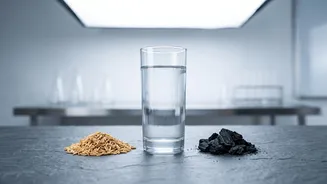
In a perfect example of turning waste into a resource, scientists are looking to rice husks, the protective shells around rice grains, for a solution. India, as a major rice-producing nation, generates enormous quantities of this agricultural byproduct. Traditionally, husks are often burned or discarded, which can contribute to air pollution. However, through a process called pyrolysis, these husks can be transformed into a valuable, carbon-rich material known as biochar. This isn't just regular charcoal; biochar is engineered to have an incredibly porous structure, making it a powerful tool for environmental cleanup.
From Waste to Wonder Material
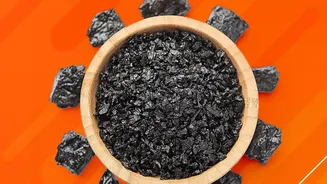
The creation of biochar happens through pyrolysis, which involves heating the rice husks to high temperatures (typically between 300°C and 700°C) in a low-oxygen environment. This process prevents the husks from simply burning and turning to ash. Instead, the organic material decomposes and transforms, creating a stable, charcoal-like substance with a vast network of microscopic pores. This process essentially creates a high-surface-area sponge at a microscopic level. The result is a material that is not only effective for filtration but also contributes to a circular economy by upcycling agricultural waste.
How Bio-Char Traps Microplastics
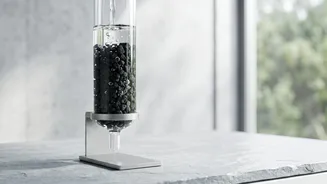
The genius of biochar lies in its structure. Its highly porous surface acts like a complex maze, physically trapping and entangling microplastic particles as water flows through it. But it's not just a simple sieve. The removal process also involves several other mechanisms. Adsorption allows particles to stick to the biochar's vast surface area, while forces like electrostatic interactions can also help pull contaminants out of the water. Research has shown that biochar filters can be incredibly effective, with some studies demonstrating removal rates of over 95% for certain microplastics. The performance can be so high that it rivals more expensive, conventional filtration methods.
Why This Matters for India
This innovation is particularly relevant for India for several reasons. First, it utilizes a readily available and low-cost raw material—rice husks—which are abundant across the country. This makes the technology potentially much more affordable and scalable than imported filtration materials. Second, it addresses two critical issues at once: managing agricultural waste and improving access to clean drinking water. By creating value from rice husks, it reduces the environmental impact of agricultural waste disposal while providing a decentralized solution for water purification that could be deployed in both urban and rural communities. This aligns with goals for sustainable development and building a more circular economy.
The Road Ahead for Clean Water
While the technology is incredibly promising, research is ongoing to optimize its real-world application. Scientists are working to standardize production methods to ensure consistent quality and to determine the best design for household and community-level filters. Challenges include preventing potential clogging over time and ensuring the filters can be easily maintained or replaced. However, the potential is vast. From simple, low-cost filters in rural homes to integration into larger municipal water treatment systems, biochar offers a sustainable and economically viable path toward tackling the microplastic problem head-on.