









An Art Woven Through Generations
Nupe embroidery is a traditional textile art originating from the Nupe people, an ethnic group primarily residing in Nigeria's Niger, Kwara, and Kogi states. For centuries, this craft has been a cornerstone of their cultural expression, passed down through
generations. The embroidery is most famously featured on large, flowing robes known as 'agbada' for men (or 'riga' in the Nupe and Hausa languages), which are prestigious garments worn for significant ceremonies and celebrations like weddings and funerals. These robes are often crafted from hand-woven strips of cotton and dyed with natural pigments like indigo, creating a rich canvas for the needlework. While traditionally a male-dominated craft, women are now also involved in producing these intricate pieces.
The Language of Stitches
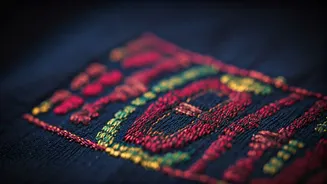
The power of Nupe embroidery lies in its symbolic, geometric patterns. These are not merely decorative flourishes; they are a visual language communicating status, heritage, and even spiritual protection. One of the most famous and elaborate patterns is the 'aska takwas' or 'eight knives'. This design, featuring eight blade-like shapes often combined with spirals and leaf forms, was traditionally believed to bring good fortune and offer protection in battle. The meticulous chain stitching, often done in contrasting white or coloured silk thread, creates a dense, textured design that stands out against the dark indigo fabric. The precision required is immense, and the finished work is a testament to the artisan's patience and skill.
Quiet Craftsmanship, Powerful Presence
The 'quiet' nature of Nupe embroidery refers to its understated elegance. Unlike bold prints, its impact comes from the density and precision of the stitching. The beauty is in the fine details, the symmetry of the geometric shapes, and the subtle texture created by thousands of individual stitches. This intricate work is traditionally done by hand, a slow and deliberate process that imbues each garment with a unique character. The artisans, often working with locally sourced cotton and dyes, are part of a long tradition of sustainable craft. This focus on manual skill and natural materials makes each embroidered piece a durable work of art, with many fine robes becoming cherished family heirlooms.
A Legacy in a Modern World
Today, Nupe embroidery is finding its place on the global stage. Collaborations between traditional Nigerian artisans and international fashion designers are bringing this ancient craft to new audiences, blending timeless techniques with contemporary styles. The intricate patterns and vibrant colours are influencing modern fashion, appearing in collections that celebrate cultural heritage. Furthermore, the rise of sustainable and slow fashion has created a new appreciation for the kind of detailed, long-lasting craftsmanship that Nupe embroidery represents. From the cultural heartland of Bida, which was recognized as a UNESCO Creative City of Crafts and Folk Art, to the runways of Lagos and beyond, this powerful art form continues to weave its story into the fabric of the future.