
The Standard Story of Creation
For decades, astronomers have operated with a standard story of how the universe grew up. This framework, known as the Lambda-Cold Dark Matter (ΛCDM) model, has been remarkably successful. It posits that after the Big Bang, the universe was a mostly uniform
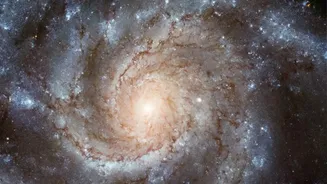
soup of matter and energy. Under the influence of gravity, primarily from unseen 'cold dark matter', tiny fluctuations in density gradually grew. Over hundreds of millions and even billions of years, these small clumps of matter merged, slowly and hierarchically building bigger and bigger structures. The first stars ignited, then grouped into small, primitive galaxies. These protogalaxies then collided and merged over eons to form the grand spirals and massive elliptical galaxies we see in our cosmic neighborhood today. The key word was 'gradual'. The model predicted that the very early universe should be full of small, dim, and clumpy infant galaxies, not well-formed adults.
A New Eye on Cosmic Dawn
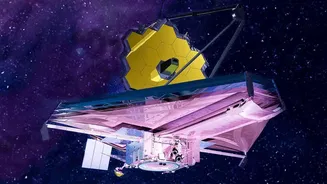
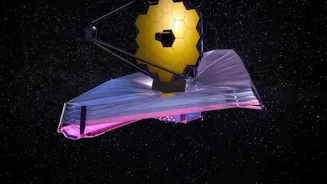
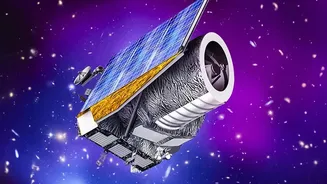
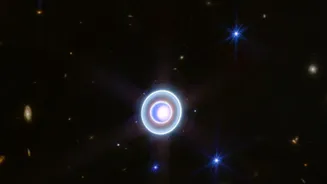
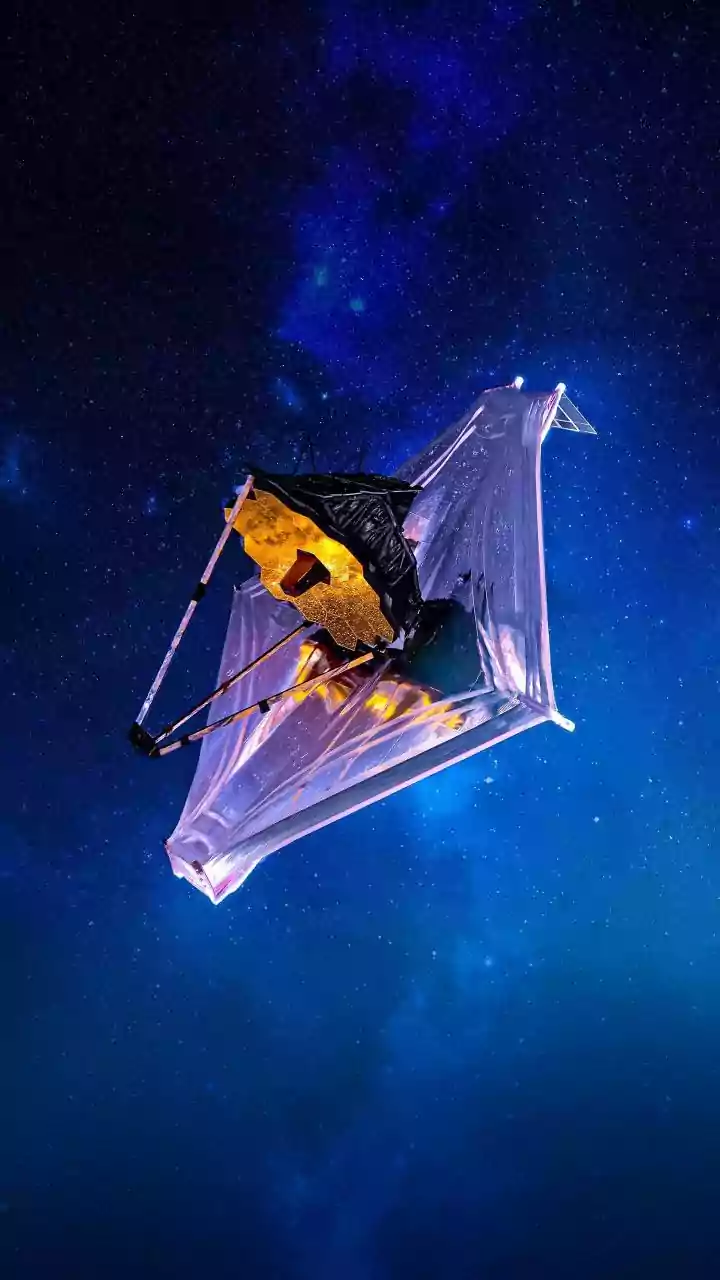
Launched in late 2021, the James Webb Space Telescope is an infrared observatory of unprecedented power, designed specifically to capture light from the universe's earliest epochs. As the universe expands, light from the most distant objects is stretched into longer, redder wavelengths, a phenomenon called redshift. Webb’s giant mirror and extreme sensitivity to infrared light allow it to see objects whose light has traveled for over 13 billion years, giving us a view of the cosmos as it was just a few hundred million years after the Big Bang. Astronomers hoped Webb would find the faint, primordial galaxies predicted by the ΛCDM model, confirming our tidy story of cosmic evolution. Instead, from its very first observations, it began finding things that, according to the models, simply should not be there.
The 'Impossible' Galaxies
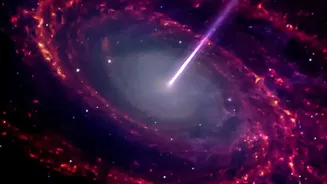
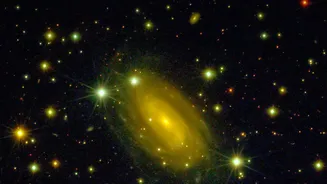
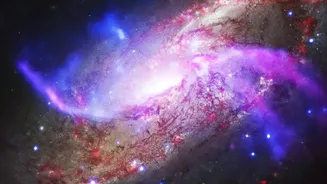
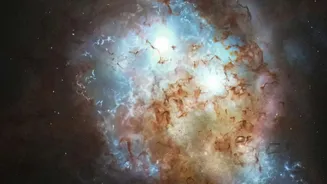
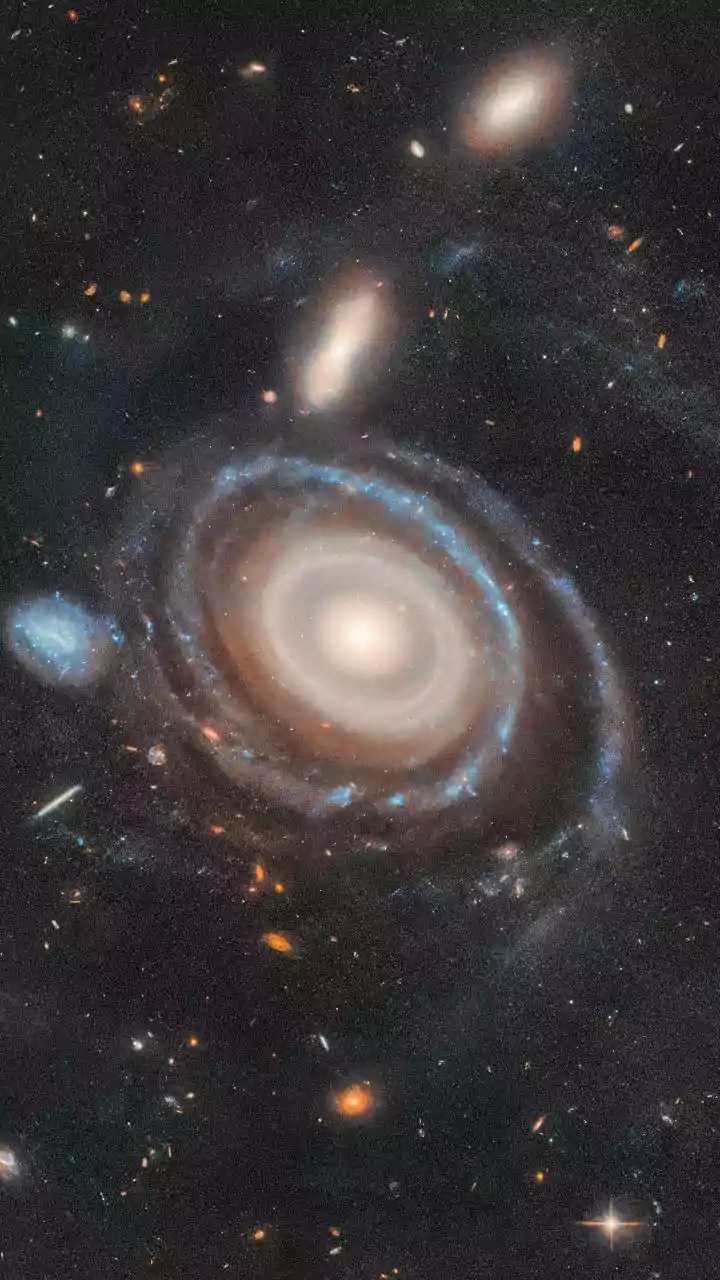
Almost immediately, JWST started spotting galaxies in the infant universe that were shockingly massive and bright. Some galaxies, seen just 500-700 million years after the Big Bang, appear to have stellar masses far greater than what the ΛCDM model would allow to form in such a short time. It’s like finding a fully grown redwood tree in a patch of soil where you only planted a seed the day before. Beyond just mass, some of these early galaxies show surprising maturity. Astronomers have found well-ordered, rotating disk galaxies with spiral structures far earlier than expected; a structure called the 'Big Wheel' galaxy existed within the first two billion years, a time when galaxies were thought to be chaotic and messy. These findings suggest that the processes of galaxy formation were perhaps far more rapid and efficient than previously understood.
Rewriting the Rules of the Universe
These discoveries have sent theorists scrambling for explanations. The tension between Webb's data and the standard model has opened up a thrilling period of scientific debate. Some explanations focus on adjusting our understanding of the early universe's astrophysics. Perhaps star formation was far more efficient, or produced more massive, brighter stars than we see today. Another idea is that some of these bright objects aren't 'normal' galaxies at all, but a new type of object. Recent findings point to the existence of 'black hole stars'—massive, dense clouds of gas powered by a central black hole, which could explain the extreme brightness of some 'little red dots' seen by Webb. More radically, some scientists are questioning if the ΛCDM model itself needs a major overhaul. Alternate theories, such as Modified Newtonian Dynamics (MOND), which alters the laws of gravity and removes the need for dark matter, are gaining renewed attention as they may better explain this rapid early growth.