




A City of Palaces and Power
Before Kolkata rose to prominence, Murshidabad was the epicentre of power and commerce in eastern India. Established by Nawab Murshid Quli Khan, it was a city once said to rival London in prosperity. Today, a weekend trip from Kolkata offers a vivid glimpse
into this opulent past, where magnificent structures stand as monuments to the Nawabs of Bengal. The city’s historical fabric is so rich that a short journey feels like stepping into a different era, making it an ideal destination for history enthusiasts and curious travellers alike.
The Thousand-Door Marvel: Hazarduari Palace
The crown jewel of Murshidabad is undoubtedly the Hazarduari Palace, a magnificent European-style structure built in the 19th century for Nawab Nazim Humayun Jah. Its name, meaning 'Palace of a Thousand Doors', is famously misleading; it has only 100 real doors, while the other 900 are false, designed to confuse intruders. Now a museum managed by the Archaeological Survey of India, the palace showcases an incredible collection of artifacts from the Nawabi era, including antique furniture, royal garments, and an impressive armoury. The sheer scale and grandeur of Hazarduari, with its towering columns and sprawling grounds, is the first and most compelling reason for any visit.
Echoes of Faith: Katra Masjid and Nizamat Imambara
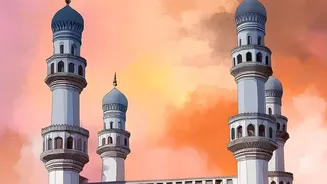
Beyond the palace, Murshidabad’s spiritual heart can be found in its mosques and imambaras. The Katra Masjid, built by Murshid Quli Khan in 1723-24, is a structure of immense historical importance. It served not just as a mosque, but also as a 'caravanserai' or inn for travellers and a centre for Islamic learning. In an act of profound humility, the Nawab wished to be buried under the entrance staircase, so his grave is trodden upon by visitors to this day. Nearby, the Nizamat Imambara, rebuilt in 1847 after a fire, stands as the largest in India, a serene white monument that contrasts beautifully with the yellow Hazarduari Palace opposite it.
Gardens, Tombs, and Forgotten Treasures
The charm of Murshidabad lies not just in its main attractions but also in the smaller, hidden gems scattered across the landscape. The Khosh Bagh (Garden of Happiness) across the river holds the tombs of Nawab Alivardi Khan and his grandson Siraj-ud-Daulah. Other sites like the Kathgola Palace, a stunning mansion built by a Jain merchant family, showcase the wealth that flowed through this city from traders across the world. The massive Jahan Kosha Cannon, meaning 'World Subduer', lies peacefully in a field, a relic of the city's formidable past. Exploring these sites by a 'toto' (electric rickshaw) allows you to soak in the slow, timeless pace of the town.
Planning Your Weekend Escape
Getting to Murshidabad from Kolkata is straightforward. Several daily trains, such as the Hazarduari Express and Bhagirathi Express, connect Sealdah or Kolkata station to Murshidabad, with a journey time of about three to four hours. The drive is approximately 200 km. Accommodation options are available to suit various budgets, from simple guesthouses to heritage stays that offer a more immersive experience. A weekend is just enough time to cover the main sights, allowing you to return to Kolkata refreshed and enriched by a journey into Bengal's splendid history.