




Ignore the Front of the Pack
The front of a bread package is marketing. Words like 'multigrain', 'wheat bread', 'brown bread', or even 'made with whole grains' are often legally meaningless and designed to give a healthy impression. 'Multigrain' simply means the bread contains more
than one type of grain, which could all be refined. 'Brown bread' can get its colour from added molasses or caramel colouring, not necessarily from whole grains. Your first step to finding a healthy loaf is to flip it over and ignore the tempting claims on the front.
The Ingredient List Is Your Truth
Ingredients are listed by weight, from most to least. For a bread to be truly whole-grain, the very first ingredient should be a whole grain. Look for the word 'whole' right before the grain, such as 'whole wheat flour' (atta), 'whole grain rye', or 'whole oats'. If the first ingredient is simply 'wheat flour' or 'enriched wheat flour' (maida), the bread is primarily made from refined flour, no matter what other healthy-sounding ingredients are listed later. A label that says '100% whole wheat' is your strongest guarantee.
Analyse the Nutrition Facts for Fibre
After confirming the first ingredient is a whole grain, check the Nutrition Facts panel. Fibre is a key benefit of whole grains, aiding digestion and promoting fullness. Aim for a bread that provides at least 2 to 3 grams of dietary fibre per slice. A truly high-fibre bread might offer even more. Some experts suggest a simple trick: look for a 10:1 ratio of carbohydrates to fibre. For every 10 grams of total carbohydrates, there should be at least 1 gram of fibre. This ratio is a good indicator that the grain content is genuinely whole.
Watch for Added Sugars and Sodium
Even 100% whole-grain breads can have nutritional downsides. Many manufacturers add sugar and salt to improve taste and shelf life. While reading the nutrition label, check the 'Added Sugars' and 'Sodium' lines. Some breads can contain several grams of sugar per slice, which adds up quickly. Likewise, the sodium in just two slices of bread can contribute a surprising amount to your daily total. A shorter ingredient list is generally a good sign, indicating fewer preservatives and additives. The ideal bread contains just a few simple ingredients: whole-grain flour, water, yeast, and a little salt.
Don't Be Fooled by 'Multigrain'
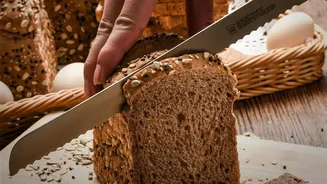
This is one of the most common points of confusion. 'Multigrain' and 'whole-grain' are not the same thing. Multigrain bread is made from multiple types of grains, but those grains can be (and often are) refined. A multigrain bread could be made from a mix of refined wheat, refined rye, and refined oats, offering little of the fibre and nutrients found in their whole counterparts. A true whole-grain bread, on the other hand, is made from grains where the entire kernel—bran, germ, and endosperm—is preserved, which is where the nutrition lies.