






The Foundation: Crew Resource Management
Modern pilot training is built on the philosophy of Crew Resource Management (CRM). Originating in the late 1970s after investigations found that many accidents were caused by failures in teamwork and communication, CRM changed aviation safety. It's a system
that trains crews to use all available resources—people, equipment, and information—to operate safely. This approach encourages a less authoritarian cockpit, where first officers are empowered to question captains and cabin crew are integrated into the safety team. It’s about creating an environment of clear communication, workload management, and mutual monitoring to catch errors before they escalate.
The Practice Field: Full-Flight Simulators
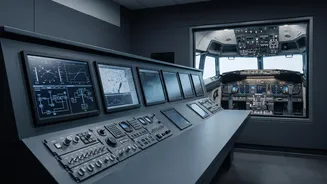
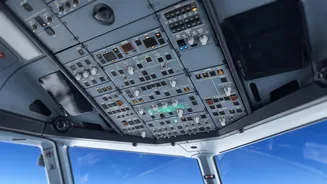
The backbone of emergency preparation is the full-flight simulator. These multi-million dollar devices are engineering marvels, replicating an aircraft's cockpit and flight dynamics with incredible accuracy. They allow pilots to experience and manage dangerous events—like engine failures, fires, hydraulic failures, or severe weather—in a controlled environment without any real-world risk. This isn't just about memorising checklists; it's about building muscle memory. In an actual emergency, there's no time for hesitation. Training allows pilots to react instinctively, moving their hands to the right controls and executing procedures immediately.
Responding to Medical Emergencies
When an emergency is medical, whether it involves a passenger or a pilot, a clear set of protocols kicks in. For a pilot incapacitation, the other pilot's first job is to take firm control of the aircraft, often announcing "I have control." They then engage the autopilot to reduce workload, declare an emergency with air traffic control, and coordinate with cabin crew. Flight attendants are trained to assist, potentially moving the incapacitated pilot from the controls and administering first aid. The remaining pilot must then make a critical decision: divert to the nearest suitable airport, weighing factors like runway length, weather, and the availability of emergency medical services on the ground.
Tackling Operational Failures
Operational emergencies, such as an engine failure or a loss of cabin pressure, are the scenarios most intensely drilled in simulators. Pilots practice these situations repeatedly, learning to identify the problem, work through the specific checklist, and fly the aircraft in a degraded state. Training covers a vast range of potential failures, from electrical faults to landing gear malfunctions and flight control problems. The goal is to make the abnormal feel routine. By practicing these events over and over, crews learn to manage stress, communicate effectively, and make sound decisions under immense pressure.
A Never-Ending Cycle of Training
A pilot's license is not a one-and-done qualification. To remain current, airline pilots must undergo recurrent training every six to twelve months. This mandatory process involves both classroom instruction and intensive simulator sessions where their emergency response skills are tested. Regulators like the FAA require this constant cycle of practice and evaluation to ensure proficiency is maintained throughout a pilot's career. This commitment to continuous learning and practice is what ensures that if the unexpected happens, your flight crew is not facing it for the first time.