


Remnants of Creation
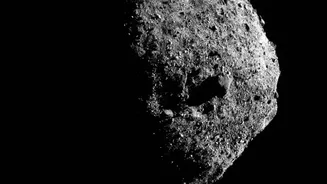
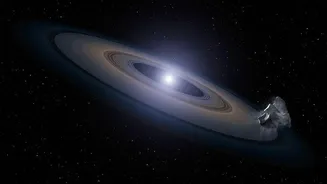
The Kuiper Belt is a vast, doughnut-shaped ring of icy bodies orbiting the Sun beyond Neptune, starting about 30 times farther from the Sun than Earth is. Think of it as a cosmic scrap yard, filled with hundreds of thousands of objects that are leftovers
from the formation of the solar system 4.6 billion years ago. This region is home to dwarf planets like Pluto, as well as millions of smaller, icy bodies composed of frozen water, methane, and ammonia mixed with rock. Because these objects have remained in a deep freeze far from the Sun, they are considered pristine time capsules, holding secrets about the raw materials that built the planets, including our own.
How to Catch a Speck of Stardust
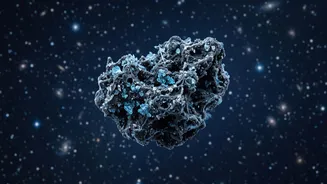
Collecting these particles is an incredible feat of engineering. For decades, NASA has used high-altitude research aircraft, like the ER-2, to fly through the thin air of the stratosphere, about 20 kilometres up. This altitude is above most terrestrial dust and pollution. Attached to the wings are specially designed collectors, which often use plates coated in ultra-pure silicone oil. As the plane flies, microscopic interplanetary dust particles (IDPs), which are constantly raining down on Earth, get stuck in the oil. Back on the ground, in a meticulously clean lab at Johnson Space Center, scientists painstakingly examine the collectors under powerful microscopes to find, retrieve, and catalog these tiny extraterrestrial visitors, which are often just a few micrometres across—smaller than the width of a human hair.
What These Twelve Grains Reveal
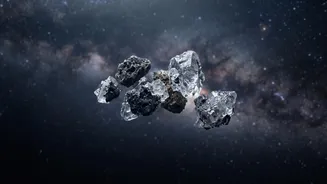
While analysis is ongoing, the initial findings from these twelve grains are thrilling. These particles are not uniform; they show a surprising diversity in composition and structure. Some appear to be anhydrous (water-free) with abundant amorphous silicates and carbonaceous materials, the very building blocks of rocky planets. Others show evidence of past exposure to liquid water, suggesting that the distant Kuiper Belt objects they came from may have once hosted wet environments. This variation supports the idea that the early solar system was a chaotic and complex place. By studying their isotopic composition—a kind of chemical fingerprint—scientists can confirm their origin and distinguish them from dust that comes from closer asteroids or comets.
Why the Discovery Matters So Much
These twelve grains are more than just cosmic dust; they are physical samples from the solar system's most remote and primitive region. Studying them directly in the lab provides 'ground truth' that can’t be achieved with telescopes alone. These particles offer tangible clues to some of science's biggest questions: What was the chemical makeup of the primordial cloud that formed our Sun and planets? How did organic materials and water—essential ingredients for life—get delivered to the early Earth? Every particle that can be traced back to the Kuiper Belt helps scientists refine their models of planetary formation and understand how a disk of gas and dust evolved into the complex system we see today.
What Happens Next in the Investigation
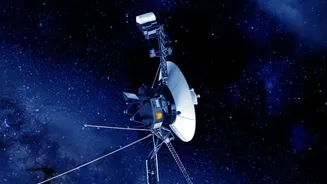
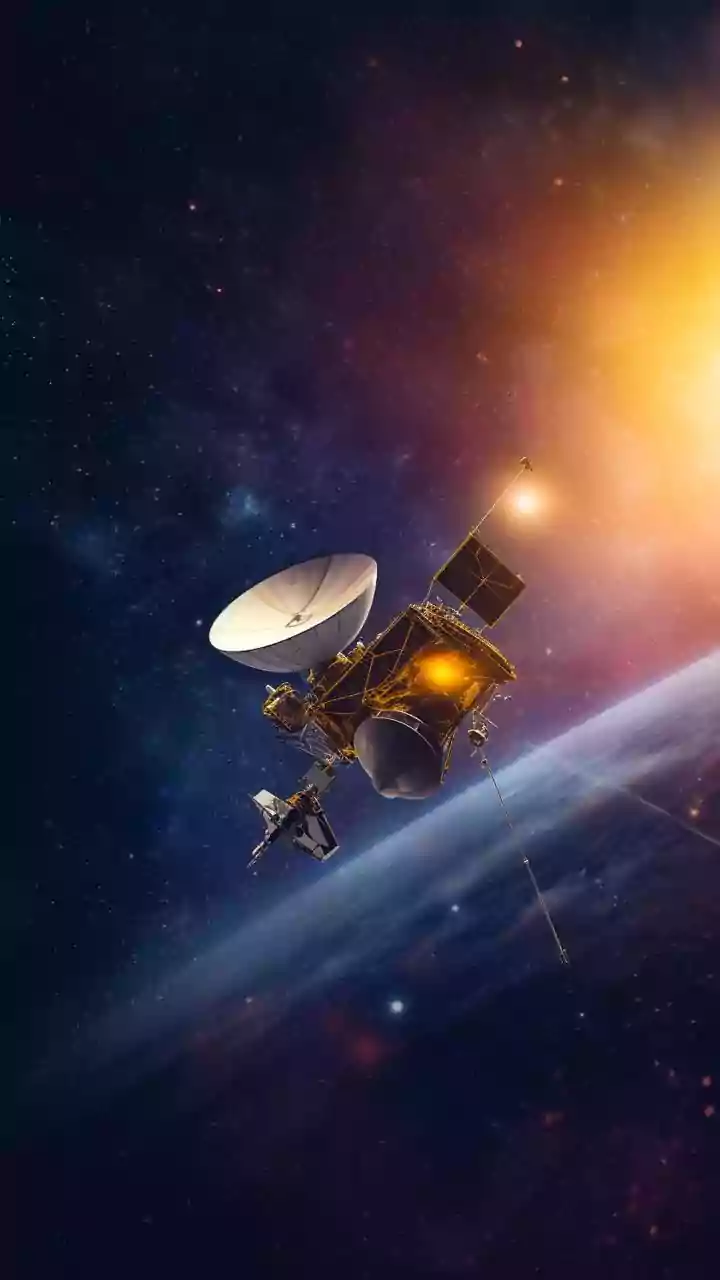
The twelve grains are just the beginning. The process of analyzing such minuscule samples is delicate and often destructive, so scientists must choose their tests wisely. Techniques like advanced electron microscopy and synchrotron-based X-ray analysis can reveal mineralogy and chemical makeup at a near-atomic level without destroying the samples. Other tests, like isotopic analysis to confirm an extraterrestrial origin, may require vaporizing a portion of the precious grain. This research complements missions like New Horizons, which is currently flying through the Kuiper Belt and recently detected higher-than-expected dust levels, hinting that the region may be larger or more active than previously thought. Each new grain and every distant measurement adds another piece to the puzzle of our cosmic origins.