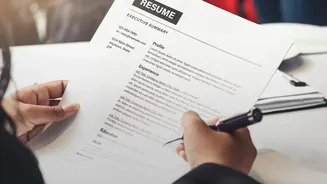







The Rise of the Perfect, AI-Generated CV
For decades, the resume has been the cornerstone of the job application process. But the widespread availability of generative AI tools like ChatGPT has fundamentally changed the game. Now, any candidate can produce a highly polished, professional resume and cover
letter in minutes. Research has even shown that job seekers using AI assistance on their resumes are more likely to be hired and earn higher wages. While this helps candidates overcome spelling errors and awkward phrasing, it creates a new problem for employers: a crisis of authenticity. When every resume is perfect, how do you determine who is genuinely qualified and who is just good at using AI prompts?
A Growing Crisis of Trust for Recruiters
This influx of AI-perfected applications is creating a significant challenge for hiring managers. Many report finding it harder to assess a candidate's true abilities based on their application alone. It has been described as a "resume illusion," where there's a growing disconnect between what’s written and what's real. This isn't just frustrating; it’s costly. A bad hire can negatively impact productivity, team morale, and the bottom line. The traditional method of screening for credentials like degrees and years of experience is proving less reliable, as these proxies for skill don't always predict job performance. As a result, businesses are desperately seeking a more dependable way to verify what a candidate can actually do.
The Pivot to Proof: Skills-Based Hiring
In response, a growing number of companies are shifting their focus from credentials to capabilities in a strategy known as skills-based hiring. Instead of relying solely on what's written on a resume, employers are using various methods to directly evaluate a candidate's real-world abilities. By late 2025 and early 2026, reports indicated that nearly three-quarters of employers were using some form of skills-based hiring. This approach focuses on what a candidate can do, not just their job titles or educational background. It’s a move designed to cut through the noise and find talent based on demonstrable proof of skill.
What Applied Assessments Actually Look Like
Applied assessments take many forms, tailored to the specific role. For a software developer, it might be a coding challenge. A marketing candidate could be asked to create a sample social media campaign. A project manager might need to outline an approach for a hypothetical project. Other common methods include job simulations, work sample tests, and even behavioral interviews that probe for examples of past performance. In some hands-on fields like skilled trades or culinary arts, employers are even asking for short video demonstrations of a skill. The goal is always the same: to get a practical, real-world glimpse of a candidate's abilities in action.
A More Level Playing Field?
This shift offers significant benefits. For employers, it's more predictive of job performance than hiring based on experience or education alone. Companies report fewer mis-hires, better employee retention, and access to a wider, more diverse talent pool by removing barriers like mandatory degrees. For candidates, it's an opportunity to showcase their abilities, even if they have a non-traditional career path. However, the approach isn't without challenges. Assessments can be time-consuming for applicants, and some critics worry they may overlook key soft skills like creativity or empathy. There is also a risk of poorly designed tests introducing their own biases.
How Job Seekers Can Adapt and Succeed
In this new landscape, job seekers should shift their focus from just polishing their CV to building a body of evidence. This means developing a portfolio of work, preparing for practical assessments, and being ready to provide specific, real-world examples of how you have used your skills to solve problems. While AI can still be a useful tool for cleaning up your resume, the real emphasis should be on what happens next. Think about your past experiences in terms of tangible results and be prepared to demonstrate your competence. The ultimate goal is to prove you can do the job, not just say you can.