



The Waning Perseids and a Quieter Shower
The famous Perseid meteor shower peaked around August 12-13, but its activity continues until the end of the month. While the rate of meteors will have dropped significantly, patient observers in dark locations might still catch a few stray shooting stars
in the late hours after midnight. More interesting for enthusiasts looking for a challenge is the Kappa Cygnid meteor shower, which is active until August 28. This is a very minor shower, producing only about three meteors per hour at its best. What makes it noteworthy is the nature of its meteors: they are known to be slow-moving and can occasionally produce bright fireballs, making them a satisfying catch for those willing to spend time under the stars. The radiant, or apparent point of origin, is the constellation Cygnus, the Swan.
A Glimpse of a Partial Lunar Eclipse
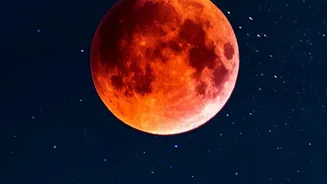
On the night of August 27-28, a partial lunar eclipse will occur as the Full Moon passes through a part of Earth's shadow. However, visibility for this event from India is not favourable. The greatest eclipse is set to happen at 4:14 AM UTC on August 28, which is 9:44 AM in Indian Standard Time. By this time, the Moon will have already set for observers across the subcontinent. While direct viewing from India won't be possible, major space agencies like NASA typically stream such events live, allowing you to witness the celestial alignment online.
Saturn Rises in the Evening Sky
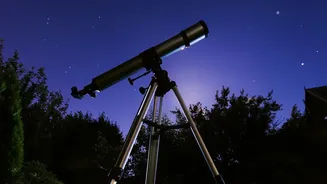
The ringed planet, Saturn, is becoming a prominent feature in the evening sky. While its grand opposition, when it is at its brightest and closest to Earth for the year, is on October 4, it is already an excellent target for observation. Throughout late August, Saturn rises in the east in the evening and can be found in the constellation Cetus. Its steady, yellowish light distinguishes it from twinkling stars. Even a small telescope will reveal its famous rings, a sight that never fails to amaze. As we move towards September, the planet will rise earlier and become even better placed for viewing. On August 31, the Moon will have a conjunction with Saturn, appearing near it in the sky, which can be a helpful guide to locate the planet.
Explore the Heart of the Milky Way
August provides one of the last best chances to view the core of our own galaxy, the Milky Way, before it sinks lower in the sky. This is heavily dependent on finding a dark location away from city lights and, crucially, a break in the monsoon clouds. From a truly dark site, the Milky Way appears as a luminous, hazy band stretching across the sky. Its brightest and most detailed section lies towards the south, in the direction of the constellations Sagittarius and Scorpius. In Indian mythology, this celestial river is called the 'Akash Ganga'. Look for the teapot-shaped pattern of stars in Sagittarius; the spout of the teapot points directly towards the galactic centre. High overhead, you can also spot the Summer Triangle, an asterism formed by the three bright stars Vega, Deneb, and Altair.
Tips for a Successful Stargazing Session
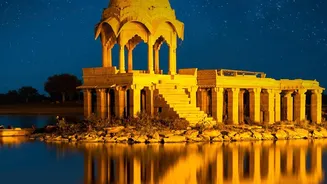
To make the most of these celestial sights, preparation is key. First, escape the city. Light pollution washes out all but the brightest objects, making it impossible to see faint meteors or the Milky Way. Even a short drive to a darker rural area can make a huge difference. High-altitude regions like Ladakh or Spiti, or dry areas like the Rann of Kutch, offer the best chances for clear, dark skies during this season. Second, allow your eyes to adapt. It takes about 20-30 minutes for your eyes to become fully sensitive to low light, so avoid looking at your bright phone screen. Finally, be patient. Stargazing is a waiting game. Settle into a comfortable chair, look up, and let the universe reveal its wonders.