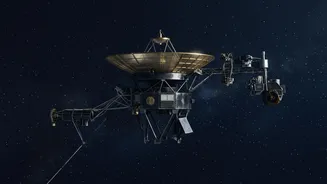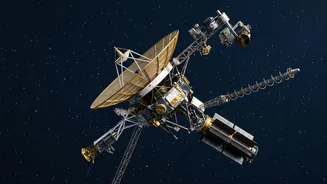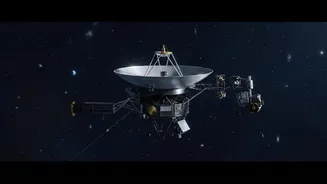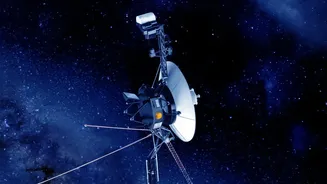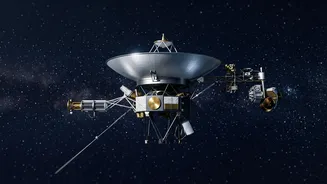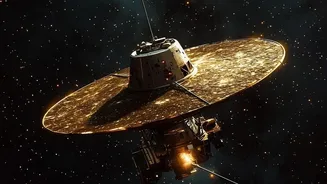



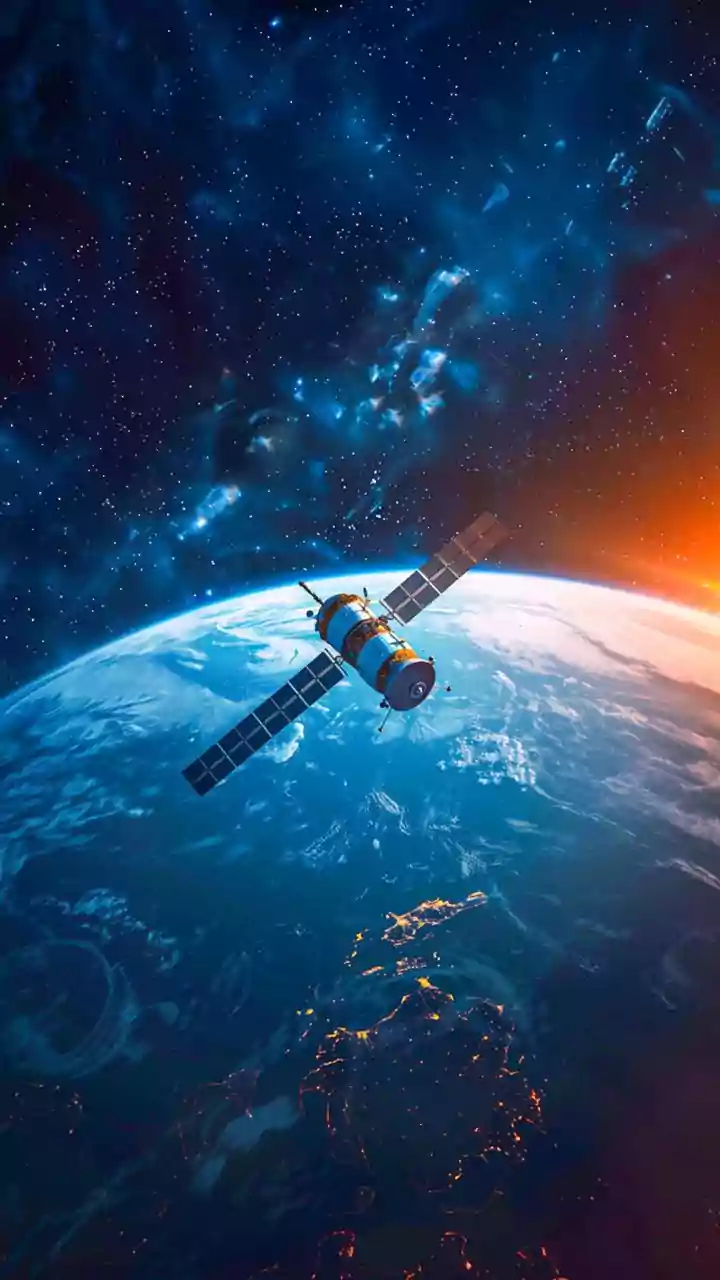

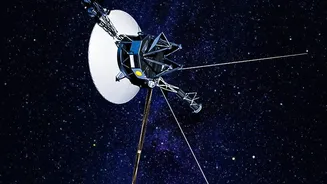
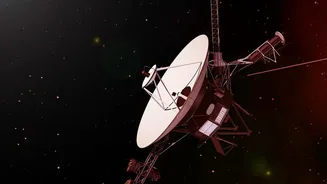
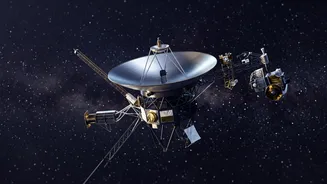
For two days in October, humanity’s most distant creation went quiet. NASA’s Voyager 1, a relic of 1970s engineering now nearly 26 billion kilometres away, stopped phoning home, creating a tense silence broken only by its own surprising resilience.
A Worrying Silence Across the Void
On
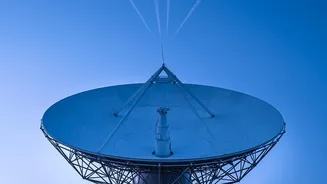
October 18 and 19, 2026, scheduled check-ins with Voyager 1 yielded nothing but static. For 48 hours, NASA's Deep Space Network, a global array of giant antennas, listened for a signal and heard nothing in return. For a mission that has been running for 49 years, any anomaly is cause for concern. But this was different. At its incredible distance, even a simple command and response takes two full days, making troubleshooting a slow and deliberate process. The mission team at NASA's Jet Propulsion Laboratory (JPL) prepared to diagnose a problem on a spacecraft so far away it is venturing through interstellar space, the region between the stars.
An Unexpected Automated Fix
Before the JPL team could even send a troubleshooting command, Voyager 1 surprisingly came back online. On October 20, a signal reappeared, and the spacecraft has been communicating normally ever since. Subsequent investigation revealed that the probe had essentially healed itself. Engineers believe its fault protection system, an autonomous program designed to keep the craft safe, detected an anomaly with a group of its thrusters. In response, the system automatically shut down the malfunctioning thrusters and switched to a backup set, placing the spacecraft into a stable 'safe mode' that likely paused communications. Mission manager Kareem Badaruddin noted it was the first time they had seen this particular behaviour, adding that at this stage, they must 'expect the unexpected'.
The Challenge of an Aging Explorer
The incident highlights the immense challenges of operating a nearly 50-year-old probe. Launched in 1977, Voyager 1 and its twin, Voyager 2, are powered by radioisotope thermoelectric generators that convert the heat from decaying plutonium into electricity. This power supply diminishes by about four watts each year, forcing engineers to make difficult decisions about which systems to shut down to conserve energy. In fact, just a month before the silence, in September 2026, the team performed a delicate power-shuffling maneuver nicknamed the 'Big Bang'. They simultaneously swapped three devices for lower-power alternatives to keep the craft's remaining science instruments running longer than anticipated.
A Legacy Measured in Light_Days
Despite its age_related issues, Voyager 1 continues to be a pioneer. After revolutionising our understanding of Jupiter and Saturn in the early 1980s, it became the first human_made object to enter interstellar space in 2012. It remains the farthest object from Earth, a testament to its robust design and the ingenuity of its long_running mission team. The recent communications pause occurred just weeks before another historic moment. On November 18, 2026, the spacecraft will reach a distance of one light_day from Earth. This means that light itself, the fastest thing in the universe, takes a full 24 hours to travel from the probe back to us. This milestone underscores not only the incredible distance Voyager has travelled but also the profound communication delays that make every interaction a patient, two_day conversation across the cosmos.