







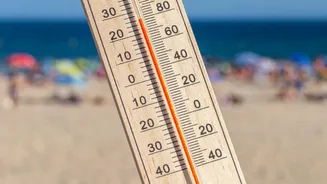
The Great Deception: Temperature vs. 'Feels Like'
Our bodies don't just react to the temperature on a thermometer; they react to what's called the 'heat index' or the 'feels like' temperature. This is a measure that combines air temperature with relative humidity. The monsoon brings a dramatic increase
in atmospheric moisture. When humidity is high, the air is already saturated with water vapour. So, even if the temperature is a pleasant 28°C, high humidity can make it feel much hotter and more oppressive, putting a hidden strain on your body.
The Science of Sweat
Your body has a brilliant, built-in cooling system: sweating. When you get hot, your glands release sweat. The magic happens when this sweat evaporates from your skin, a process that draws heat away from the body and cools you down. But for evaporation to occur, the surrounding air needs to be able to absorb the moisture. Herein lies the problem during the monsoon. When the air is already laden with humidity, your sweat has nowhere to go. It can't evaporate efficiently, leaving you feeling sticky and preventing your body from cooling itself effectively.
Why You Feel So Drained
This failed cooling process is exactly why you feel so fatigued. Your body, sensing that it's still overheated, goes into overdrive. The heart works harder to pump more blood to the skin to try and release heat, your heart rate increases, and you continue to sweat profusely in a futile attempt to cool down. This entire process consumes a tremendous amount of energy, redirecting it from other bodily functions. This metabolic stress is what leads to that profound sense of fatigue, weakness, and lethargy, even if you haven't been physically active.
Hidden Risks Beyond Fatigue
Feeling tired is one thing, but these humid conditions pose real health risks. The constant, inefficient sweating can lead to significant fluid and electrolyte loss, increasing the risk of dehydration. Symptoms of dehydration include headaches, dizziness, muscle cramps, and dark-coloured urine. If ignored, this can progress to more serious conditions like heat exhaustion or even heatstroke. Furthermore, the damp, humid environment is a breeding ground for allergens like mold and dust mites, which can trigger or worsen respiratory issues like asthma and allergies.
How to Fight the Monsoon Slump
While you can't change the weather, you can adapt your habits to stay energised and healthy. Hydration is key; drink plenty of water throughout the day, even if you don't feel thirsty. Incorporate electrolyte-rich fluids like coconut water or sports drinks if you've been sweating a lot. Opt for light, breathable fabrics like cotton to help your skin breathe. Try to schedule strenuous activities for cooler parts of the day, like early morning or late evening. Eating light, easily digestible meals can also help, as heavy, oily foods require more energy to digest, adding to your body's load. Finally, ensure your living space is well-ventilated to reduce indoor humidity and prevent the growth of mold.