



Wasim Akram: The Sultan of Swing
Arguably the greatest left-arm bowler of all time, Pakistan’s Wasim Akram was a complete master of his craft. With a short, explosive run-up and a whippy action, he could swing the ball both ways at high pace, making him a nightmare for any batsman. Akram was a pioneer
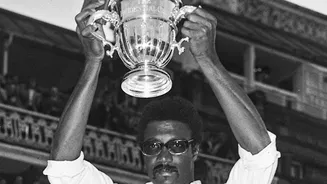
of reverse swing, a skill that allowed him to be devastating with both the new and old ball. His career tally is simply staggering: 414 Test wickets and 502 in One Day Internationals, the latter making him the first bowler to cross the 500-wicket milestone in the format. His match-winning performance in the 1992 World Cup final, where he took two crucial wickets in two balls, cemented his legacy as a big-game player and the undisputed 'Sultan of Swing.'
Zaheer Khan: India's Spearhead
For India, Zaheer Khan was the leader of the pace attack for a decade. 'Zak' was not just a bowler but a thinker, constantly setting up batsmen with his clever variations. He mastered conventional swing, reverse swing, and developed a deceptive knuckleball which he used to great effect in the 2011 World Cup. His role in that victorious campaign cannot be overstated; he was the joint-highest wicket-taker with 21 scalps, providing crucial breakthroughs at every stage. With 311 Test wickets and 282 in ODIs, Zaheer carried the weight of India’s pace bowling, particularly overseas, and his ability to mentor younger bowlers later in his career further solidified his importance to Indian cricket.
Mitchell Starc: The Modern Menace
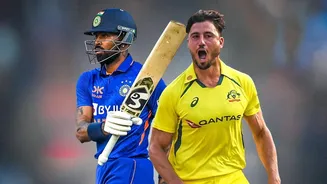
When it comes to sheer, unadulterated pace and aggression from a left-armer, few can match Australia's Mitchell Starc. At 6-foot-6, he generates steep bounce and bowls at speeds consistently above 150 km/h. His signature delivery is the late, inswinging yorker aimed at the stumps, a ball that has proven almost unplayable, especially in limited-overs cricket. Starc is a World Cup specialist, winning Player of the Tournament in 2015 after taking 22 wickets to lead Australia to victory. He holds the record for being the fastest bowler to 150 and 200 ODI wickets. With over 400 Test wickets to his name, he has surpassed many legends, cementing his place as one of the most destructive fast bowlers of his generation.
Chaminda Vaas: The Sri Lankan Craftsman
While often overshadowed by his legendary teammate Muttiah Muralitharan, Chaminda Vaas was the cornerstone of Sri Lanka's pace attack for over a decade. Vaas was not express pace, but he was a master craftsman with immaculate control over line and length. His ability to swing and seam the ball in both directions made him a constant threat. He holds the record for the best bowling figures in ODI history, an incredible 8 for 19 against Zimbabwe. He also famously took a hat-trick with the first three balls of a World Cup match in 2003. With 355 Test wickets and 400 ODI wickets, Vaas proved that intelligence and skill could be just as deadly as raw speed.
Trent Boult: The Swing King
New Zealand's Trent Boult is a modern purist, a bowler who relies on the classical art of swing. As a key part of the Kiwi pace attack, Boult's ability to curve the ball prodigiously, especially in the opening overs, has made him one of the most dangerous bowlers in the world. He forms one of the most potent new-ball partnerships in modern cricket alongside Tim Southee. Boult was a vital part of the New Zealand team that won the inaugural World Test Championship. With over 300 Test wickets and more than 200 in ODIs, his graceful action and lethal swing have provided some of the most aesthetically pleasing and effective bowling spells in recent memory.