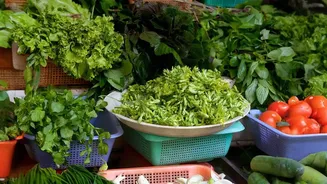







A Renewed Focus on Health and Freshness
One of the biggest drivers of this trend is a heightened awareness of health and wellness. Consumers are increasingly asking where their food comes from. Local markets offer an answer: produce is often harvested at its peak ripeness and travels a shorter
distance, which means it retains more nutrients. Research suggests that freshly harvested vegetables contain optimal levels of vitamins and minerals, which can be lost during long transportation and storage. This desire for 'clean labels' has evolved into a 'show me the farm' mentality, where cooks prioritize ingredients that are free from extensive processing and preservatives, believing fresher produce simply tastes better and is better for you.
The Quest for Authentic Flavour
Flavour is making a powerful comeback. Cooks are discovering that a locally sourced tomato, a seasonal mango, or a freshly plucked herb carries a depth of taste that its long-haul counterpart often lacks. This isn't just about everyday vegetables like lauki and tinda, which are now being celebrated and creatively used in fine-dining restaurants, but also about rediscovering a vast pantry of indigenous ingredients. Chefs and home cooks are exploring hyperlocal produce—from foraged wild greens and ancient millet varieties to regional treasures like mahua flowers and bamboo shoots—that have been part of India's culinary heritage for generations but were sidelined by mass-produced crops. This revival connects cooks to the authentic, diverse flavours of India's many regions.
The Power of Chefs and Social Media
The local market has found powerful ambassadors in India's top chefs and a new generation of food influencers. Visionary chefs are championing a 'farm-to-table' or 'hyperlocal' philosophy, building their menus around foraged and locally sourced ingredients to create innovative dishes. This trend is amplified on social media platforms, where beautifully curated feeds and viral videos showcase the appeal of traditional recipes and indigenous ingredients. Food bloggers and home chefs are encouraging a new generation to rediscover their culinary roots, making regional and local cooking more accessible and exciting than ever before.
Sustainability and Supporting Communities
The turn towards local markets is also an ethical and environmental choice. Buying local significantly reduces the carbon footprint associated with food transportation, packaging, and refrigeration. Moreover, it has a direct, positive impact on the local economy. When consumers buy from a neighbourhood vendor or a farmers' market, the money stays within the community, supporting small-scale farmers and their families. This fosters a stronger, more resilient local food system and helps preserve both agricultural biodiversity and the livelihoods of those who cultivate the land.