
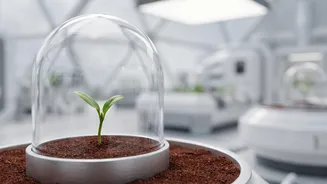
The Classroom Greenhouse
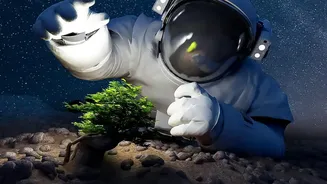
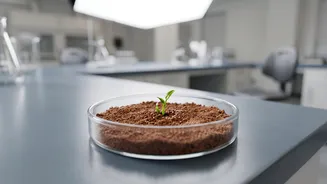
Across the globe, students are tackling one of space exploration's biggest hurdles: dinner on Mars. In projects like Villanova University's "Red Thumbs Mars Garden Project" and the "Gaia's Outpost" concept from a team of Texas students, young scientists
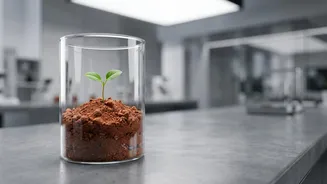
are using Martian soil simulant to see what it takes to grow terrestrial plants in alien dirt. These experiments aren't just for a grade; they're generating valuable data. Students have cultivated everything from lettuce and kale to sweet potatoes and hops, testing how plants fare in a substance designed to mimic the Red Planet's ground cover. The goal is to figure out how future Martian settlers can live off the land, reducing their reliance on expensive resupply missions from Earth.
The Problem with 'Soil'
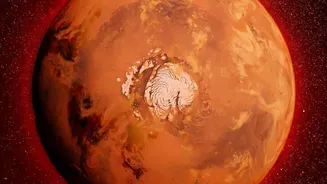
The first lesson from these experiments is that you can't just plant a seed and hope for the best. Martian ground cover, called regolith, isn't like the rich soil in our backyards. It's essentially lifeless mineral dust, devoid of the organic matter and helpful microbes that plants on Earth depend on. Worse, it's packed with toxic chemicals. Chief among them are perchlorates, a type of salt that is harmful to both plants and humans. These compounds, found at concentrations up to 1-2% in the regolith, can interfere with thyroid function and must be removed before the soil can be used for agriculture. Furthermore, the fine, clay-like texture of Martian regolith tends to compact when watered, suffocating plant roots and preventing water from getting through. In some student experiments, the simulant was so dense it physically crushed growing potatoes.
Finding Creative Solutions
This is where the students' ingenuity comes in. They are learning that Martian regolith needs to be treated before it can become fertile soil. One of the most important steps is adding nutrients. Researchers have found that growing a hardy pioneer crop like alfalfa first, and then mixing the alfalfa biomass into the regolith, can enrich it enough to sustain other food crops like turnips, radishes, and lettuce. Other student projects have experimented with adding coffee grounds, vermiculite, or even shredded cardboard to fluff up the dense simulant, improving water infiltration and giving roots room to grow. To deal with the toxic perchlorates, scientists are exploring methods like washing the soil or even using specialized bacteria that can break the chemicals down.
Beyond the Dirt
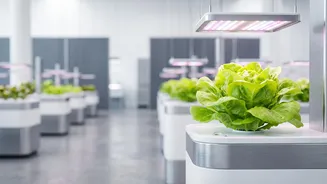
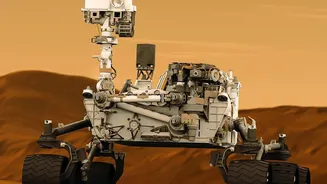
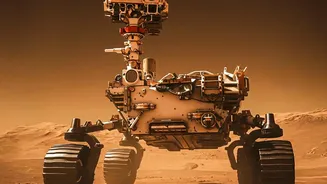
These student experiments mirror the work being done at major space agencies. NASA and other research groups have long identified in-situ resource utilization—using what's already on Mars—as critical for long-term missions. Growing food locally not only provides nutrition but also purifies water, generates oxygen, and offers a psychological boost for isolated astronauts. Some researchers are looking beyond soil entirely, focusing on hydroponic systems that grow plants in nutrient-rich water. Others at universities like Wageningen in the Netherlands are studying companion planting—growing different crops together to boost yields—in Martian greenhouses. From genetically engineering plants to be more resilient to developing aquaponic systems that use fish waste as fertilizer, the race is on to build a sustainable Martian farm.