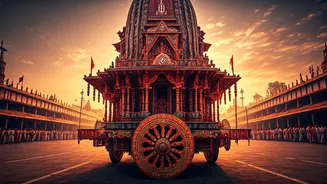





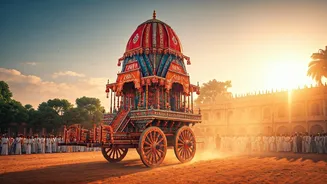


Your Travel: Getting To and Around Puri
Reaching Puri during the festival is the first major hurdle. The Odisha government is deploying around 1,000 buses from across the state and Indian Railways will operate 370 special trains to manage the influx of devotees. [6, 10] For those flying in,
the nearest airport is Biju Patnaik International Airport (BBI) in Bhubaneswar, about 60 km away. [16] From there, pre-booking a cab is highly recommended to avoid surge pricing. [16, 21] Be aware that during the main festival days, private vehicles are not allowed on the Bada Danda (Grand Road). [16] Authorities have established large parking areas on the city's outskirts, such as Malatipatpur and Talabania, with shuttle bus services to ferry pilgrims closer to the temple area. [6, 14] For local movement, auto-rickshaws are available, but authorities will be monitoring fares to prevent overcharging. [14]
Accommodation: Booking Your Stay in Advance
With millions of people descending on the city, finding a place to stay is arguably the biggest challenge. It is strongly advised to book accommodation at least three to four months in advance, as hotels, guesthouses, and dharamshalas fill up rapidly. [15, 25, 26] Options range from luxury beachfront resorts to budget-friendly guesthouses and traditional dharamshalas. [17] The main hotel areas are along Marine Drive, near the Grand Road for temple proximity, and the Baliapanda area. [25] Arriving in Puri two or three days before the main Rath Yatra day (July 16, 2026) can help you settle in and avoid the last-minute rush for hotels. [9, 13]
Crowd Management: Navigating the Grand Road Safely
The sheer number of devotees on the Grand Road can be overwhelming. Past events have seen unexpected surges that created logistical challenges. [3] For the 2026 Yatra, authorities are implementing enhanced crowd management strategies, including the use of AI-equipped CCTV cameras, drone surveillance, and physical barricades. [8, 10] For a safer experience, visitors should avoid pushing into dense crowds near the chariots and stay within designated viewing lanes. [13] It's crucial to identify entry and exit points in any crowded area and establish a meeting point with family or group members in case of separation. [13, 28] Arriving early in the morning can often provide a clearer view before the peak crowds build up. [19]
Health and Safety: Staying Well During the Festival
The monsoon weather in July means it can be hot and humid, making hydration crucial. [24] Bus operators have been directed to provide drinking water and ORS packets. [22] Emergency preparedness is a major focus for the administration, with ambulance corridors, first-aid centres, and arrangements for immediate oxygen supply for those who feel breathless in the crowds. [10, 27] Every bus operating for the Yatra is required to carry a first-aid kit. [14, 22] It's also wise to pack your own basic medical kit. When it comes to food, be cautious about where you eat and drink. Stick to bottled water and freshly cooked food from reputable vendors to avoid illness. Wearing modest, comfortable clothing and secure footwear is essential for navigating long hours on your feet. [9, 25]
Key Dates and Rituals to Know
The main Rath Yatra procession, where the deities travel from the Jagannath Temple to the Gundicha Temple, is on July 16, 2026. [2, 4] The deities remain at the Gundicha Temple for several days. [20] Other key dates include the Bahuda Yatra (return journey) on July 24 and the Suna Besha (golden attire) on July 25. [2, 14] The festival officially concludes with Niladri Bijay. [2] Understanding the schedule can help you plan which days to be in the busiest areas and which to use for exploring other parts of Puri, like the beach or local markets. [19]