




Could artificial intelligence make cancer a 'relic of the past' within a decade? Anthropic CEO Dario Amodei thinks so, sparking both excitement and skepticism. This bold prediction places AI at the forefront of one of humanity's greatest challenges.
The Ten-Year Prediction
The
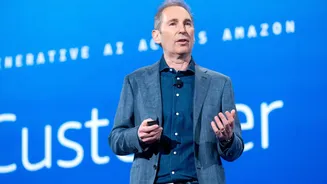
claim came from Dario Amodei, the head of Anthropic, a major competitor in the AI space known for its Claude family of models. In remarks made public in November 2026, he suggested that AI could accelerate medical research so dramatically that diseases like cancer, Alzheimer's, and heart disease might be overcome in less than ten years. This wasn't a fleeting comment; Amodei has consistently argued that advanced AI could usher in an 'age of miracles' by solving problems that have stumped scientists for generations. The prediction immediately divided opinions, with tech leaders echoing the optimism while many pharmaceutical executives and doctors urged caution.
How AI Enters the Fight
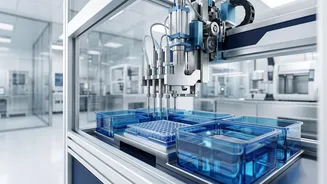
The core idea is that AI can revolutionise the painfully slow and expensive process of drug discovery. Traditionally, finding a new cancer drug can take over a decade and cost billions. AI promises to compress that timeline. Advanced models can analyse vast biological datasets, predict how proteins will fold (a key to understanding disease), and design new drug molecules from scratch. For instance, AI can screen millions of potential drug compounds on a computer in a fraction of the time it would take in a lab. It can also help design personalised treatments, such as mRNA vaccines tailored to a patient's specific tumour, by better predicting which parts of the cancer the immune system should attack.
The Case for Optimism
Tech proponents point to real-world progress as a sign of what's to come. AI is already making cancer detection more accurate; one major trial found AI-assisted mammography caught more cancers than human radiologists alone. AI models are also being used to analyse tumour cells with unprecedented detail, predicting which ones might resist treatment and allowing doctors to adapt. Anthropic itself has partnered with biotech firms, using its AI to help design more effective cancer-killing immune cells and improve potential drug candidates. Proponents argue that these are not small improvements. They represent a fundamental shift in how we understand and fight the disease, with AI serving as a powerful new tool for researchers.
A Dose of Sobering Reality
However, many medical experts are skeptical of the ten year timeline. As Germany's former health minister, Karl Lauterbach, noted, curing cancer is 'impossible in just 10 years'. The biggest hurdle isn't just discovering a potential drug, but proving it is safe and effective in humans. This involves years of rigorous and expensive clinical trials, a process AI cannot simply bypass. Furthermore, 'cancer' is not one disease but hundreds, each with its own complex biology. There are also major challenges with data quality, patient privacy, and algorithmic bias. An AI model is only as good as the data it's trained on, and if that data isn't diverse, the resulting treatments may not work for everyone.
Beyond a Single 'Cure'
Ultimately, the conversation may be focused on the wrong goal. Instead of a single 'cure,' the more realistic, and still revolutionary, impact of AI will be a series of incremental gains that transform how cancer is managed. Over the next decade, AI is poised to make diagnostics faster and more accurate, streamline the creation of clinical trials, and give doctors powerful tools to help personalise treatment plans. It can help physicians stay on top of the latest research and make betterer informed decisions for their patients. This future is less about a single miracle cure and more about turning cancer into a manageable condition through a constant stream of AI powered improvements in care.