





What is the Gaganyaan Mission?
At its heart, the Gaganyaan programme is India's historic endeavour to launch a crew of astronauts into an orbit of 400 kilometres for a three-day mission and bring them safely back to Earth. [11] Overseen by the Indian Space Research Organisation (ISRO),
this mission will make India only the fourth country in the world—after the United States, Russia, and China—to have an independent human spaceflight capability. [11] The entire program is built on a Human-Rated Launch Vehicle (HLVM3), a powerful and reliable rocket modified to carry humans. [11] But before any astronaut boards that rocket, every single component and procedure must be tested to perfection.
Testing the Landing: Integrated Air-Drop Tests (IADT)
One of the most critical phases of any space mission is the return. To ensure the crew module—the capsule where the astronauts will be—can land safely, ISRO is conducting a series of Integrated Air-Drop Tests (IADT). These tests focus on the parachute-based deceleration system. In a recent key test, IADT-02, a simulated crew module was lifted by an Indian Air Force Chinook helicopter to an altitude of about 3 km and dropped over the sea. [9] A sequence of 10 parachutes then deployed to slow the module for a safe splashdown. [7, 9] These tests validate the entire landing sequence, ensuring the parachutes work perfectly to reduce the capsule's speed to a safe level. [7, 10]
The Dress Rehearsal: Uncrewed Flights (G1 & G2)
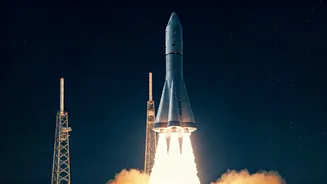
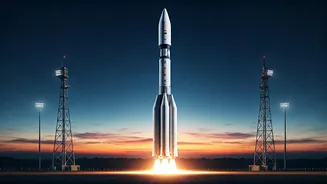
Before the main event (the crewed H1 mission), ISRO has planned at least two major uncrewed test flights, designated G1 and G2. [12] The first of these, G1, is scheduled for the second half of 2026. [13] These missions are full dress rehearsals for the real thing. The HLVM3 rocket will launch an uncrewed Gaganyaan spacecraft into orbit to test the performance of all systems, from the launch vehicle itself to the orbital module and its re-entry and recovery procedures. [16, 18] These flights will check everything from life support and avionics to propulsion, essentially proving the entire mission profile from start to finish without risking human life. [15]
Meet Vyommitra: The 'Space Friend' Robot
The star of the first uncrewed mission, G1, will be Vyommitra. [13] The name is a combination of two Sanskrit words: 'Vyoma' (space) and 'Mitra' (friend). [2, 4] Vyommitra is a sophisticated half-humanoid robot designed by ISRO to be a surrogate astronaut. [2] Because she has no legs, she is perfectly suited for the capsule's seated environment. [2] During the G1 flight, Vyommitra will occupy an astronaut's seat and simulate human functions. [6] She is engineered to monitor the crew module's parameters, operate switch panels, and check the life support systems. [2, 3] By gathering data on how the cabin environment and life support perform, Vyommitra will help ISRO confirm that every system is ready for human astronauts. [2, 6]
The Final Countdown to Human Flight
Each of these tests—from the parachute drops to the robotic spaceflights—is a vital piece of a larger puzzle. They are designed to systematically identify and eliminate risks, making the Gaganyaan mission as safe as possible. Engineers are also testing crucial ground safety systems, like the Flight Crew Emergency Egress System, which would allow astronauts to quickly escape the rocket on the launch pad in an emergency. [6] After the successful completion of all uncrewed tests, including G1 and G2, ISRO will proceed with the first crewed mission, currently targeted for 2027. [12, 14, 21] This final step will be the culmination of years of rigorous testing, all aimed at ensuring the safety of India's 'Gaganyatris' as they make history.